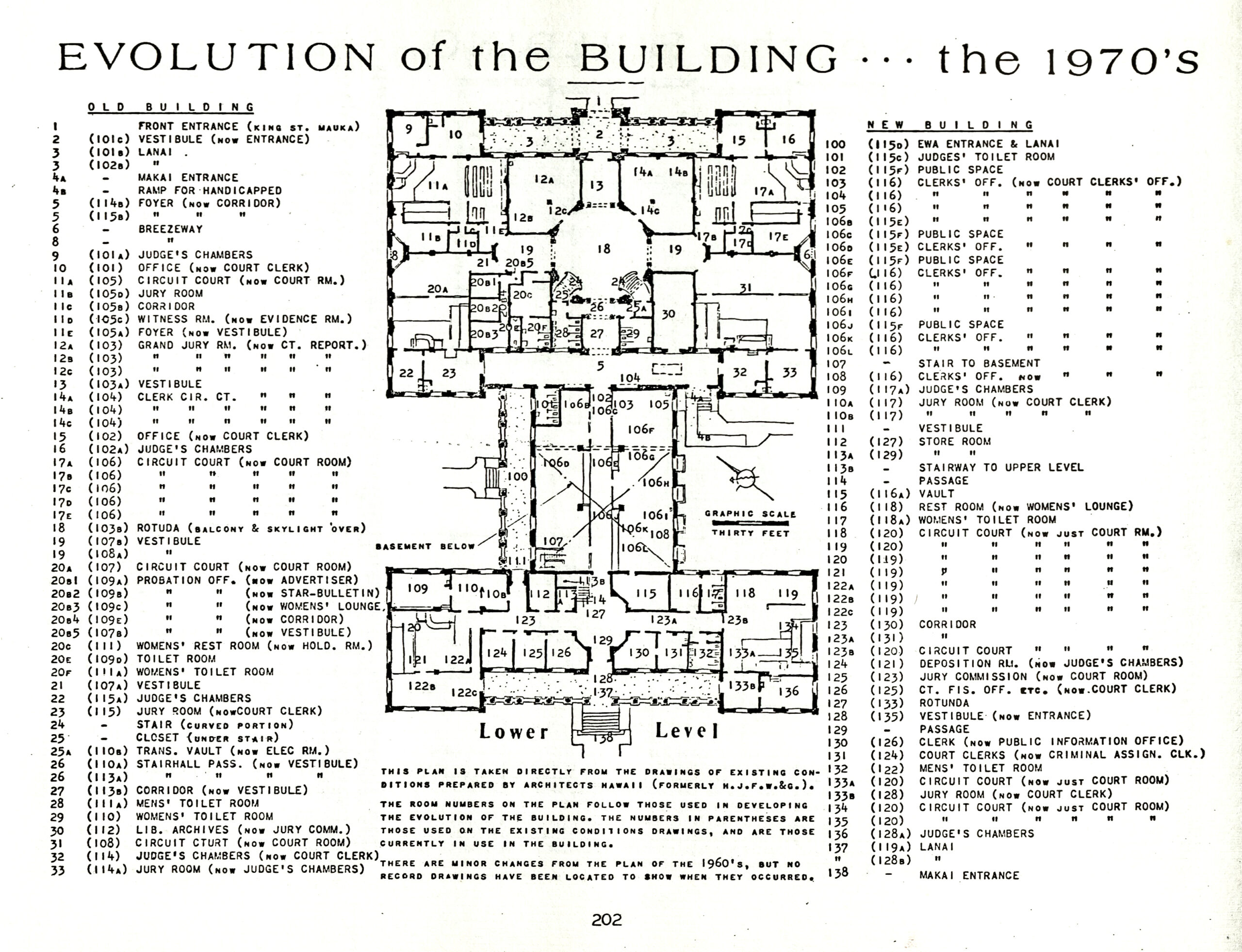
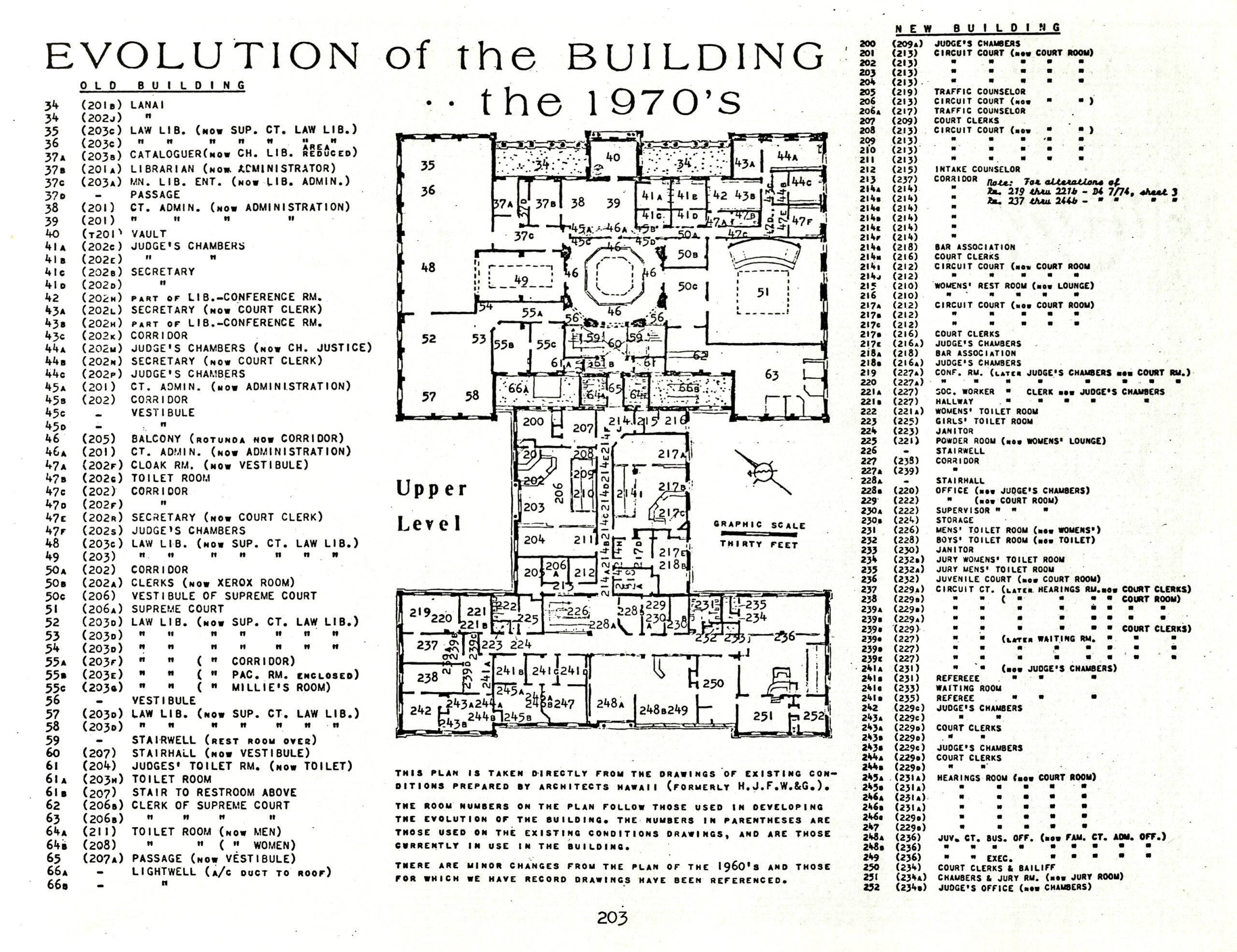
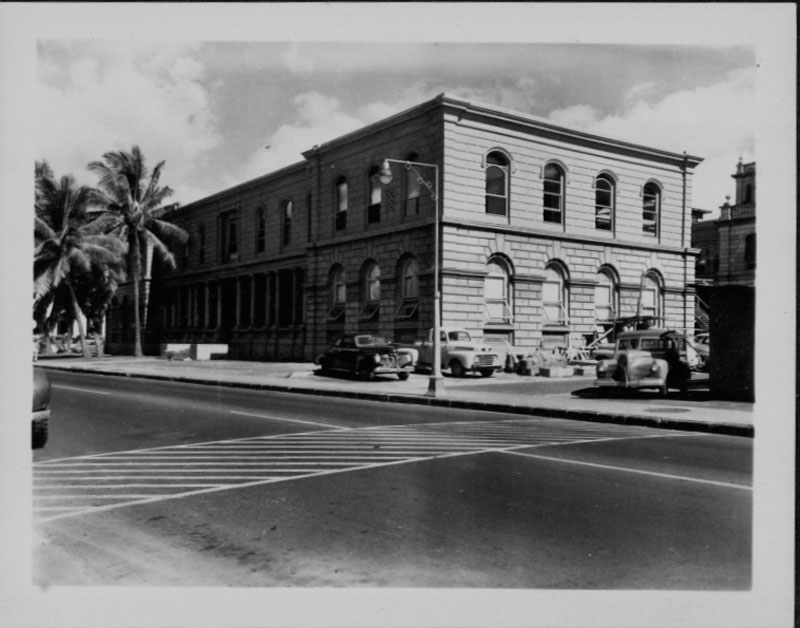
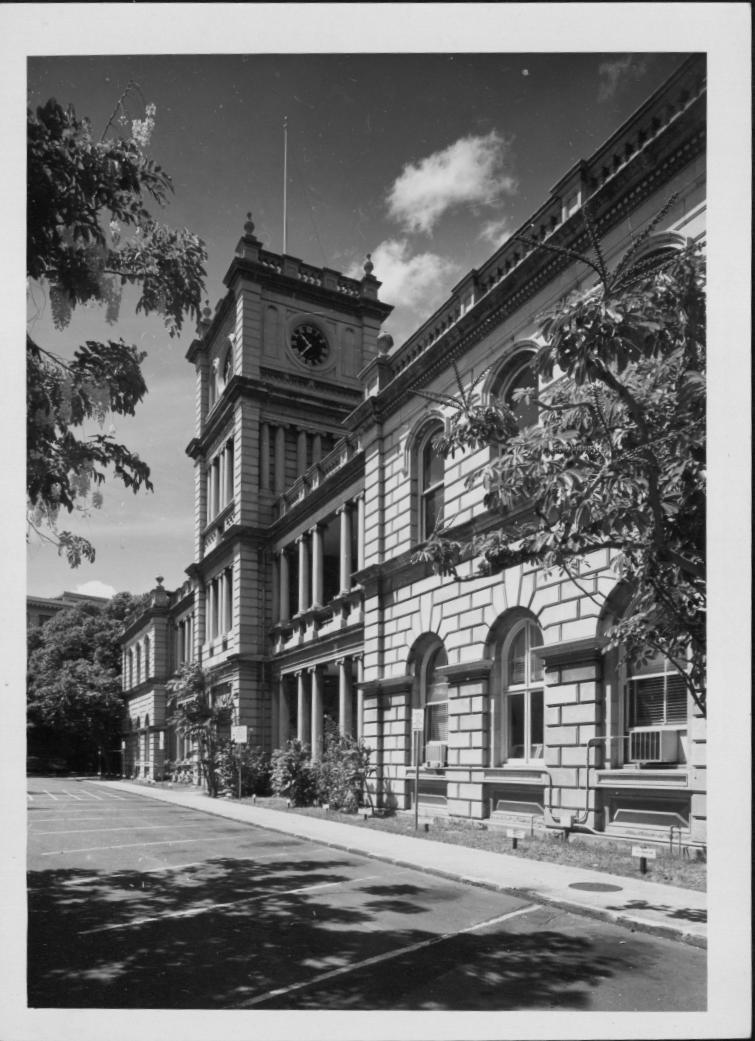
c. 1874

Aliiolani Hale shortly after its construction.

(Hawaii State Archives, PPWD-1-7-022)

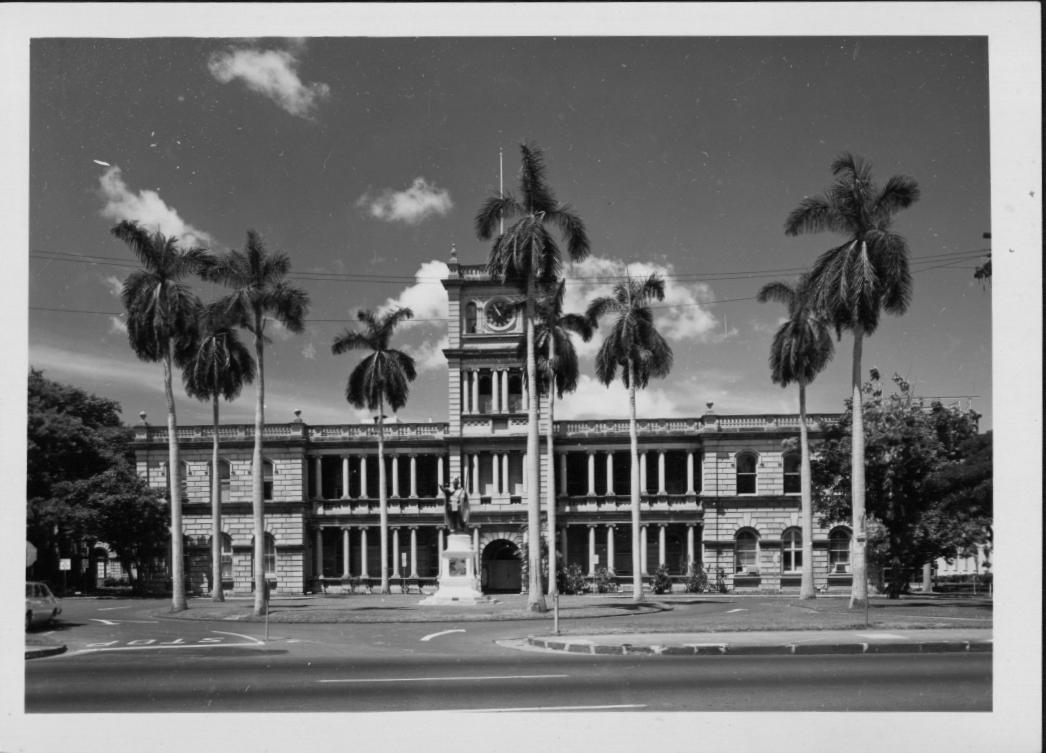
c. 1888

View from Iolani Palace shows the Kapuaiwa building at left, Aliiolani Hale, in the center, the Royal Hawaiian Opera House at right and Honolulu Harbor in the distance.

(Hawaii State Archives, PPWD-1-7-017)

2017

Aerial view of Aliiolani Hale, makai extension visible. 

2024

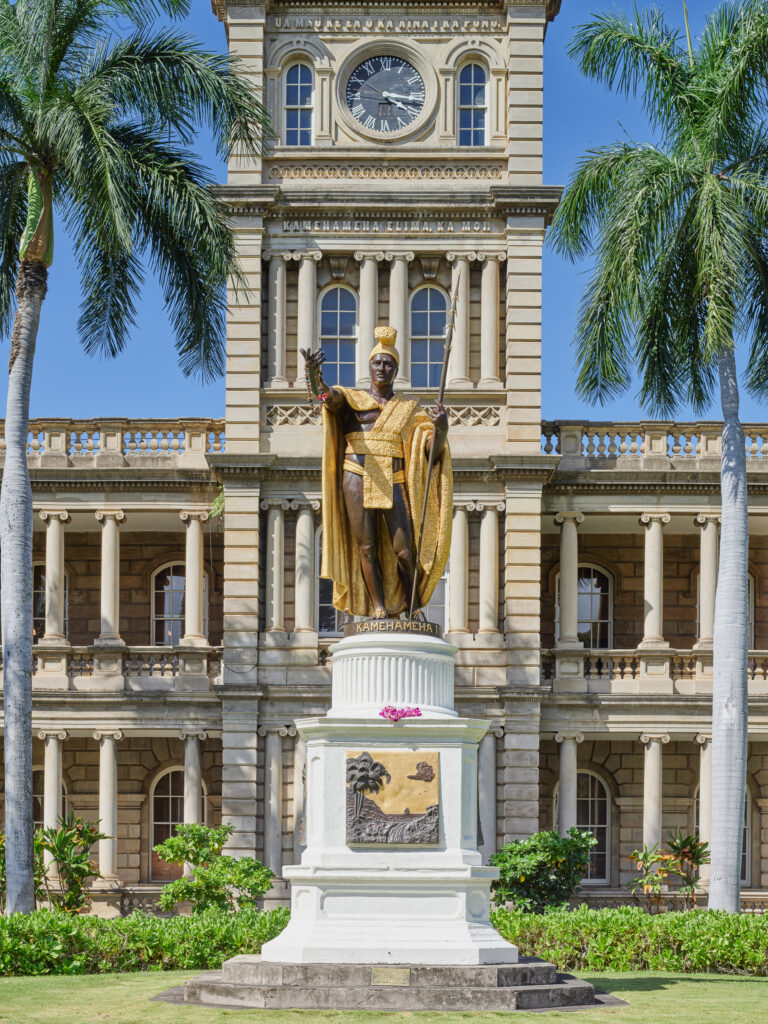
View of Aliiolani Hale from Iolani Palace. 

Ke Kukulu Kanawai: 150 Years of Law, Civics, and Culture at Aliiolani Hale

1840: Hawaii Establishes a Supreme Court

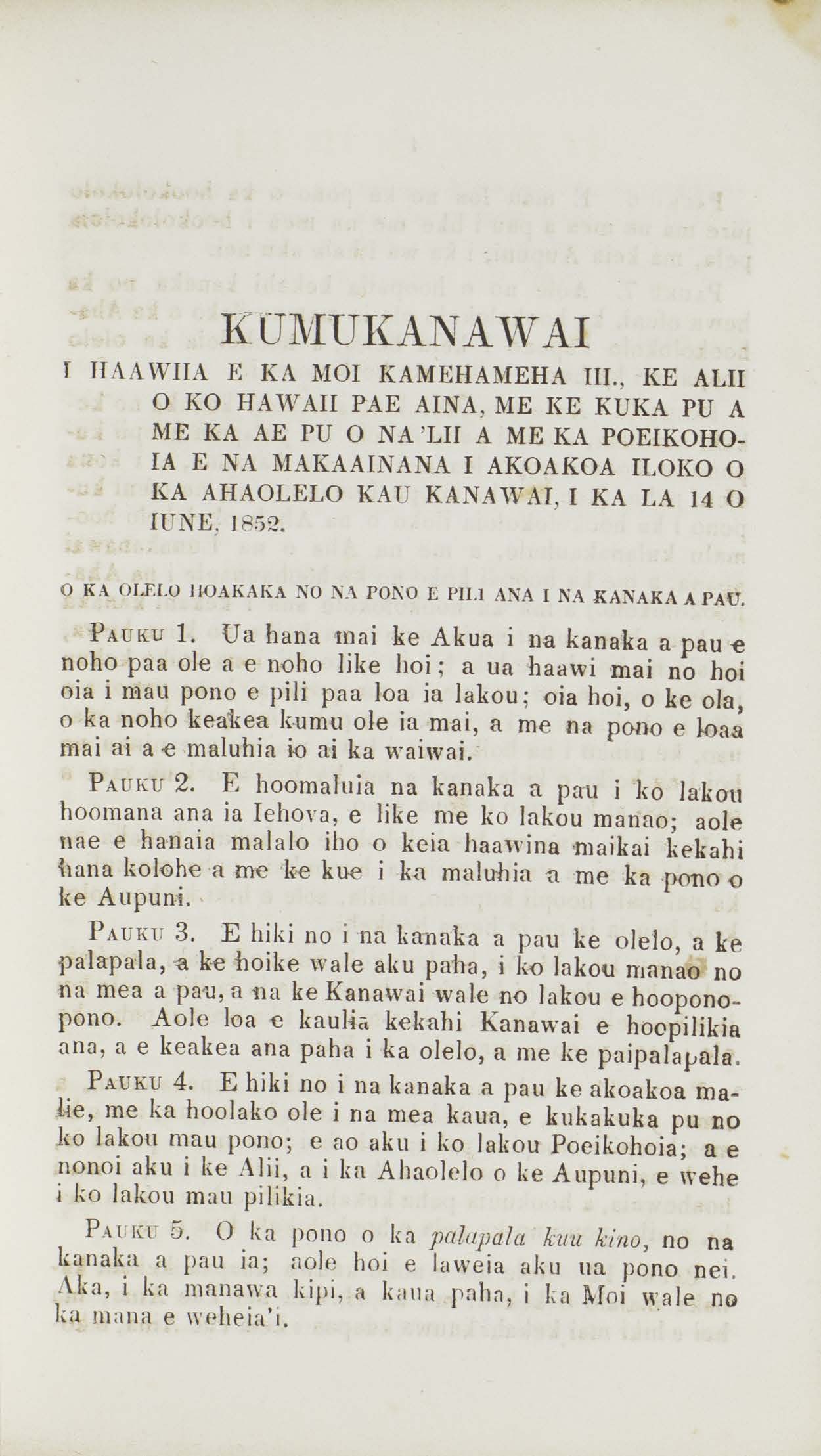
King Kamehameha III and Kuhina Nui Kekauluohi embraced the concept of constitutional monarchy and introduced Western practices of governance through the adoption of Hawaii’s first constitution on October 8, 1840. 

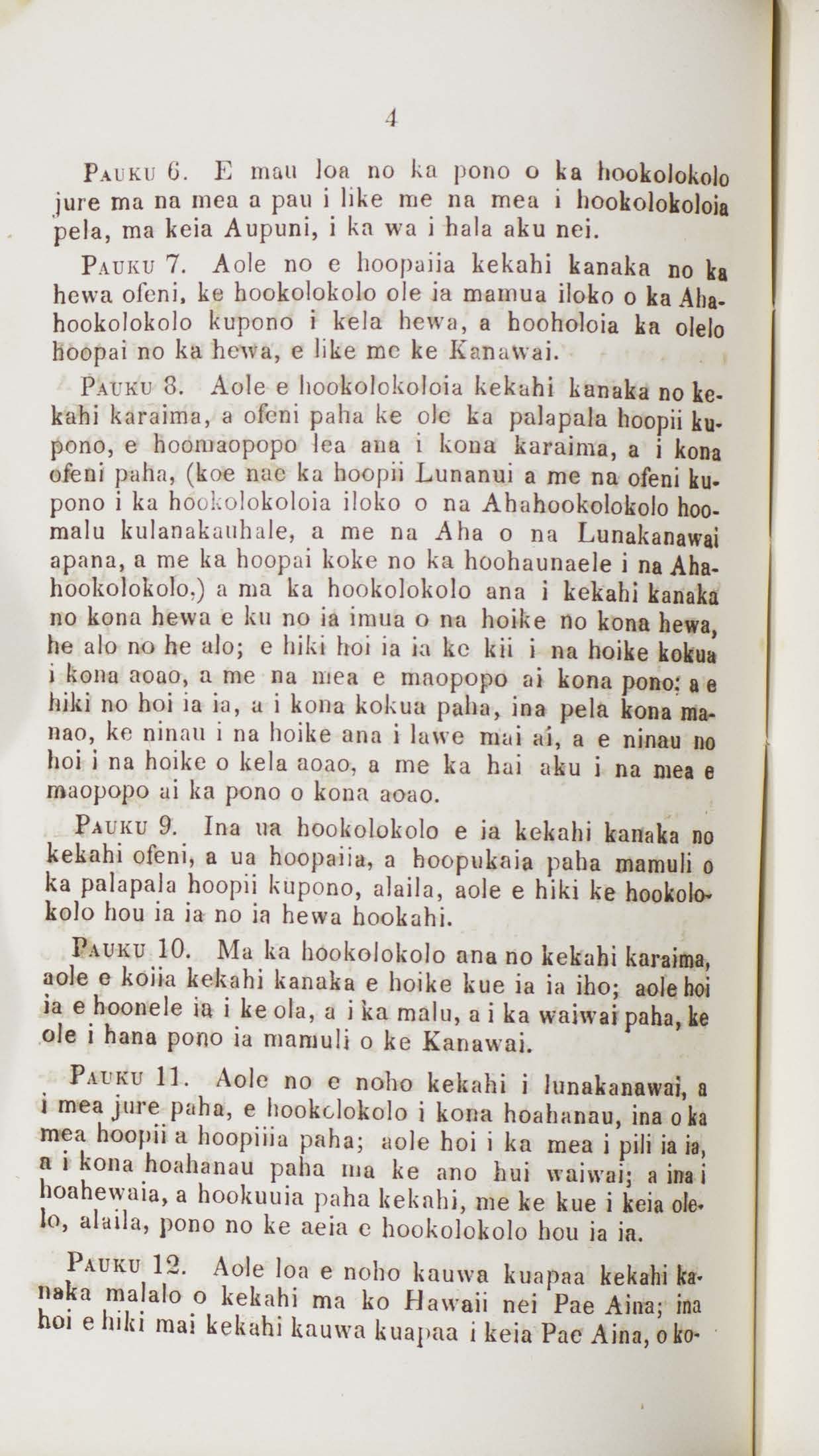
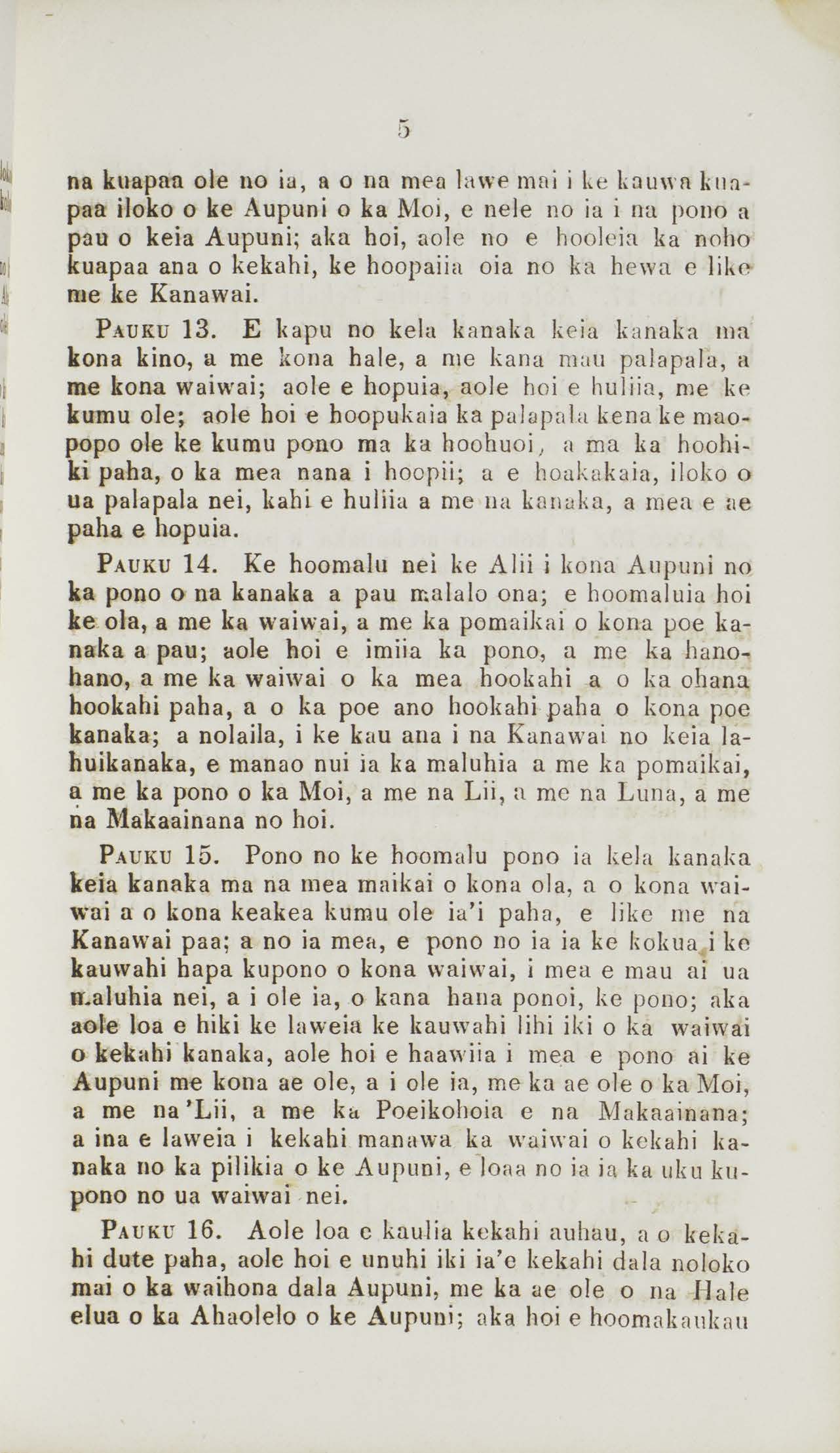
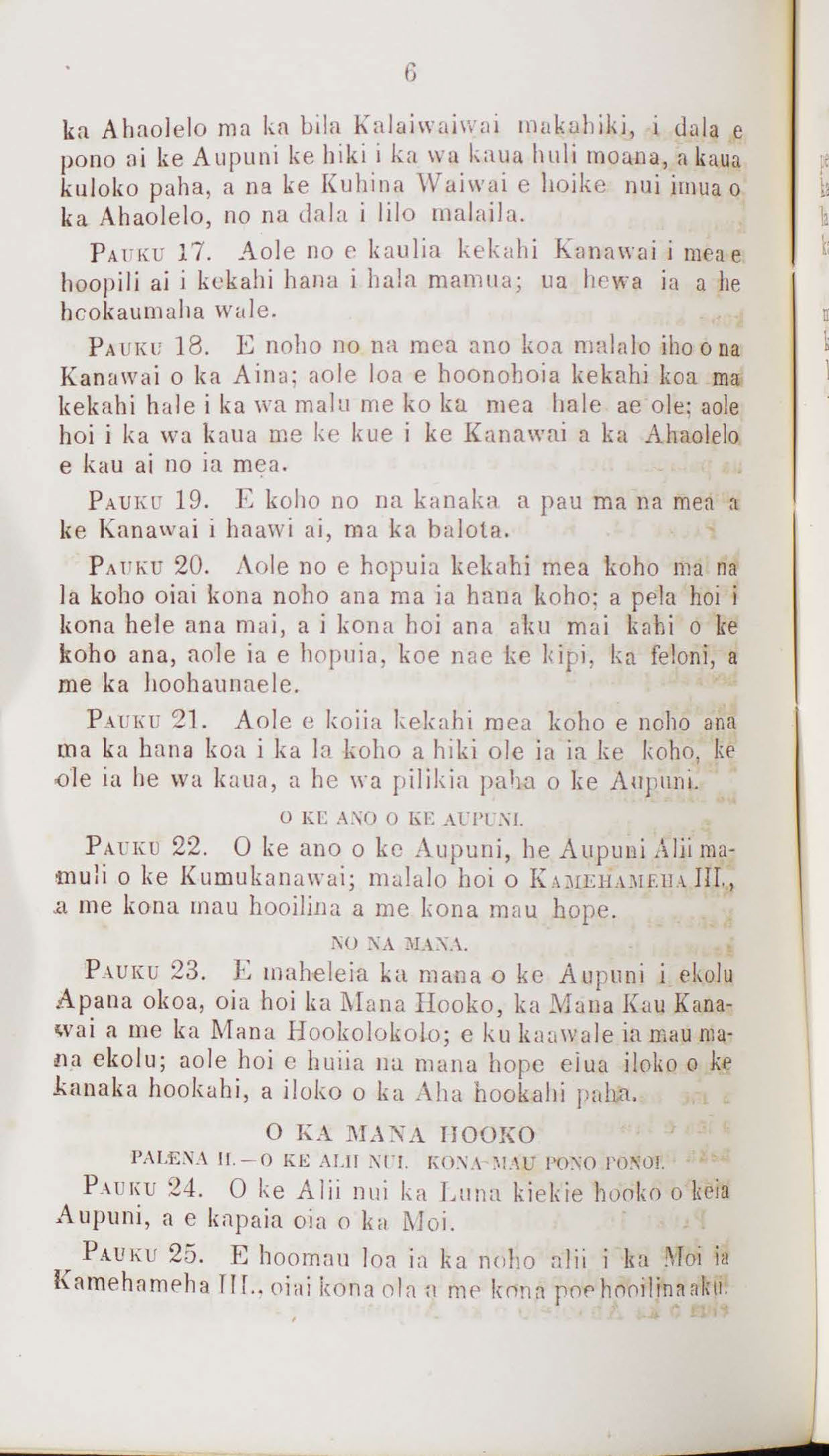
The Constitution of 1840, Ke Kumu Kanawai a me na Kanawai o ko Hawaii Pae Aina, added onto the 1839 Declaration of Rights by outlining how the new Hawaiian government would work. It created a house of representatives, elected by the people. For the first time, common citizens would have a voice in government. The house of representatives and the council of chiefs held joint power to create laws.

Along with a public-school system, the Constitution also established Hawaii’s first independent judicial body, a supreme court.

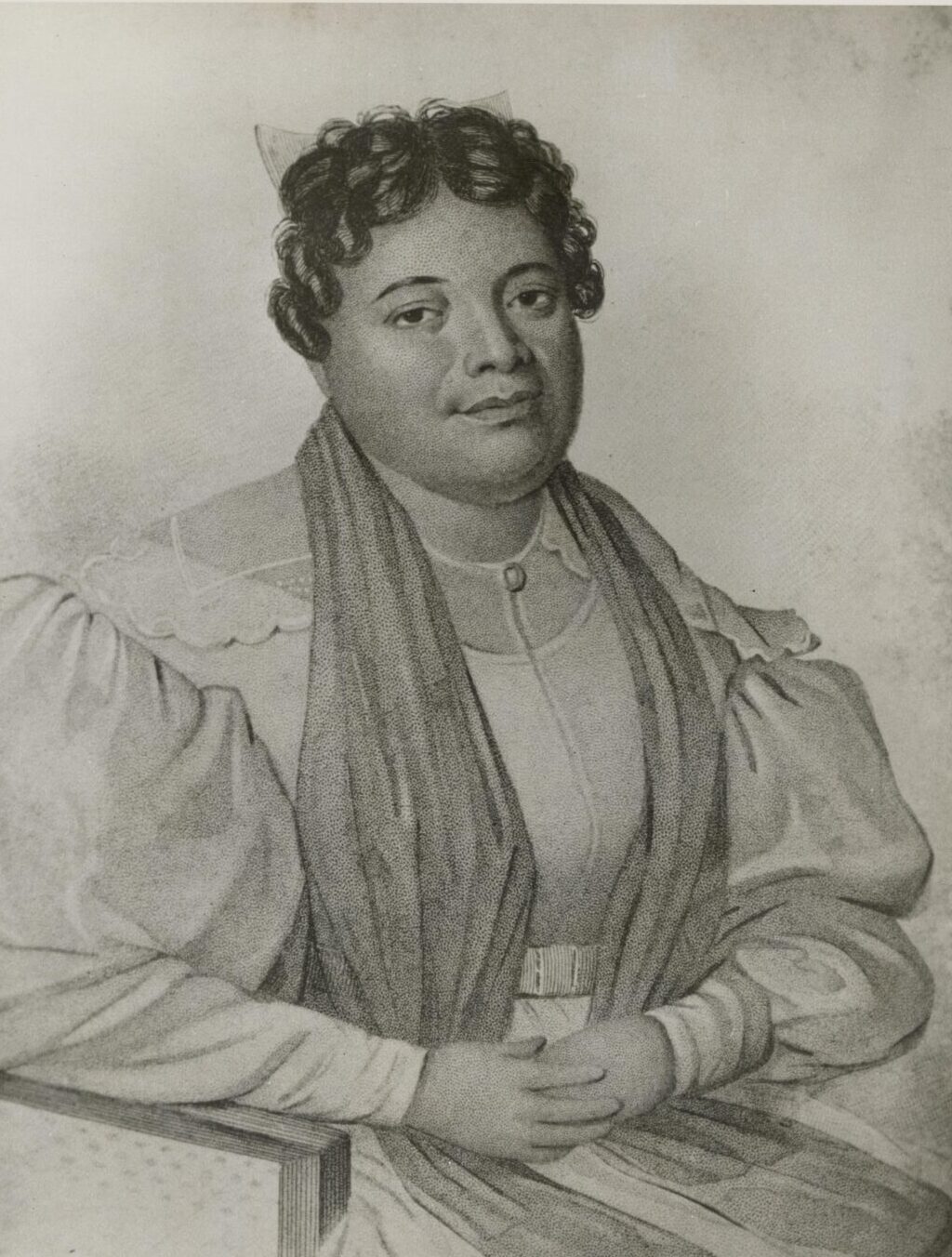
Hawaii’s first Supreme Court consisted of the King as the chief judge, kuhina nui, and four individuals appointed by the representative body. The first Chief Justice was Kauikeaouli (Kamehameha III), with Kekauluohi (Kuhina Nui), assisted by Supreme Court judges Paki, Kanaina, Kapena, and Kaauwai. Island courts held by their respective governors functioned as circuit courts on their respective island. The island governors were given powers to appoint judges who functioned as district magistrates for the island.

Chapter XLVII of the Laws of 1842 mandated that the Supreme judges assemble in Honolulu each June and in Lahaina (Maui) each December to try cases appealed to them. Selection criteria for foreign and native juries were provided for in the Laws of 1842. 

The Third Act of Kamehameha III in 1847 titled “An Act to organize the Judiciary Department of the Hawaiian Islands” created four levels of courts: the Supreme Court, the Superior Court of Law and Equity, four circuit court jurisdictions, and district courts.

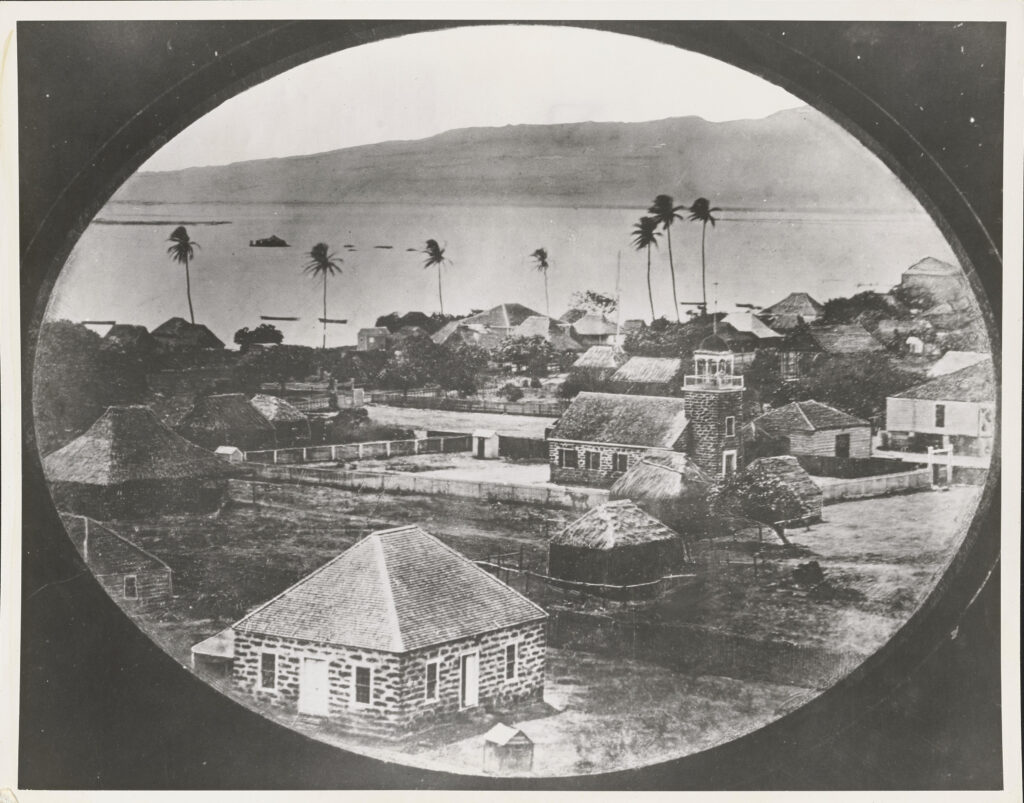
Photo taken from Kawaiahao Church Tower c. 1853/54 facing corner of Punchbowl and King Streets. Depicts the approximate location where Aliiolani Hale would be constructed twenty years later. Original photograph from Hawaiian Mission Children's Society. (Image courtesy of Hawaii State Archives, reference no. PPWD-8-6-010)
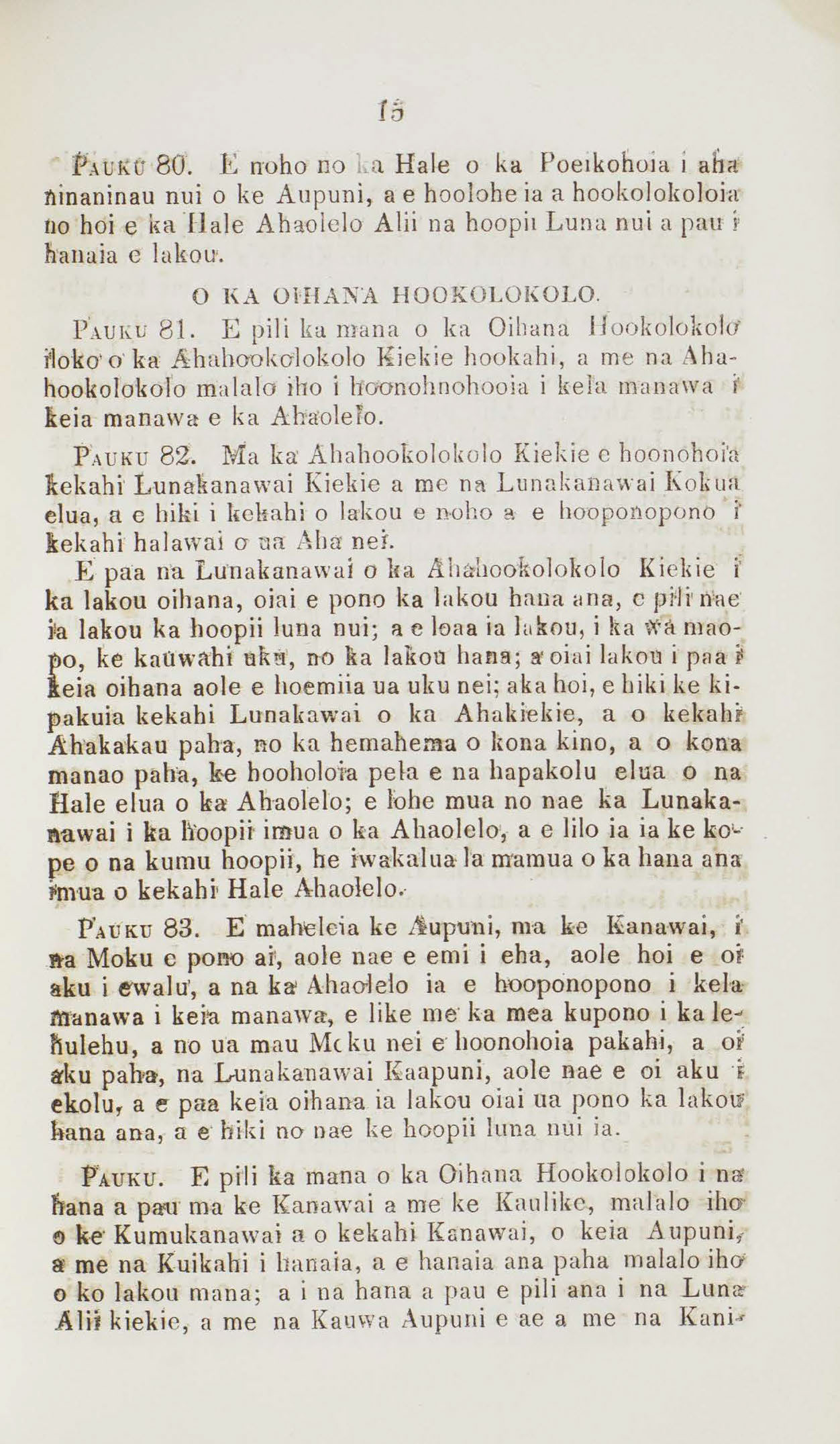
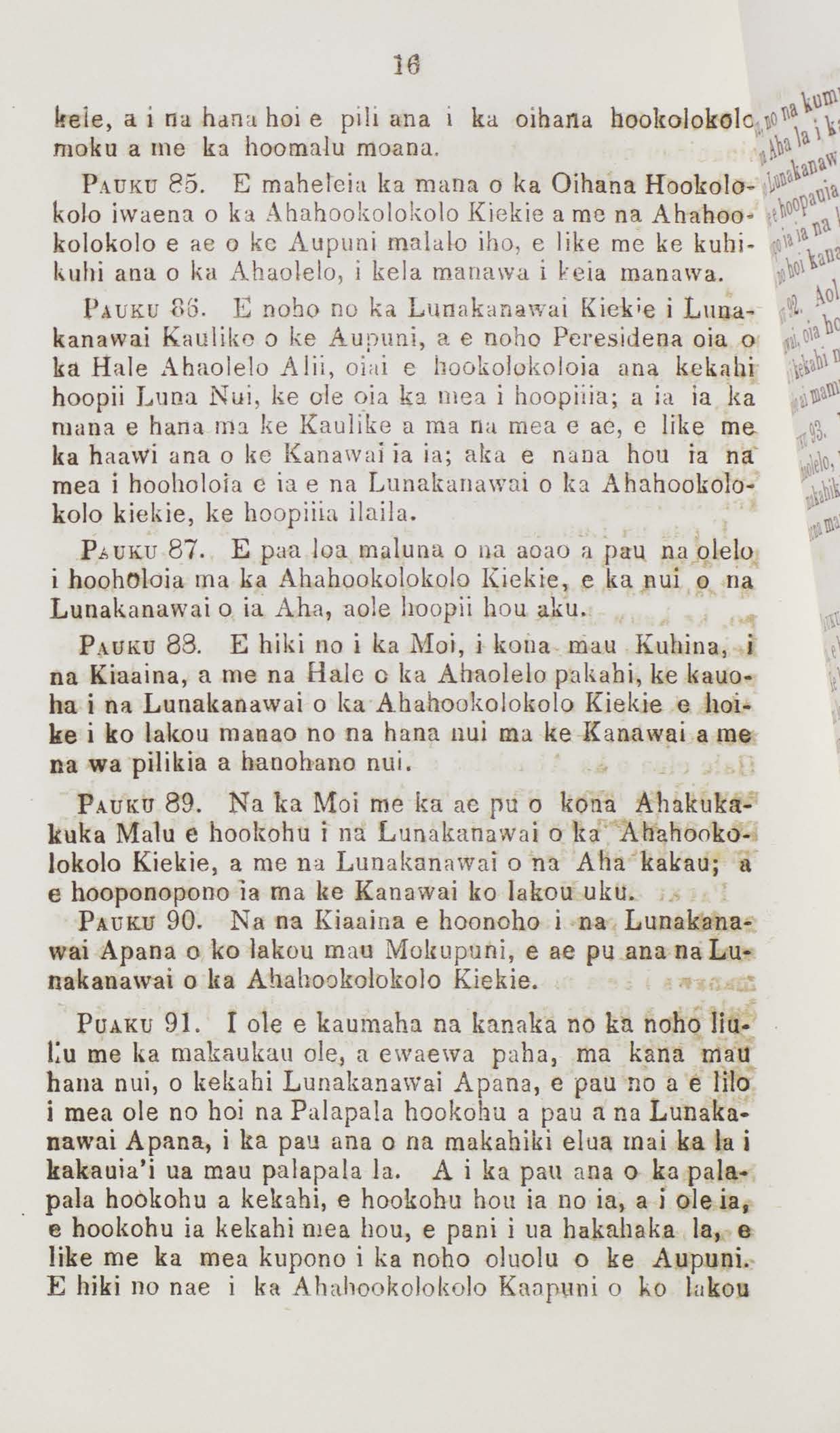
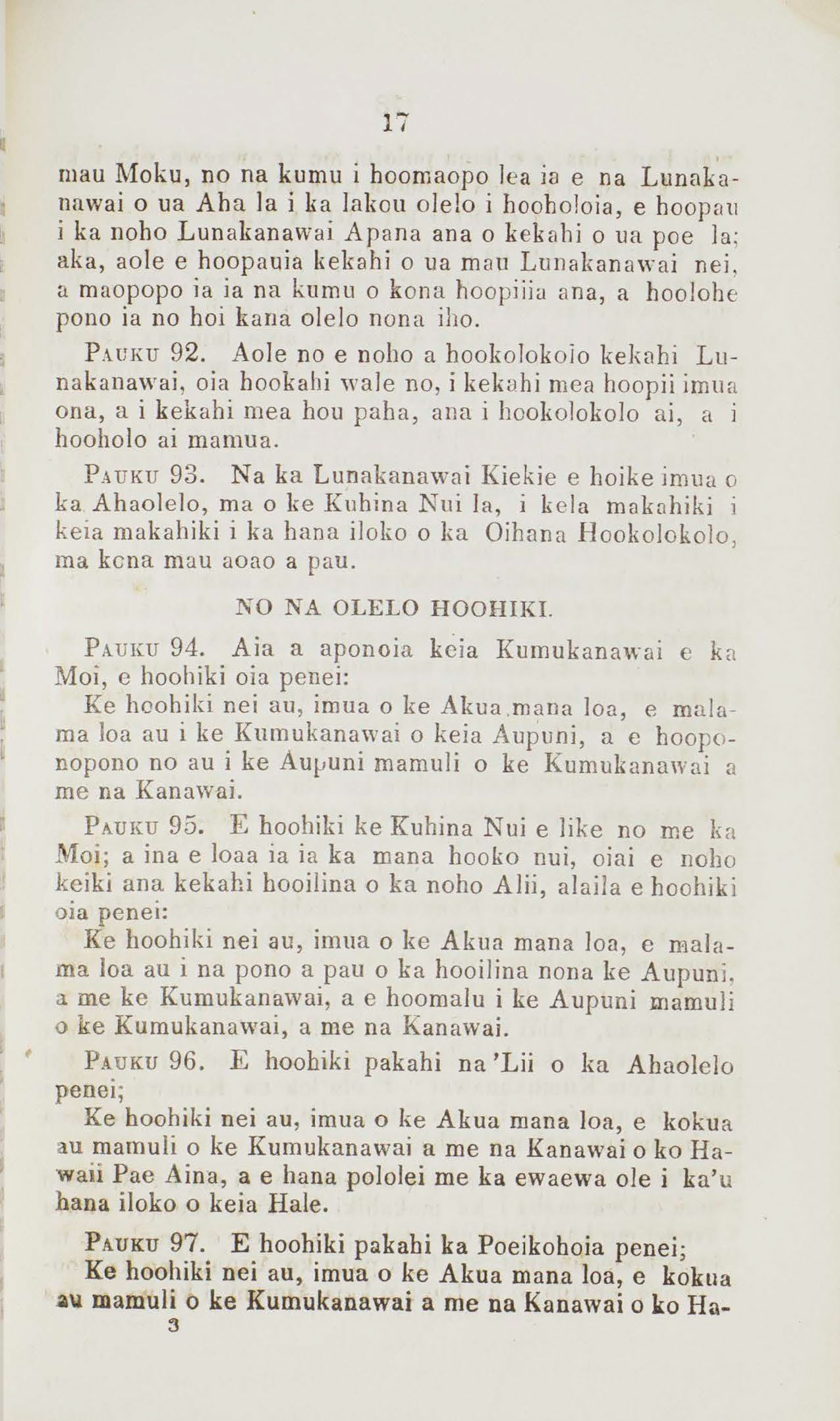
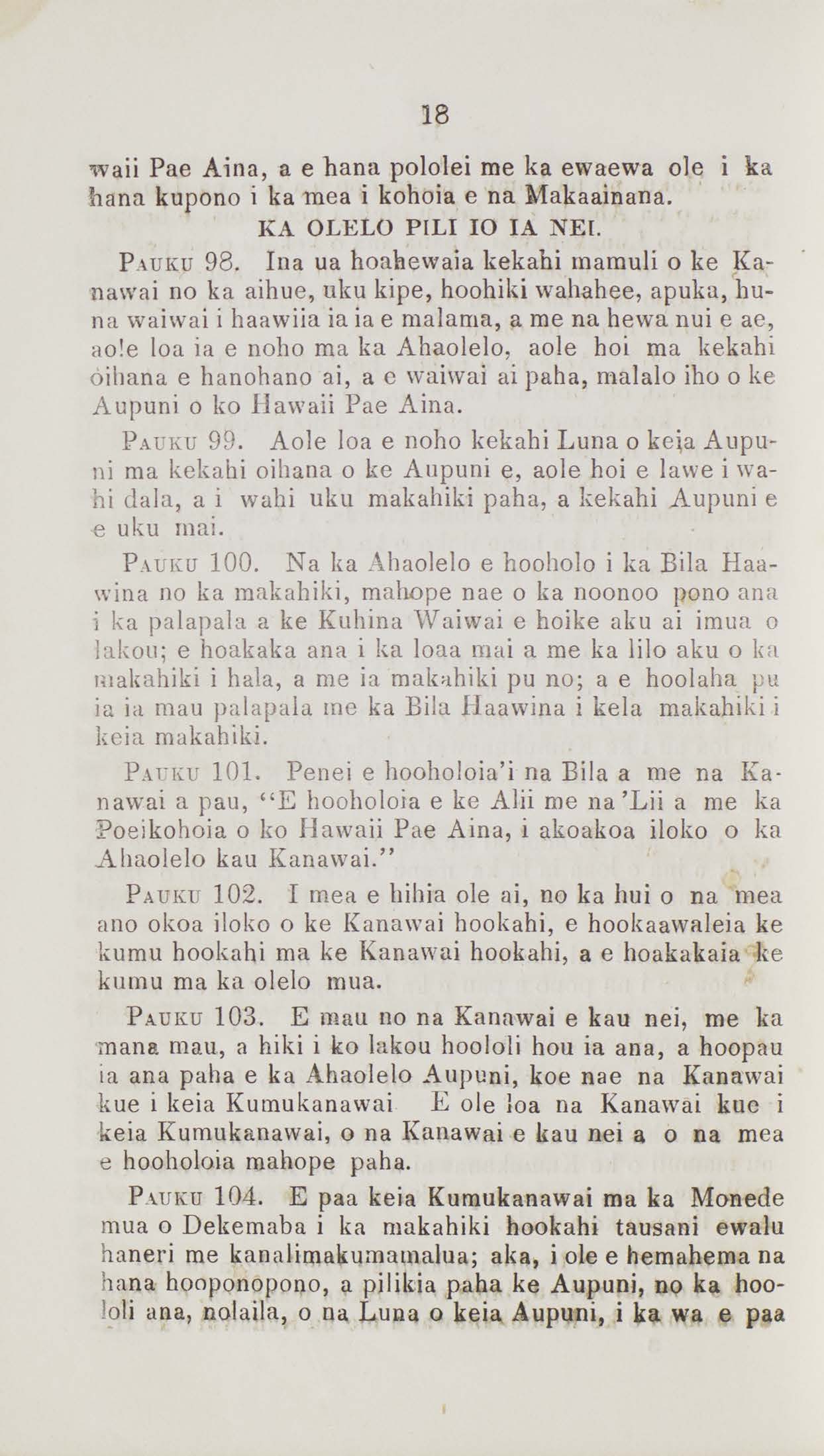
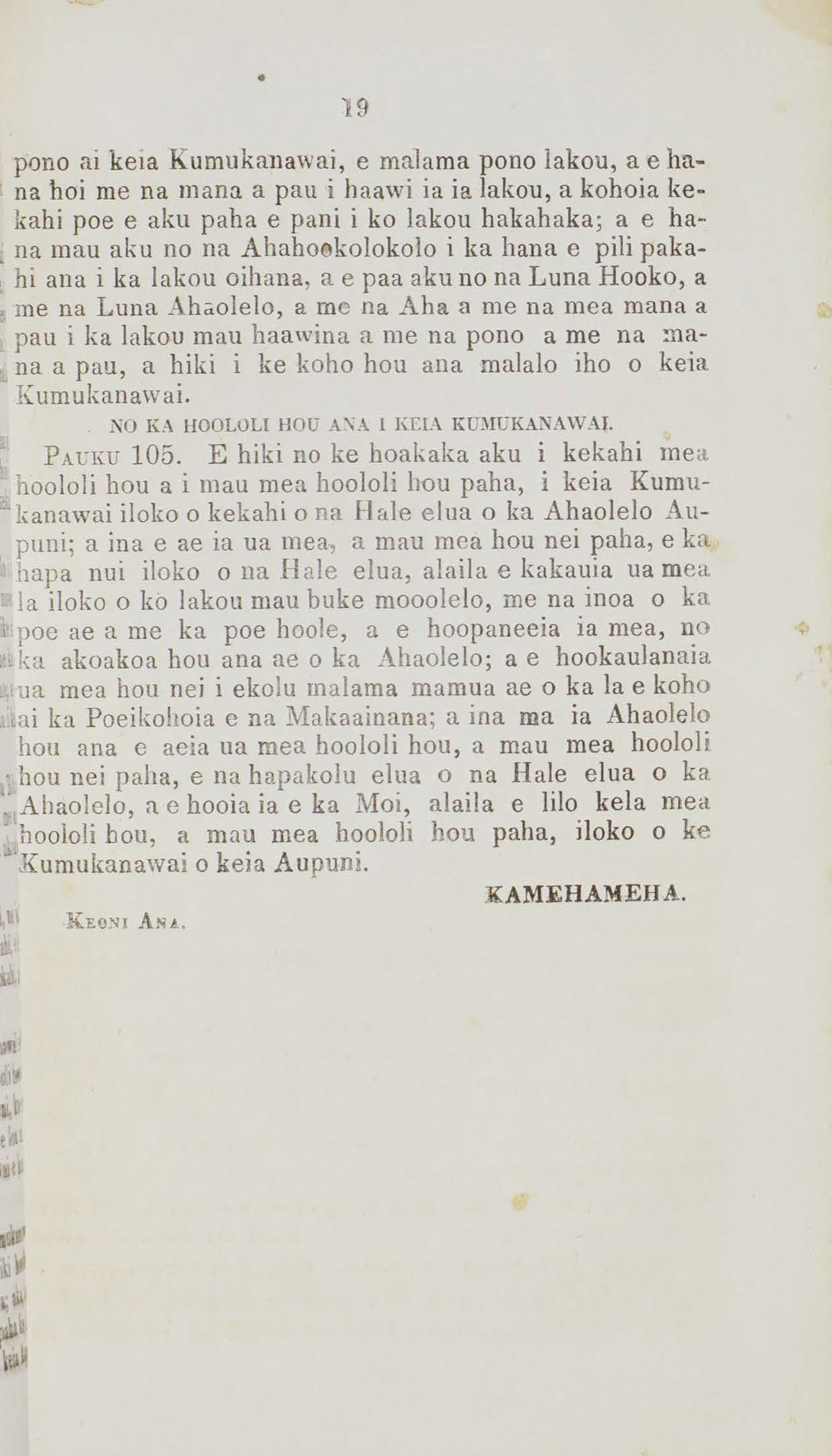
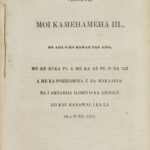
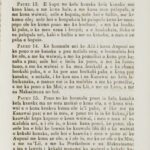
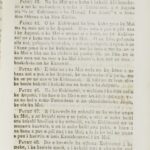
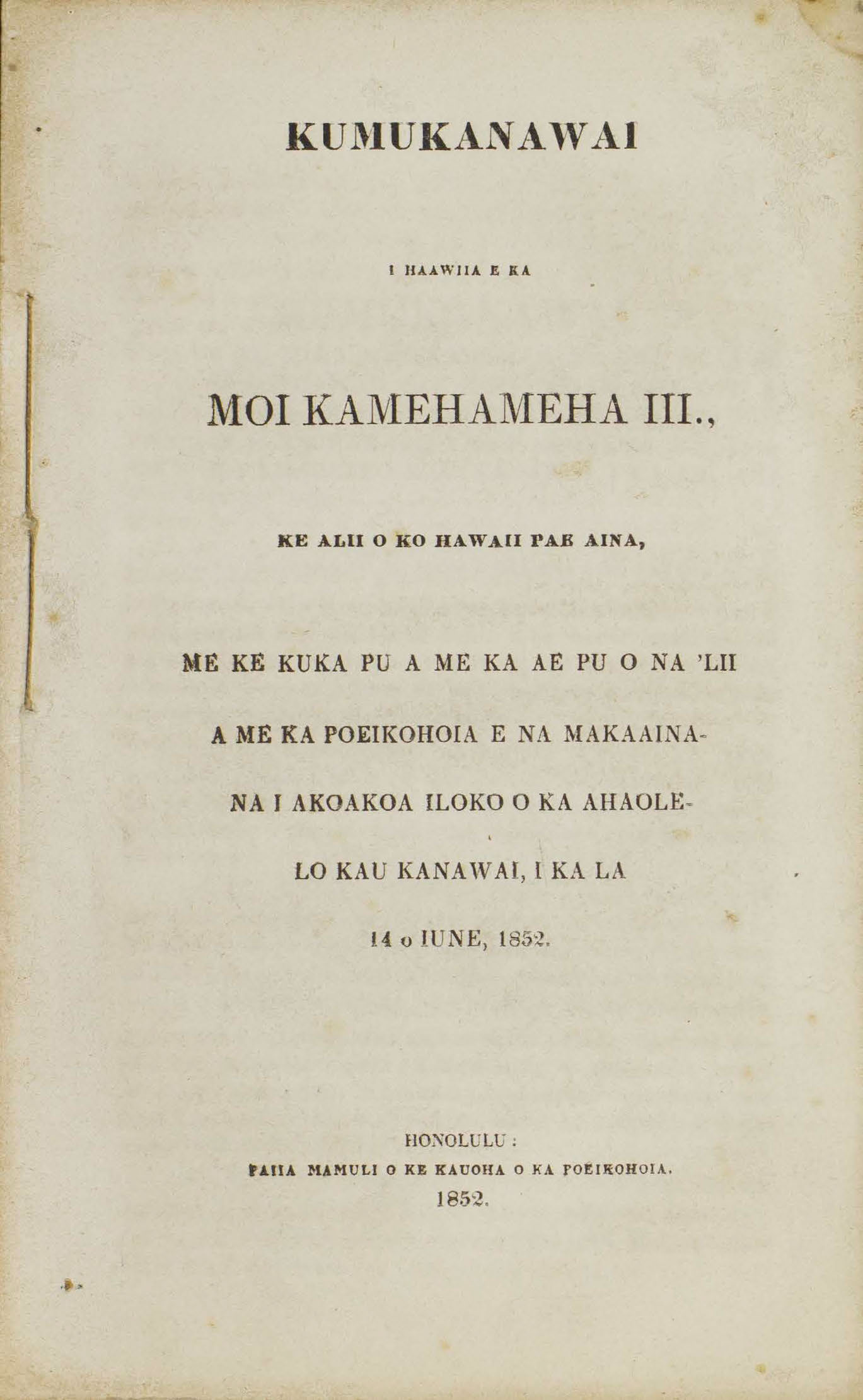
Kumukanawai1852_Page_01_Image_0001
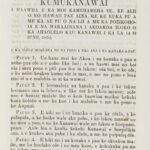
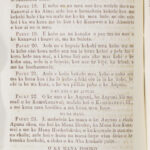
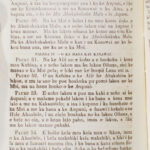
Kumukanawai1852_Page_02_Image_0001
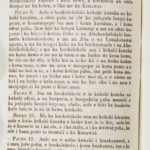
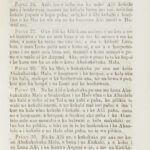
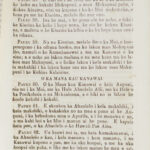
Kumukanawai1852_Page_03_Image_0001
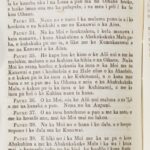
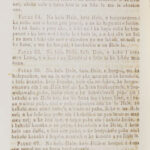
Kumukanawai1852_Page_04_Image_0001
Kumukanawai1852_Page_05_Image_0001
Kumukanawai1852_Page_06_Image_0001
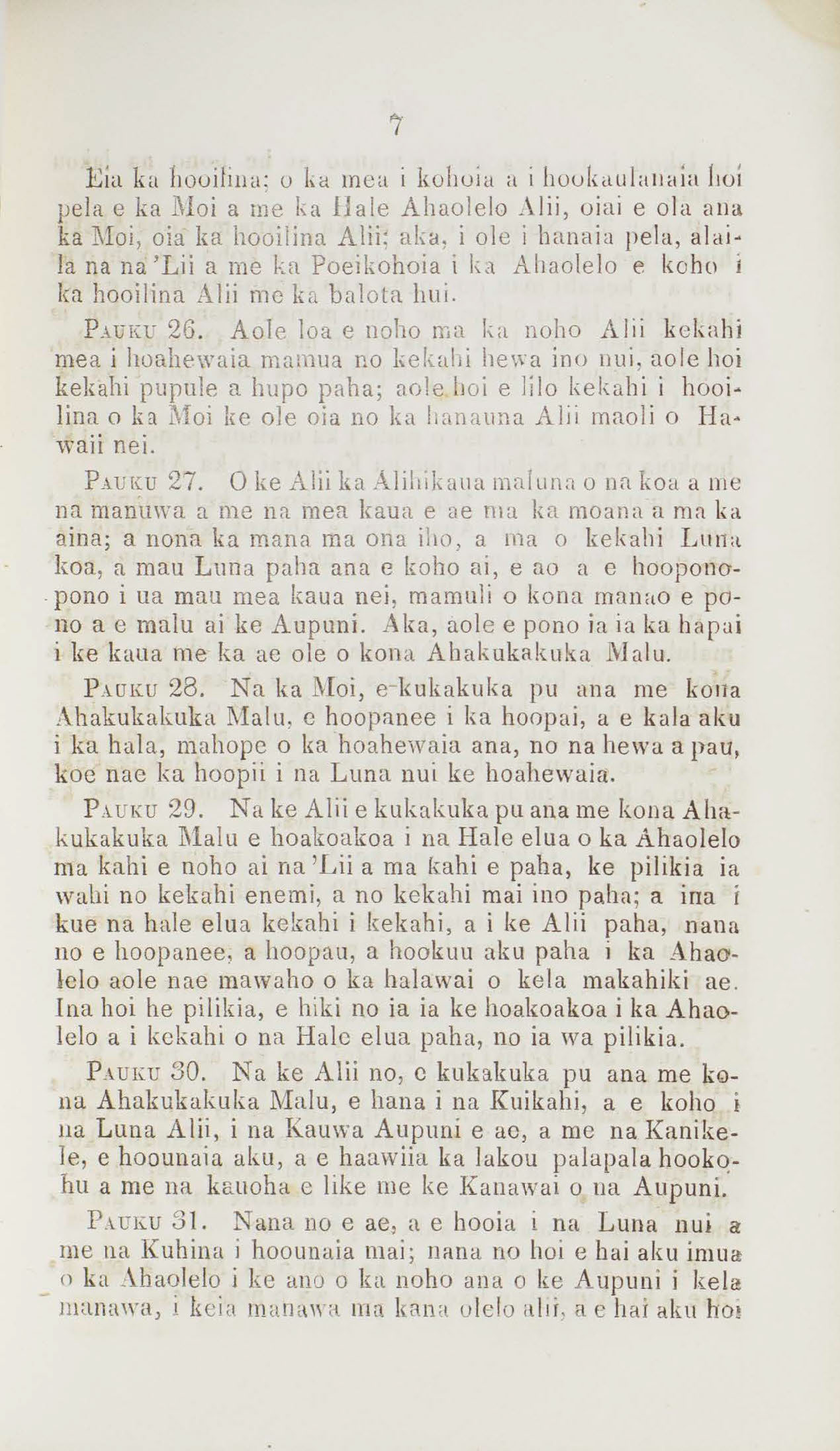
Kumukanawai1852_Page_07_Image_0001
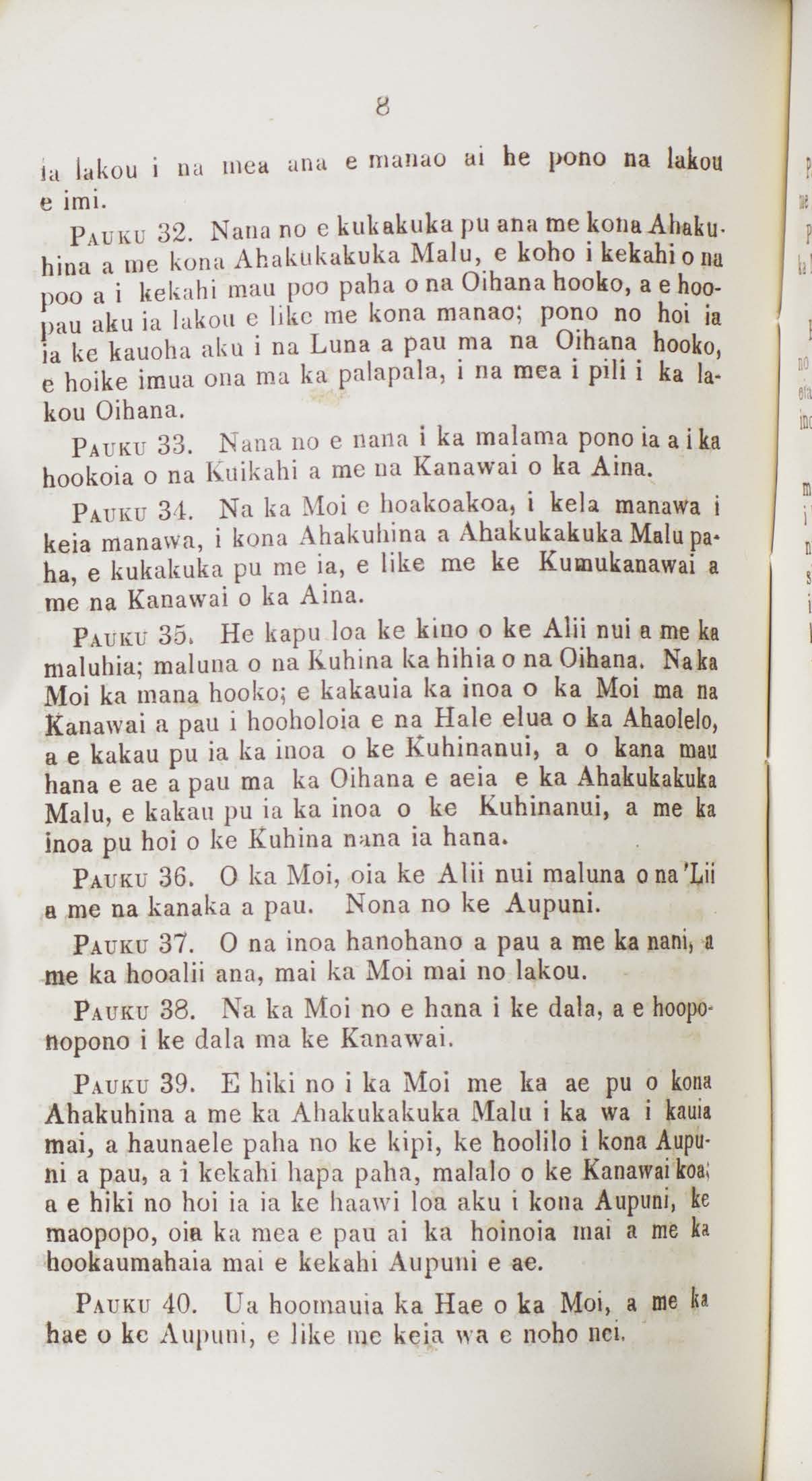
Kumukanawai1852_Page_08_Image_0001
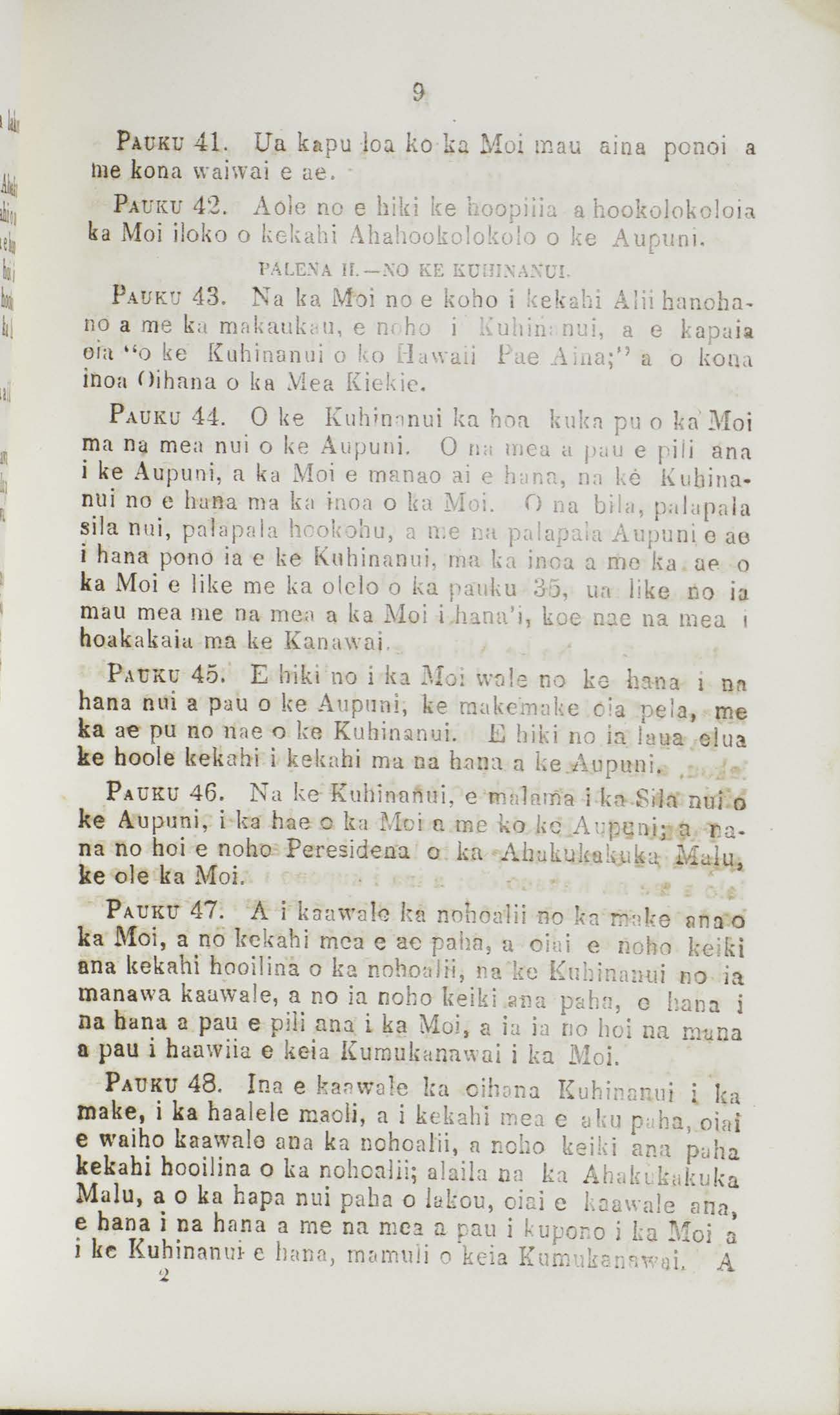
Kumukanawai1852_Page_09_Image_0001
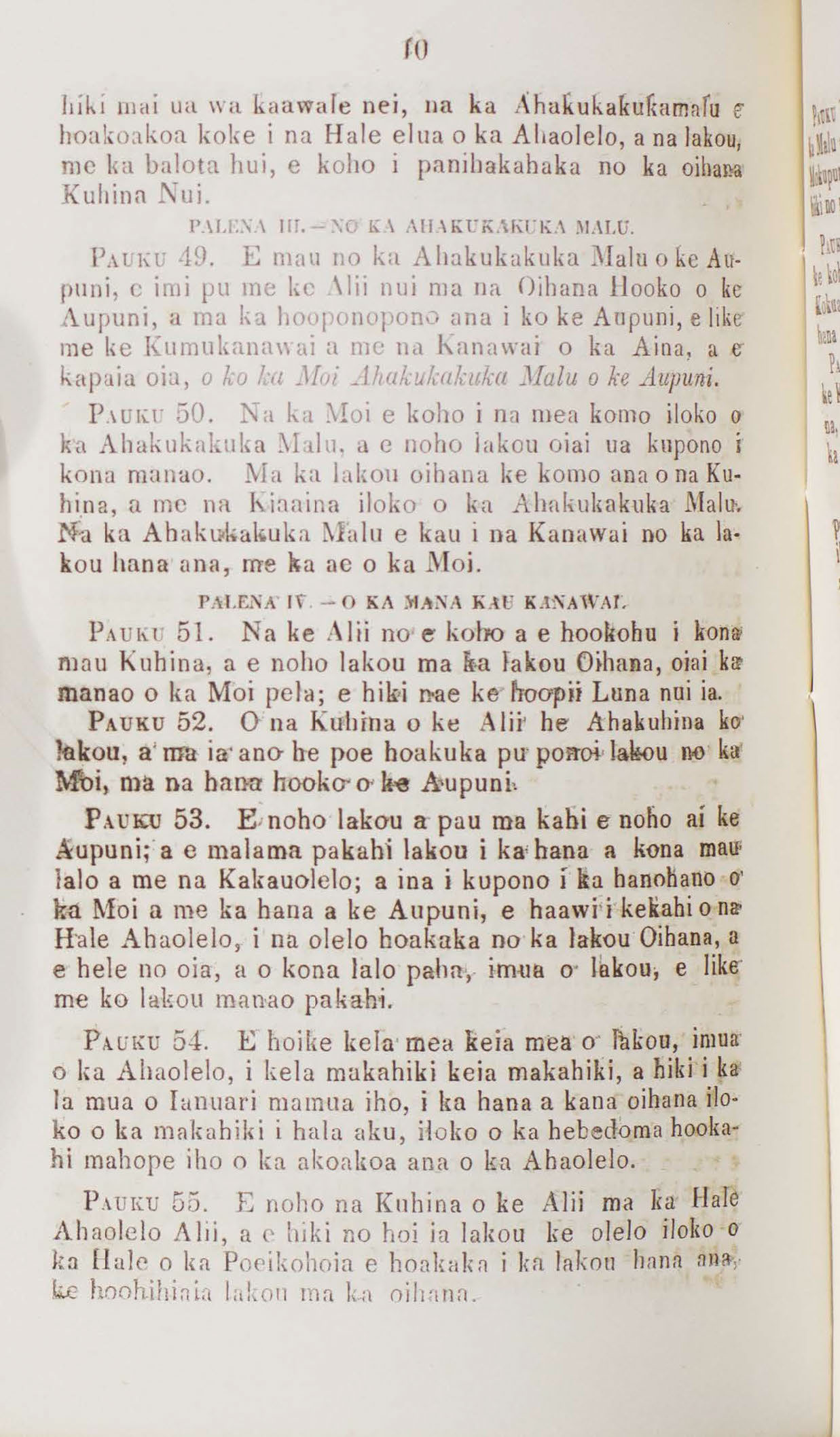
Kumukanawai1852_Page_10_Image_0001
Kumukanawai1852_Page_11_Image_0001
Kumukanawai1852_Page_12_Image_0001
Kumukanawai1852_Page_13_Image_0001
Kumukanawai1852_Page_14_Image_0001
Kumukanawai1852_Page_15_Image_0001
Kumukanawai1852_Page_16_Image_0001
Kumukanawai1852_Page_17_Image_0001
Kumukanawai1852_Page_18_Image_0001
Kumukanawai1852_Page_01_Image_0001
Kumukanawai1852_Page_02_Image_0001
Kumukanawai1852_Page_03_Image_0001
Kumukanawai1852_Page_04_Image_0001
Kumukanawai1852_Page_05_Image_0001
Kumukanawai1852_Page_06_Image_0001
Kumukanawai1852_Page_07_Image_0001
Kumukanawai1852_Page_08_Image_0001
Kumukanawai1852_Page_09_Image_0001
Kumukanawai1852_Page_10_Image_0001
Kumukanawai1852_Page_11_Image_0001
Kumukanawai1852_Page_12_Image_0001
Kumukanawai1852_Page_13_Image_0001
Kumukanawai1852_Page_14_Image_0001
Kumukanawai1852_Page_15_Image_0001
Kumukanawai1852_Page_16_Image_0001
Kumukanawai1852_Page_17_Image_0001
Kumukanawai1852_Page_18_Image_0001

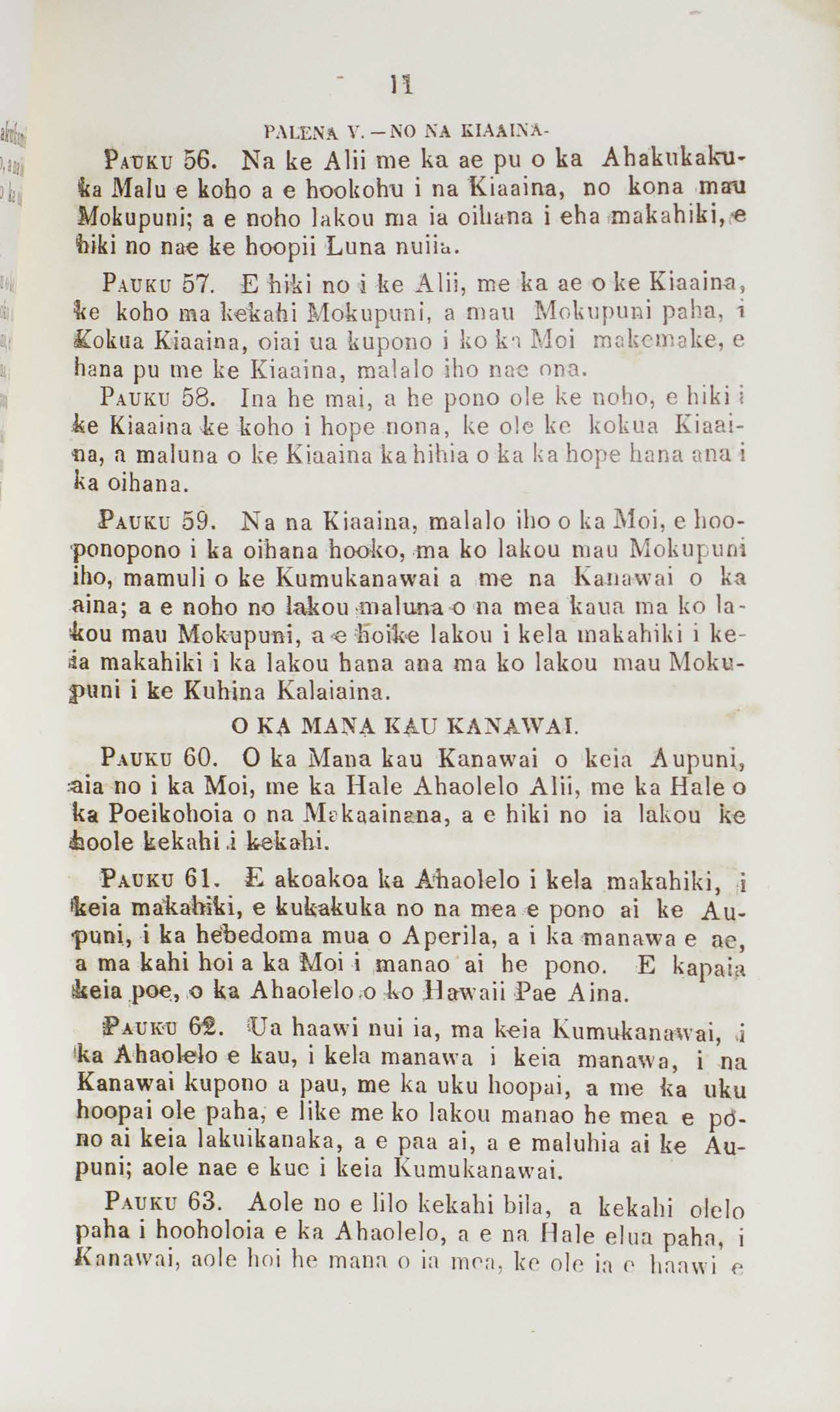
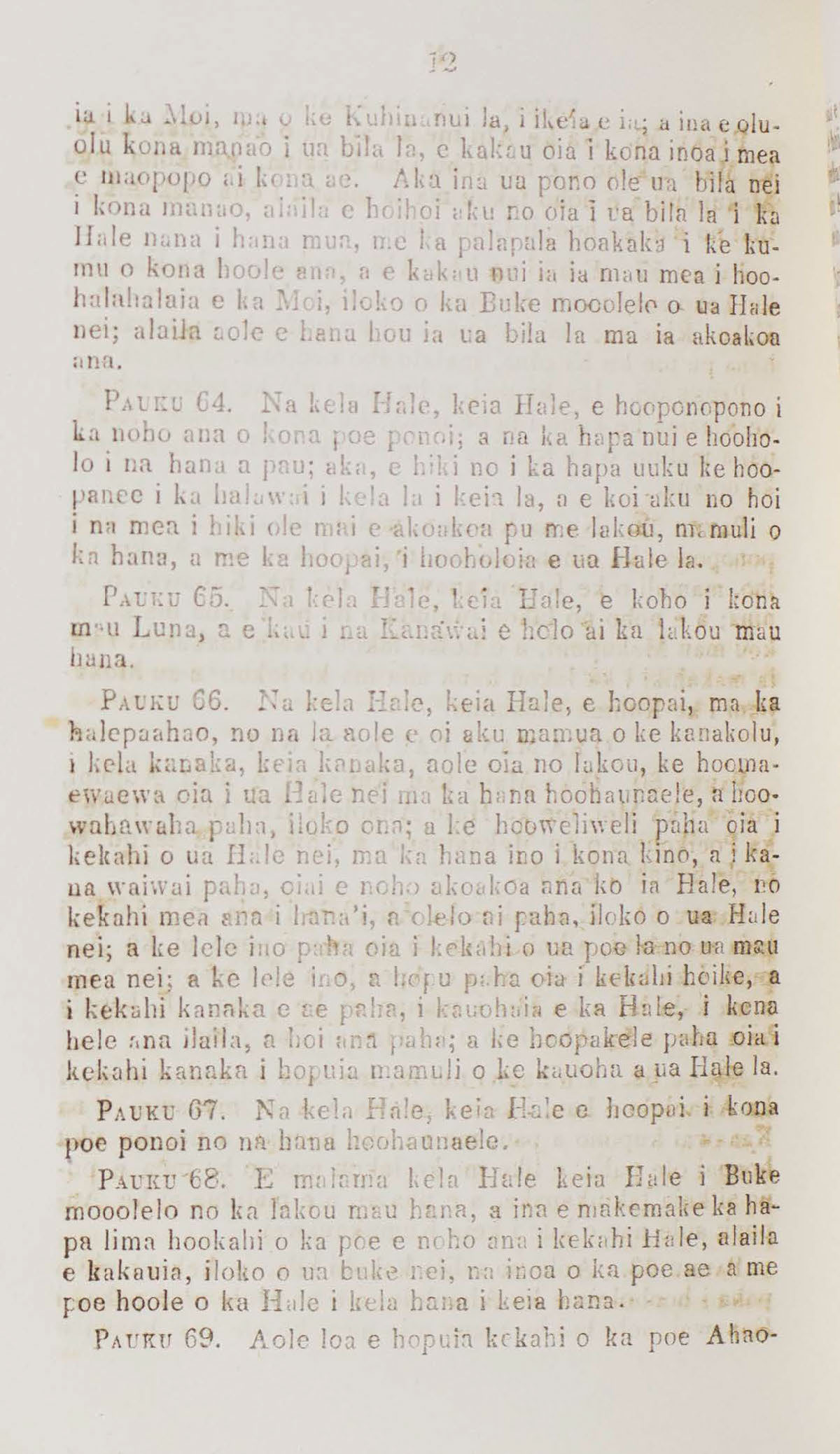
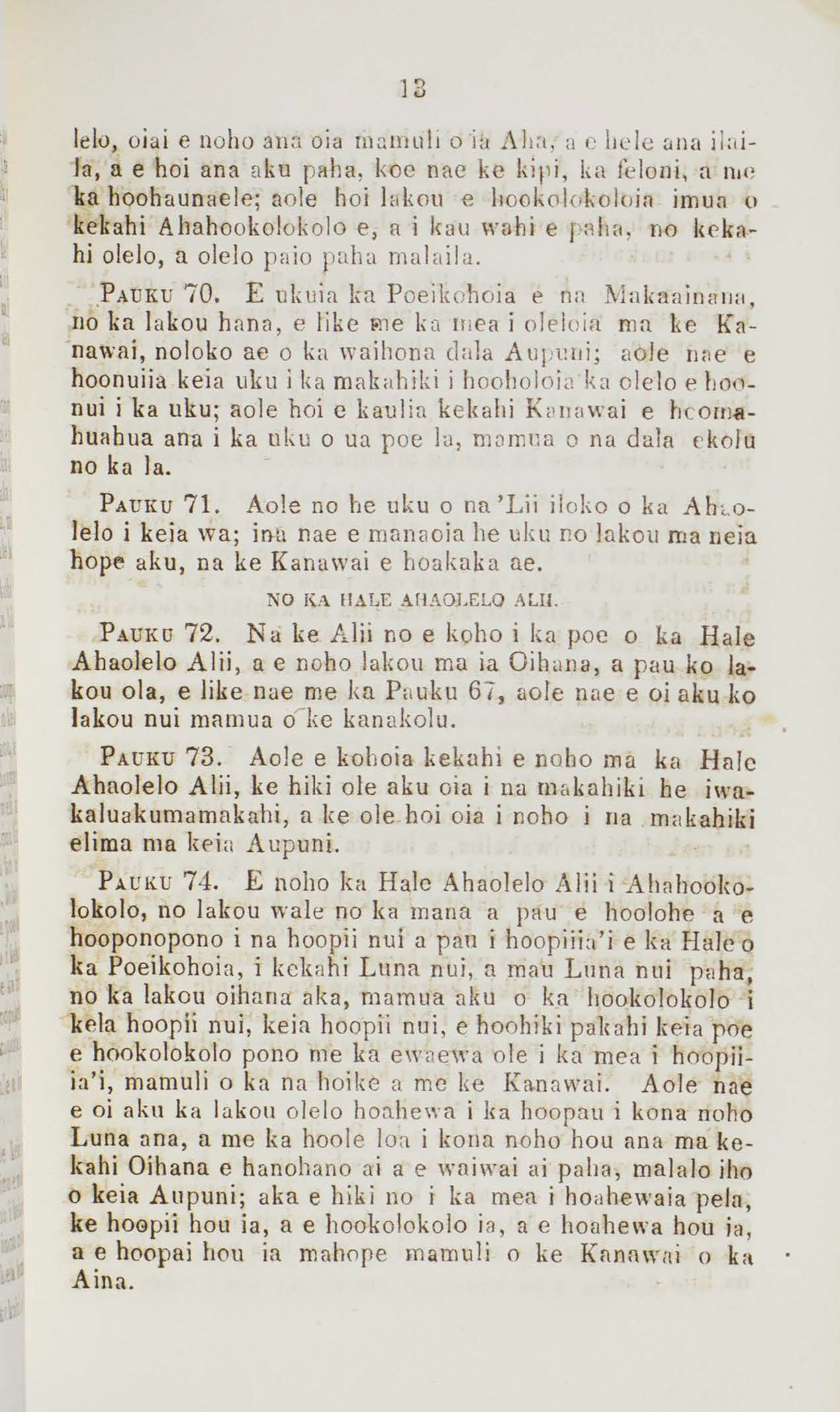
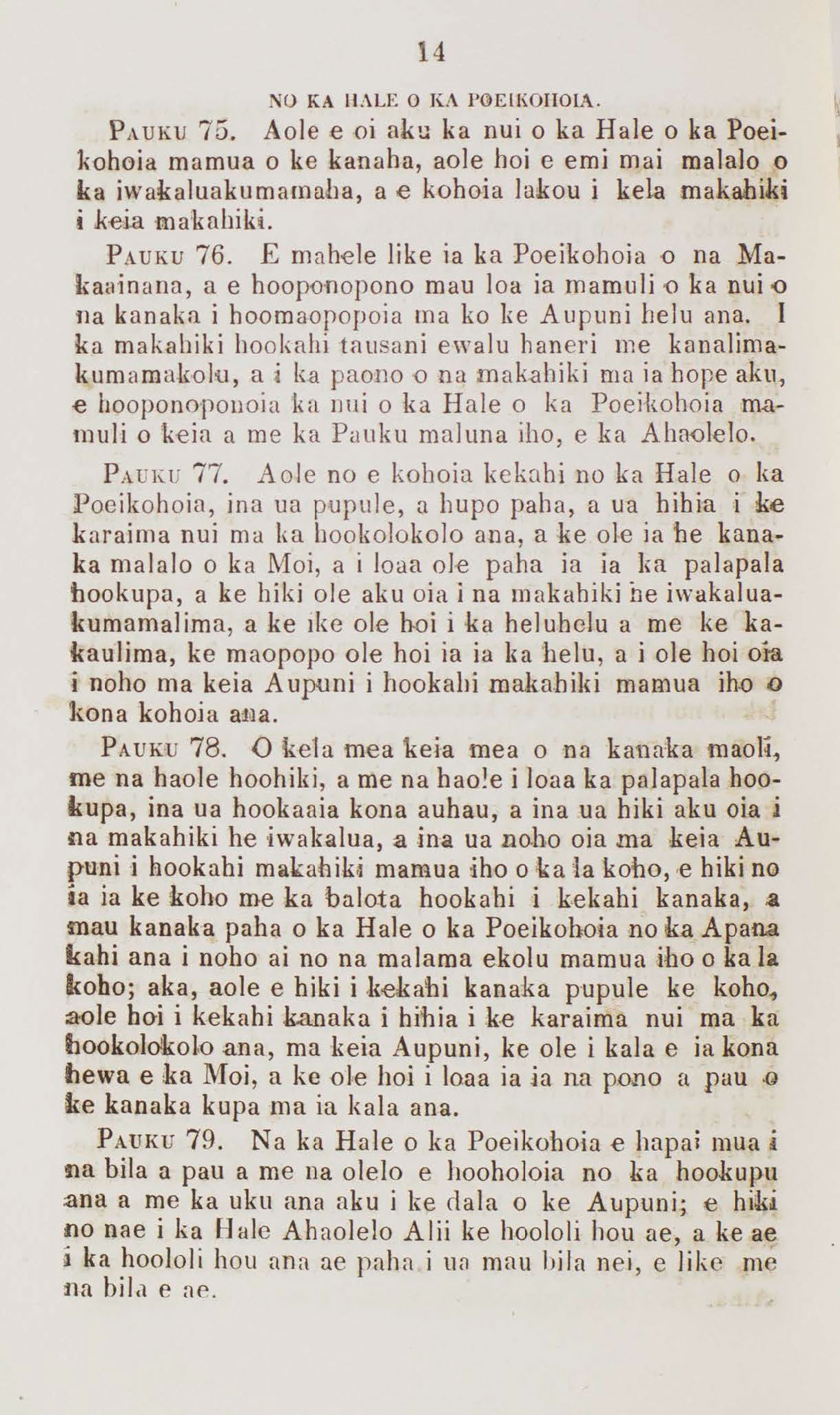
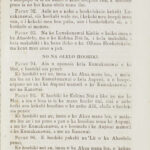
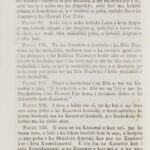
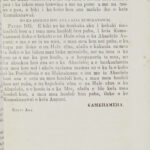
Digital scans of Kumukanawai i Haawiia e Ka Moi, 1852 (Constitution of 1852, signed by King Kamehameha III) courtesy of Punawaiola.org.

The Superior Court held original jurisdiction over legal actions affecting government officials, foreign ambassadors and resident consuls and held appellate jurisdiction on all civil and criminal matters. Decisions of the Superior Court were subject to appeal to the Supreme Court. 

The Supreme Court established by the Constitution of 1840 was abolished in December 1852 and reestablishment by an 1853 act which mandated the transfer of the civil and criminal jurisdiction from the Superior Court to the Supreme Court. 

An 1853 act relating to the Judiciary Department empowered the Chief Justice to grant divorces, to hear and determine probate, bankruptcy, admiralty, equity matters, and to decree the foreclosure of mortgages. With this act, the legal, civil, and criminal jurisdictions of the Superior Court of Law and Equity was transferred to the Supreme Court. This allowed the Supreme Court to to have original jurisdiction in almost all legal matters on the island of Oʻahu.

By 1864, the First Circuit Court on Oʻahu was gradually phased out of existence and its judicial powers were transferred to the Supreme Court. Appellate jurisdictions in chambers remained as a circuit court function and such proceedings were referred to as Intermediary Court. Appeals from the District Court of the First Circuit were heard in Intermediary Court. In 1874, the intermediary function of the First Circuit Court judge was transferred to the Supreme Court which now held both original and appellate jurisdictions for the island of Oahu. In 1892, the functions of the Supreme Court were restricted to those of an appellate court. Its functions as a circuit court were assumed by the reestablished First Circuit Court.

Honolulu Courthouse: 1852-1874

By the 1870s, Honolulu boasted a population of 15,000 including over 5,000 foreign settlers from North America, Europe, and Asia. Sugar plantations replaced whaling as the primary industry. Downtown Honolulu extended from makai, from the Honolulu Harbor, to mauka, as residential neighborhoods were being built in nearby valleys. The (Royal) Hawaiian Hotel opened a branch on Waikiki Beach, signifying the beginnings of Hawaii as a global tourist destination. 

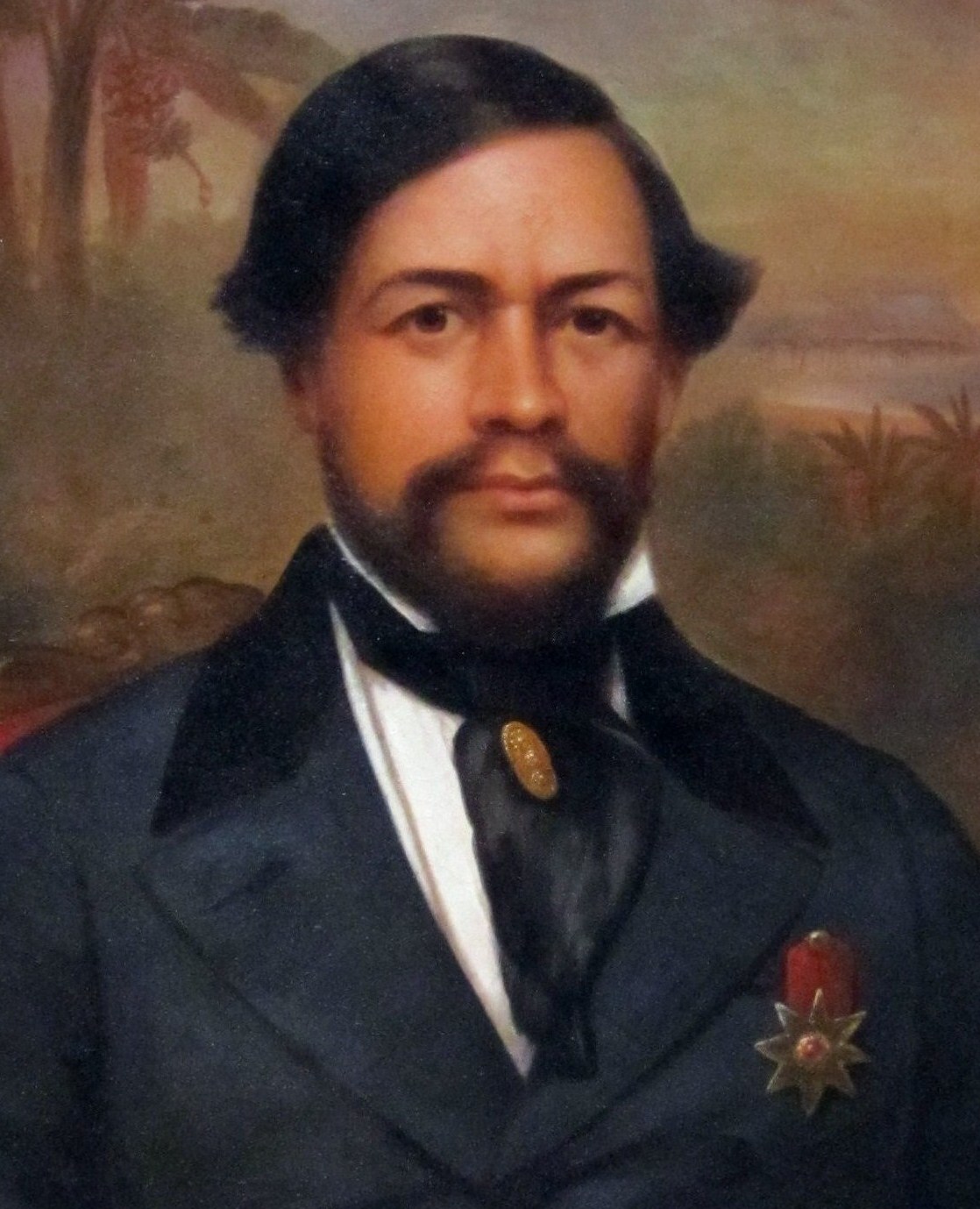
New land laws and changing economics forced many Hawaiians out of rural, agricultural-based life into the city. Kanaka Maoli (Native Hawaiian) populations decreased rapidly due to foreign disease and relentless change. For those of influence, a new social lifestyle emerged under the reign of King Alexander Liholiho (r. 1855-1863), titled Moi Kamehameha IV.

The rapid growth of Honolulu between 1860 and 1870 raised many uncertainties. Who would control Hawaii and the future of the Hawaiian Kingdom? As the center of national life, the destiny of the Hawaiian Islands was firmly intertwined with the destiny of its capital, Honolulu.

Old Honolulu Courthouse (Hawaii State Archives, reference no. PPWD-1-7-012)

Model of Honolulu Courthouse c. 1850, donated to the Judiciary History Center by AMFAC Inc. – the company that operated on the site of the Courthouse after its disuse. 

Juror’s chair made of bamboo, may have been used in the Honolulu Courthouse from 1852 to 1874. Gifted to the Judiciary History Center from the Hawaiian Historical Society. 

Constructing Aliiolani Hale

Built of coral blocks and wood, the Honolulu Courthouse, completed in 1852, accommodated judicial operations of the young nation and served as a reception hall for diplomatic ceremonies and social functions. By the late 1860s, the need for more government infrastructure arose. In 1866, the Kingdom Legislature appropriated funds for the construction of a new royal palace, as the original, built in 1843, fell into disrepair.

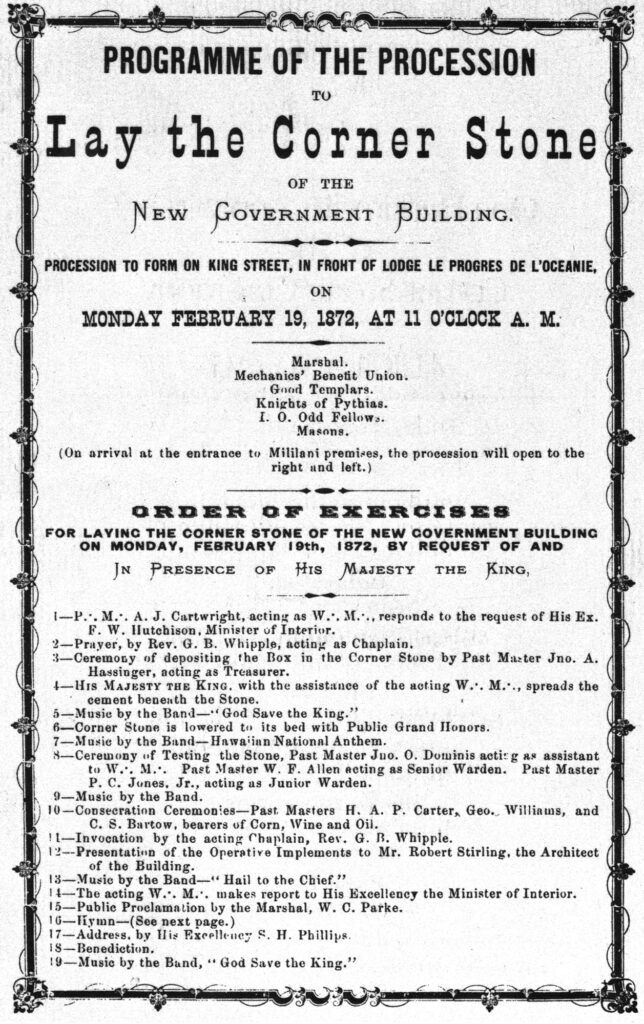
Two sets of palace plans designed by Australian architect Thomas Rowe arrived to Honolulu in December 1871. By then, King Kamehameha V and the Legislature determined the construction of a government building was higher priority. The Kingdom’s Public Works Department adapted one of the palace plans for the new civic site. On February 19, 1872, ground was broken and Kamehameha V laid the cornerstone for the new capitol. Kamehameha V passed away on December 11, 1872. The construction of Aliiolani Hale continued under King Lunalilo and after his passing on February 3, 1874.

The old Honolulu Courthouse supported the Judiciary and other civic operations throughout the construction of Aliiolani Hale, until February 12, 1874. After the contentious election of King Kalakaua over Queen Emma, riots broke out and the Honolulu Courthouse was severely damaged. 

Concrete blocks were a relatively new building material to Hawaii.  Two Australian stonemasons aided Superintendent Stirling, of the Public Works Department, on the making of the massive concrete pillars and stones, and their placement at the building site. Inmates from Oahu Prison provided additional workforce for Aliiolani Hale’s construction.

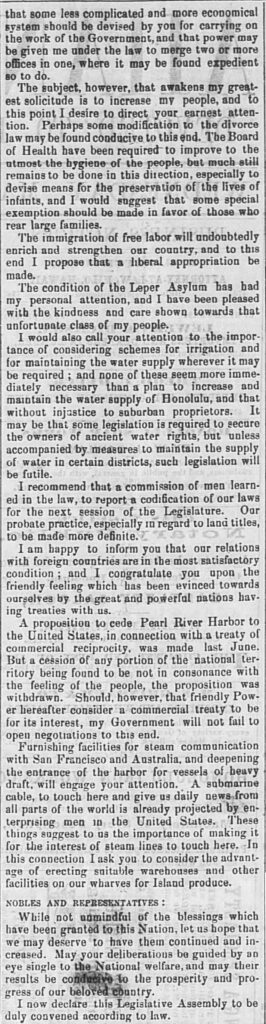
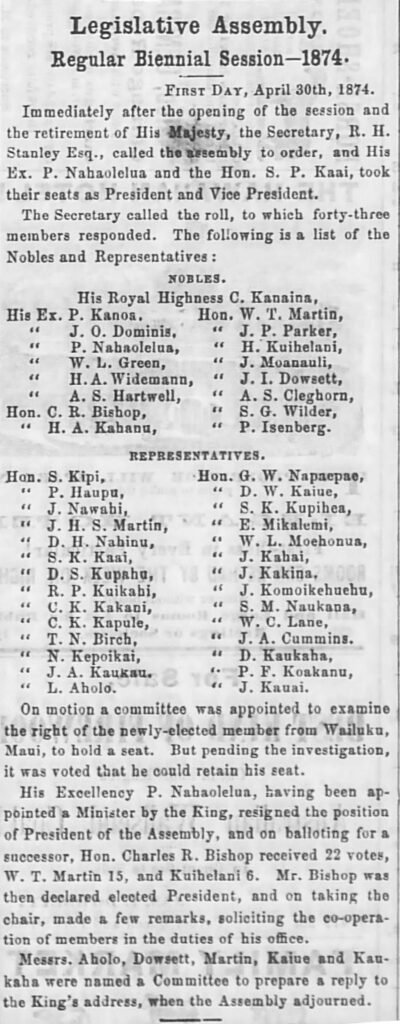
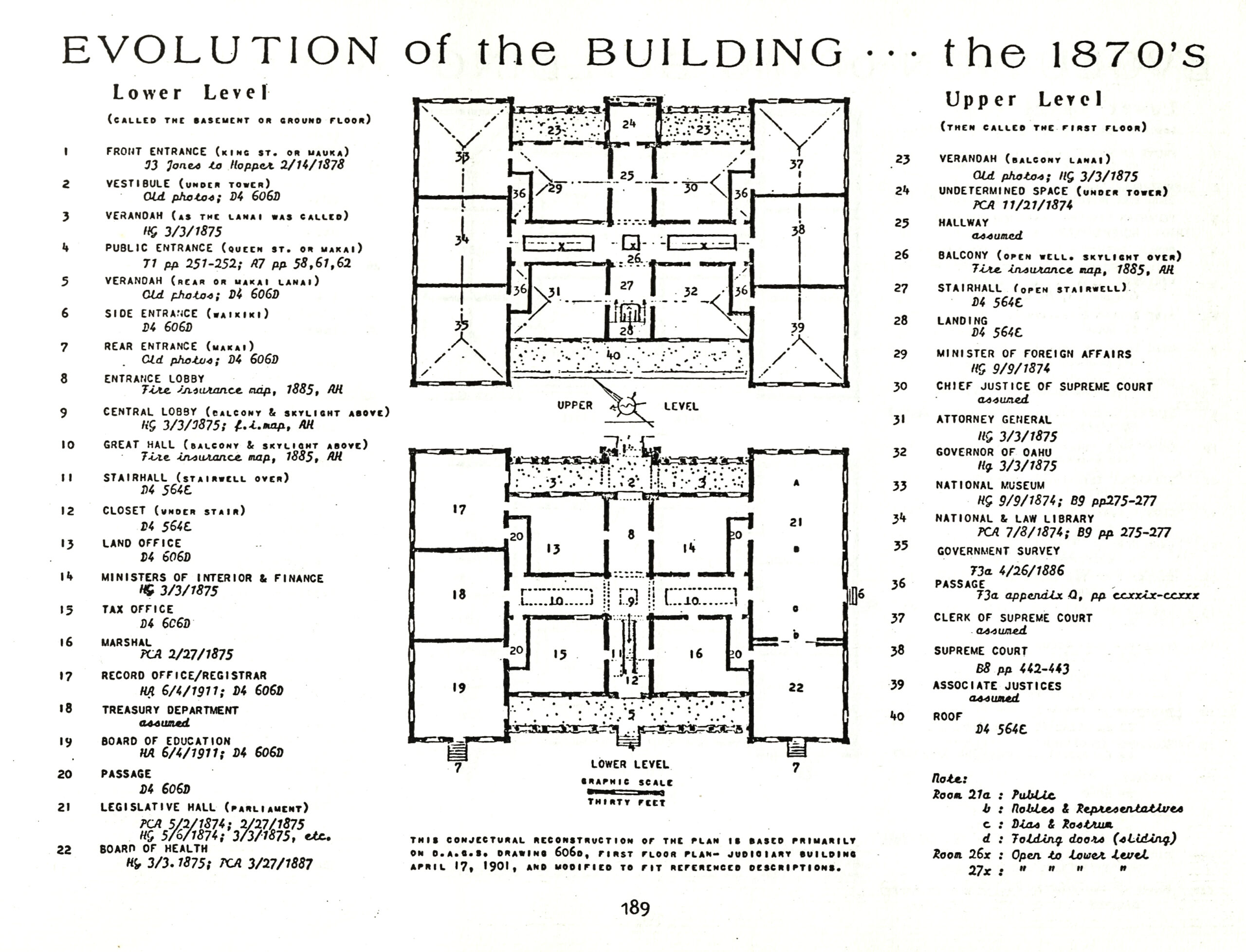
King Kalakaua formally opened Aliiolani Hale on April 30, 1874 for the First Legislative Session. He named it the “House of Heavenly Kings” in honor of one of the names of Kamehameha V. 

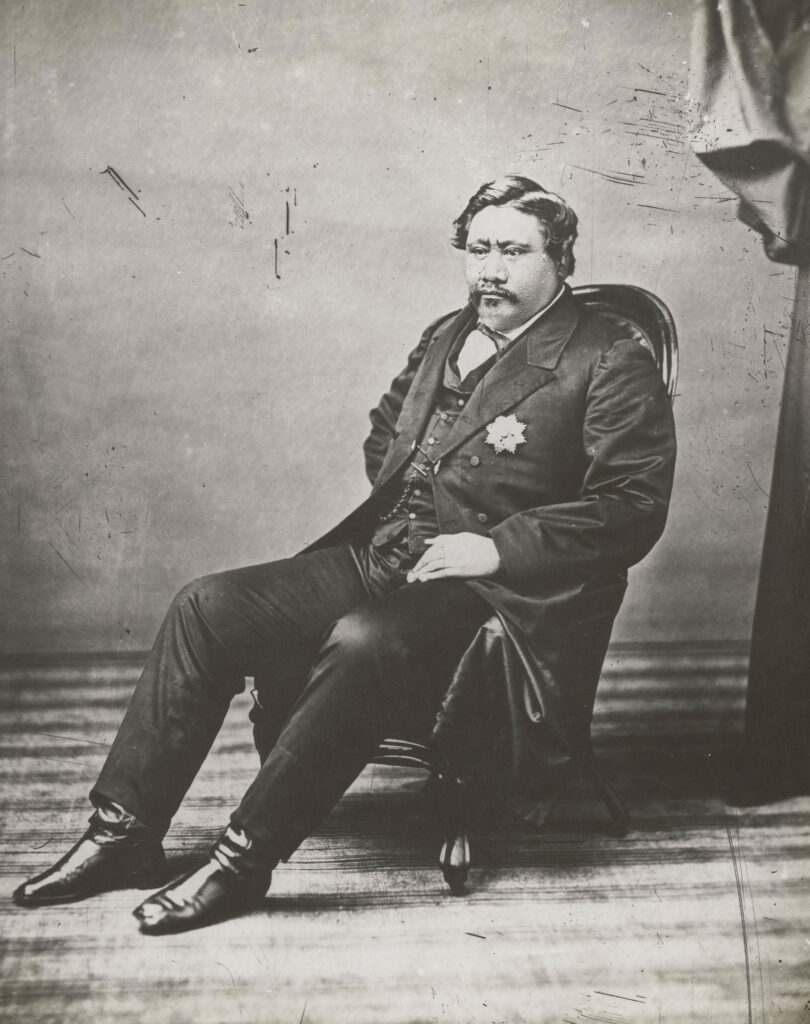
King Kamehameha V (Hawaii State Archives, reference no.__)
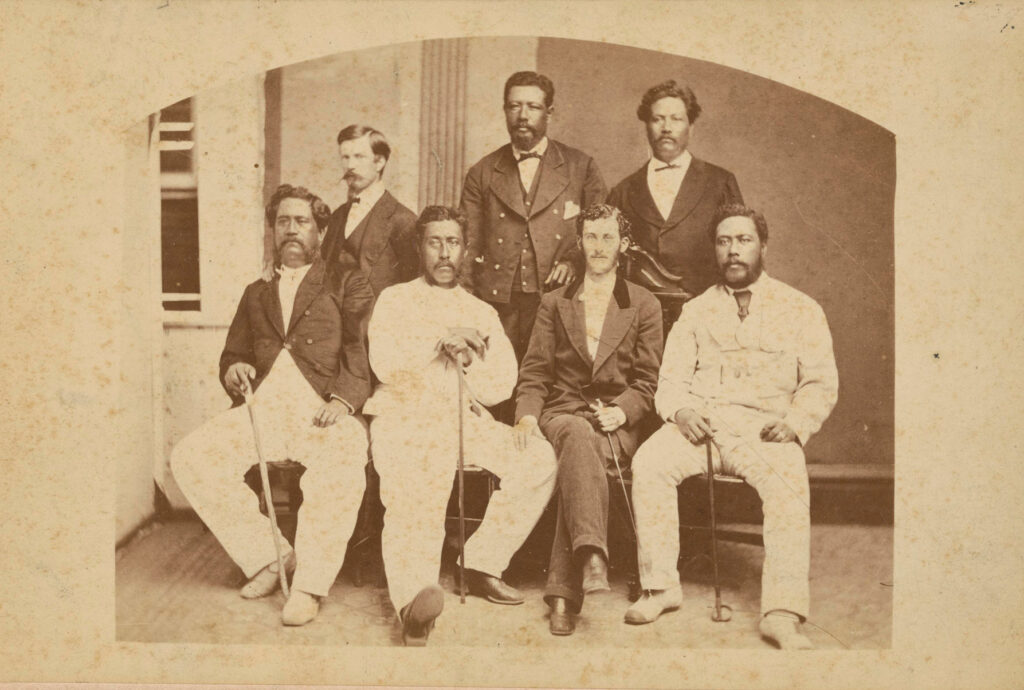
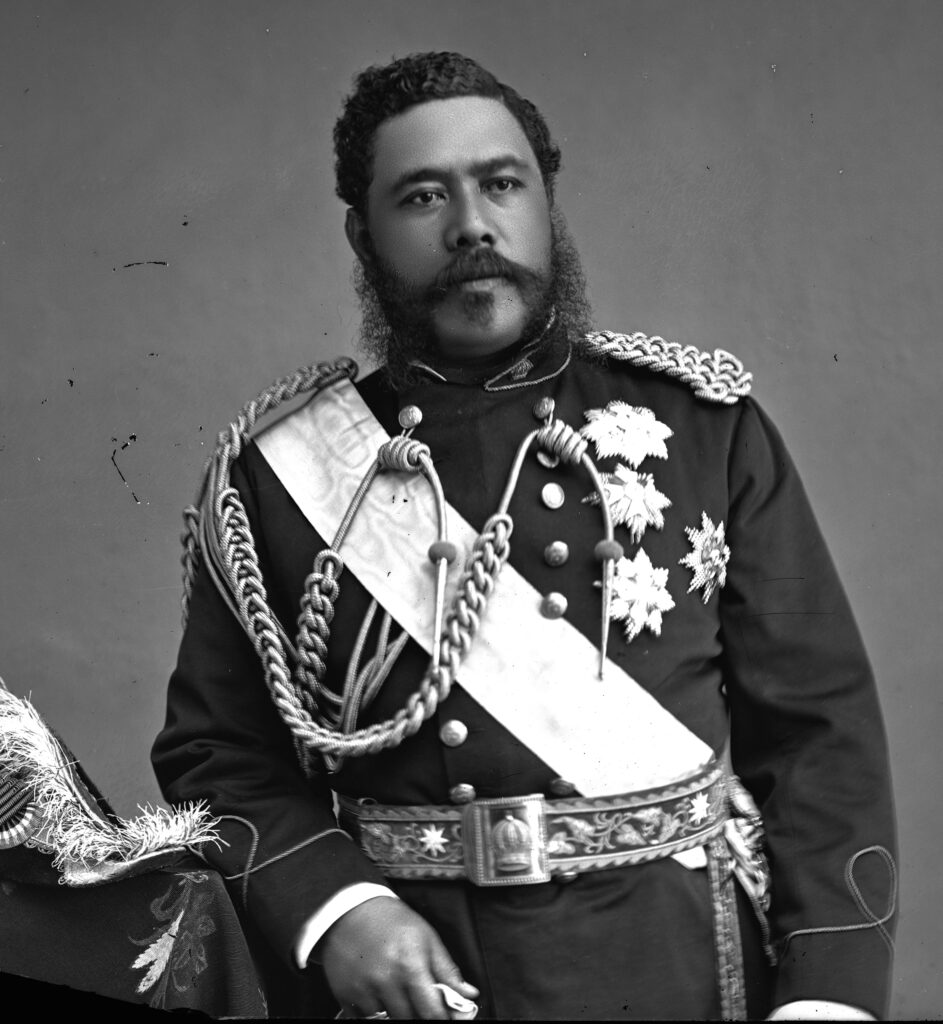
Seated (L to R): Major Moehunua, William C. Lunalilo, Charles W. Stoddard, David Kalakaua; Standing (L to R): Dave McKinley (?), J. J. Kekaulahao (?), Fred K. Beckley. c. 1872 (Photo courtesy of Hawaii State Archives, reference no. PPWD-16-2-006)

King Kalakaua Opens Aliiolani Hale: April 30, 1874

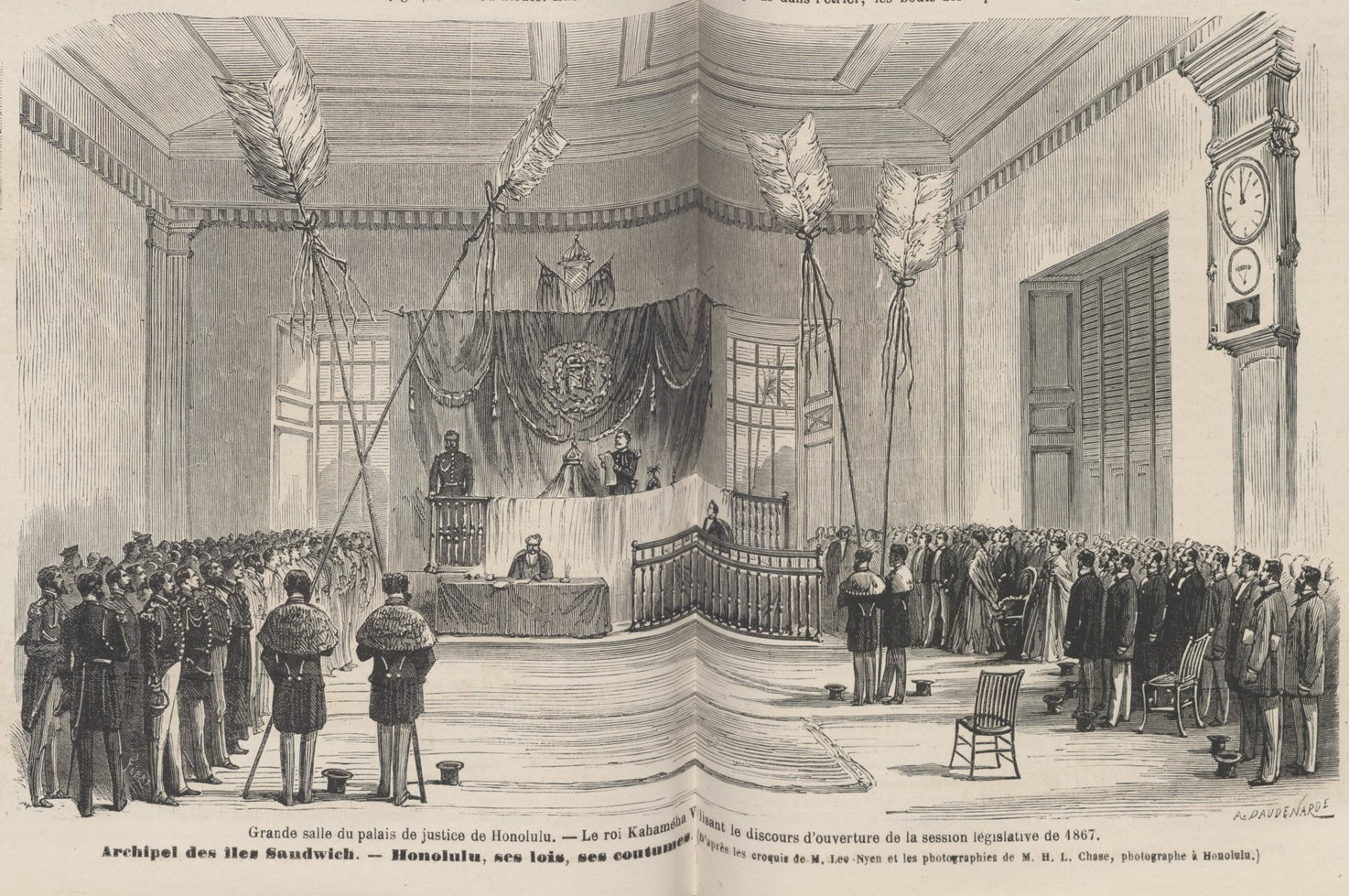
Caption reads: "Great Hall of the Honolulu Courthouse. King Kamehameha V reading the opening speech of the legislative session of 1867. Sandwich Islands Archipelago. Honolulu, its laws, its customs." (Le Monde illustré, 30 novembre 1867, page 336)
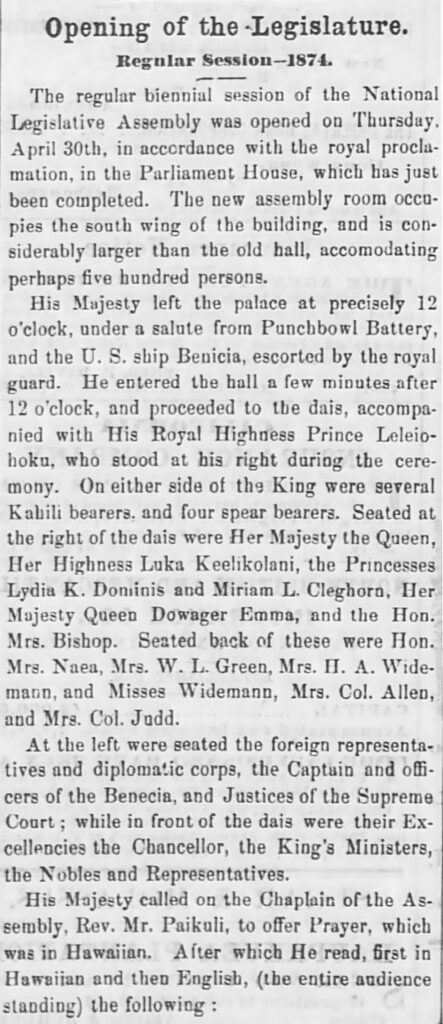
The Hawaiian Gazette 
May 6, 1874 · Page 2
The Hawaiian Gazette May 6, 1874 · Page 2
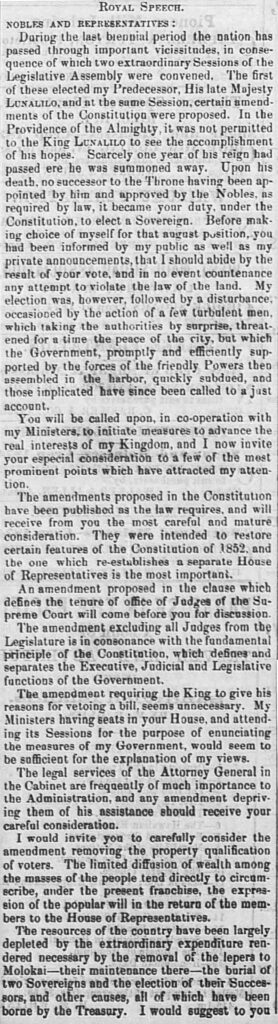
The Hawaiian Gazette 
May 6, 1874 · Page 2
The Hawaiian Gazette May 6, 1874 · Page 2
The Hawaiian Gazette 
May 6, 1874 · Page 2
The Hawaiian Gazette May 6, 1874 · Page 2
The Hawaiian Gazette 
May 6, 1874 · Page 2
The Hawaiian Gazette May 6, 1874 · Page 2
The Hawaiian Gazette 
May 6, 1874 · Page 2
The Hawaiian Gazette May 6, 1874 · Page 2
The Hawaiian Gazette 
May 6, 1874 · Page 2
The Hawaiian Gazette May 6, 1874 · Page 2
The Hawaiian Gazette 
May 6, 1874 · Page 2
The Hawaiian Gazette May 6, 1874 · Page 2
The Hawaiian Gazette 
May 6, 1874 · Page 2
The Hawaiian Gazette May 6, 1874 · Page 2

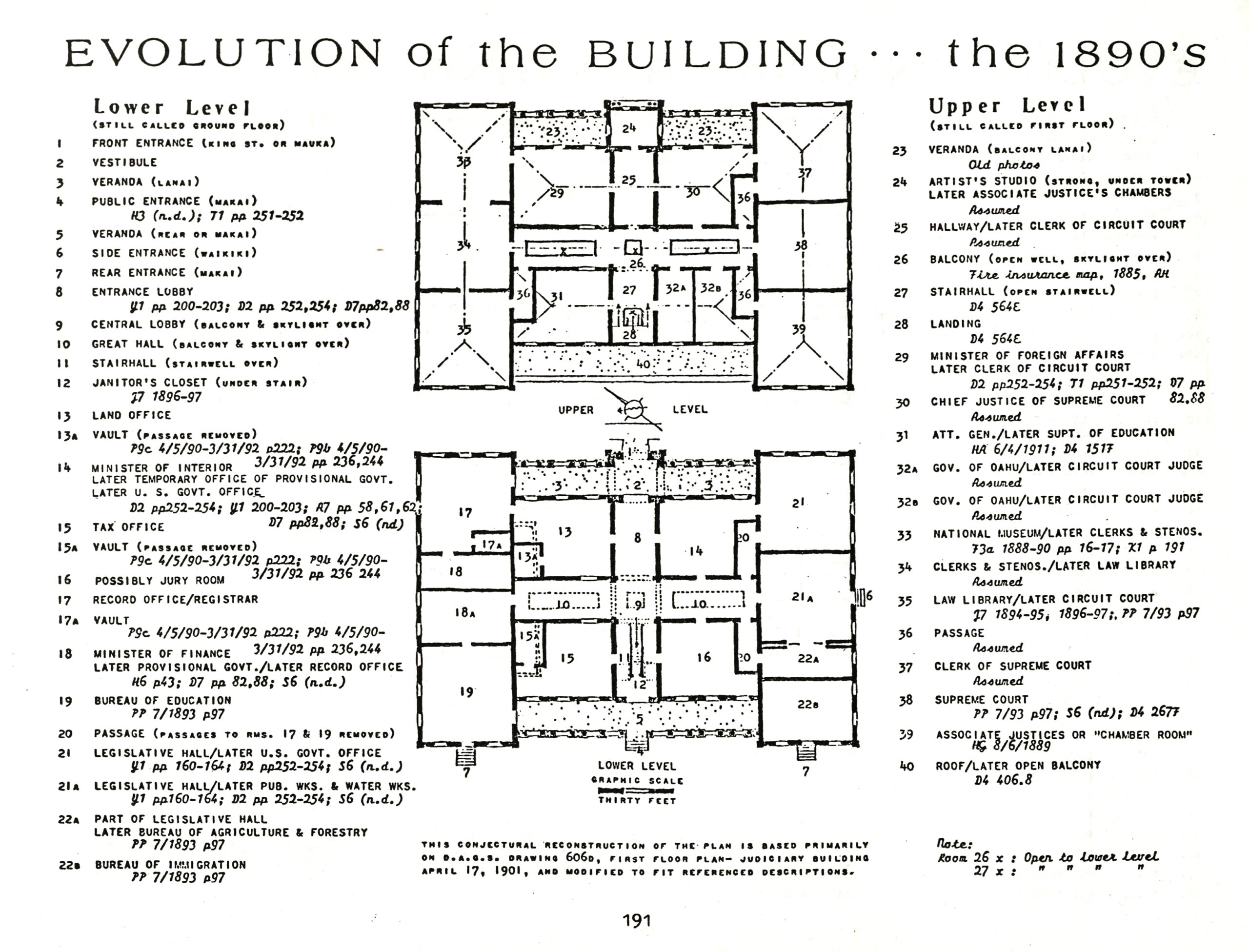
Designated as the home of the Legislature, in May of 1874, the Judiciary Department also moved into the new government building. In July, the Law Library took up residence on the second floor with “3,000 law books and 2,000 scientific books.” By September, Aliiolani Hale housed the first National Museum in the Hawaiian Kingdom. An appeal made to the public requested the donation of artifacts: “Old Hawaiian ornaments and utensils, Hawaiian minerals and preserved zoological specimens are particularly desired.” 

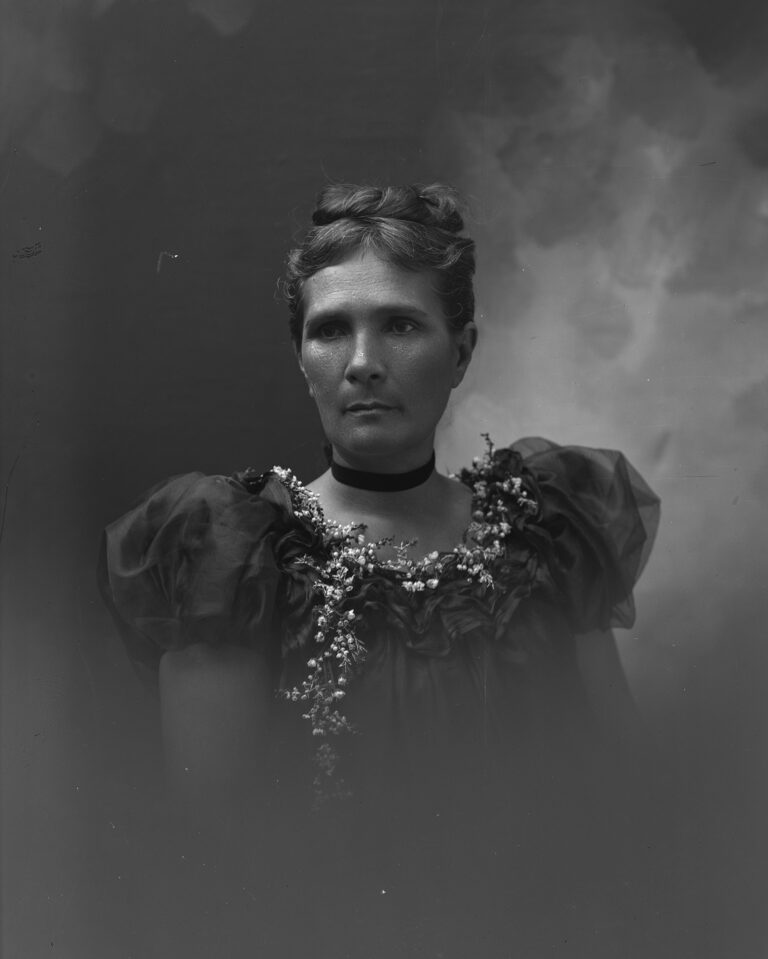
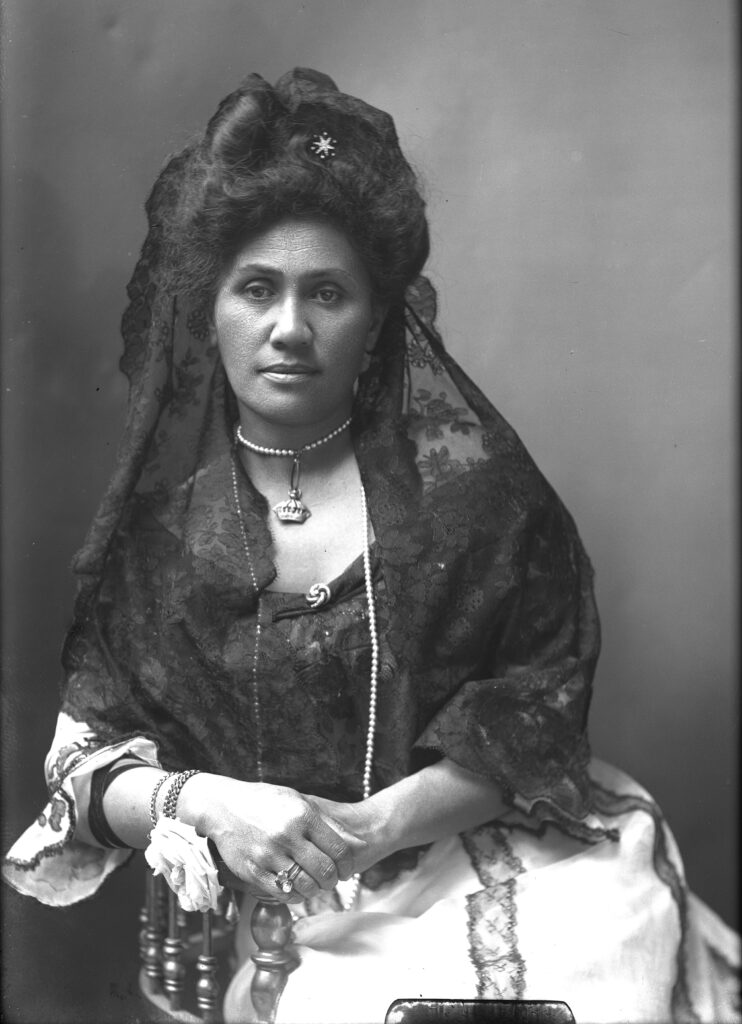
Walter Murray Gibson appointed Emma Kailikapuolono Metcalf Beckley Nakuina as the female curator of the Hawaiian National Museum and Government Library, titled Curatrix. 

After the downfall of the Gibson administration in 1887, funding to the museum was cut and the collections were later incorporated into the Bernice Pauahi Bishop Museum.


Hawaii's First National Museum

In 1892, Nakuina was appointed Commissioner of Private Ways and Water Rights for the district of Kona, on the island of Oahu, corresponding to the capital city of Honolulu and its surrounding areas. Nakuina was chosen for this post specifically because of her knowledge of traditional water rights, and she was tasked with the duties of resolving water usage and rights issues. She held this position from 1892 to 1907, at which point the powers were reassigned to the circuit courts. During her tenure, she worked under the monarchy until the 1893 overthrow of the Kingdom of Hawaii. In order to remain in her governmental post, she took the oath of allegiance to the subsequent regimes of the Provisional Government, the Republic and the Territory of Hawaii. Although she never held the formal title, she is often regarded as Hawaii’s first female judge.

In March 1893, she became a member of Hui Aloha ʻĀina o Na Wahine (Hawaiian Women’s Patriotic League) or Hui Aloha ʻĀina for Women. This patriotic group was founded shortly after its male counterpart the Hui Aloha ʻĀina for Men to oppose the overthrow and plans to annex the islands to the United States and to support the deposed queen.[17] Nakuina served as interpreter of the organization for a month until a dispute arose between two factions of the group. The rift centered on the wordings to a memorial seeking the restoration of the monarchy to be presented to the United States Commissioner James Henderson Blount who was sent by President Grover Cleveland to investigate the overthrow.

Whereas, we as a nation, have taken our position among the civilized and enlightened nations of the earth, both in respect to capabilities of self-government and in the facilities as we enjoy in our high and common schools in the diffusion of popular intelligence; and whereas, a national museum representing the archaeology, literature, geology, and national history of our kingdom would be but another form of school for the education of our youth, as well as a repository for reference to the scientific world at large; and whereas, every succeeding year is rendering it more difficult to gather from the archives of the past the mementoes and relics of our early existence as a nation, as well as the pre-historic age of these islands. Therefore be it enacted that the board of education be authorized to establish a national museum in some suitable government building or apartment to be provided by the minister of the interior, in which should be collected and preserved such articles illustrating the subjects named.

“Hawaian [sic] Island Exhibit, Main Building,” Centennial Exhibition, Philadelphia, 1876. View looking west. Courtesy Larson Collection, Special Collections Research Center, California State University, Fresno (EXP876.1ab, no. 163).

Hawaiian Exhibits,” Women’s Industries and Centenary Fair, Sydney, 1888. Courtesy Hawaiian Historical Society (Oversize 3728).

“Hawaiian Exhibits,” Women’s Industries and Centenary Fair, Sydney, 1888 (detail). Courtesy State Archives of Hawaii (PP-08).

“Hawaian [sic] Island Exhibit, Main Building,” Centennial Exhibition, Philadelphia, 1876. View looking west. Courtesy Larson Collection, Special Collections Research Center, California State University, Fresno (EXP876.1ab, no. 163).

Hawaiian Exhibits,” Women’s Industries and Centenary Fair, Sydney, 1888. Courtesy Hawaiian Historical Society (Oversize 3728).

“Hawaiian Exhibits,” Women’s Industries and Centenary Fair, Sydney, 1888 (detail). Courtesy State Archives of Hawaii (PP-08).

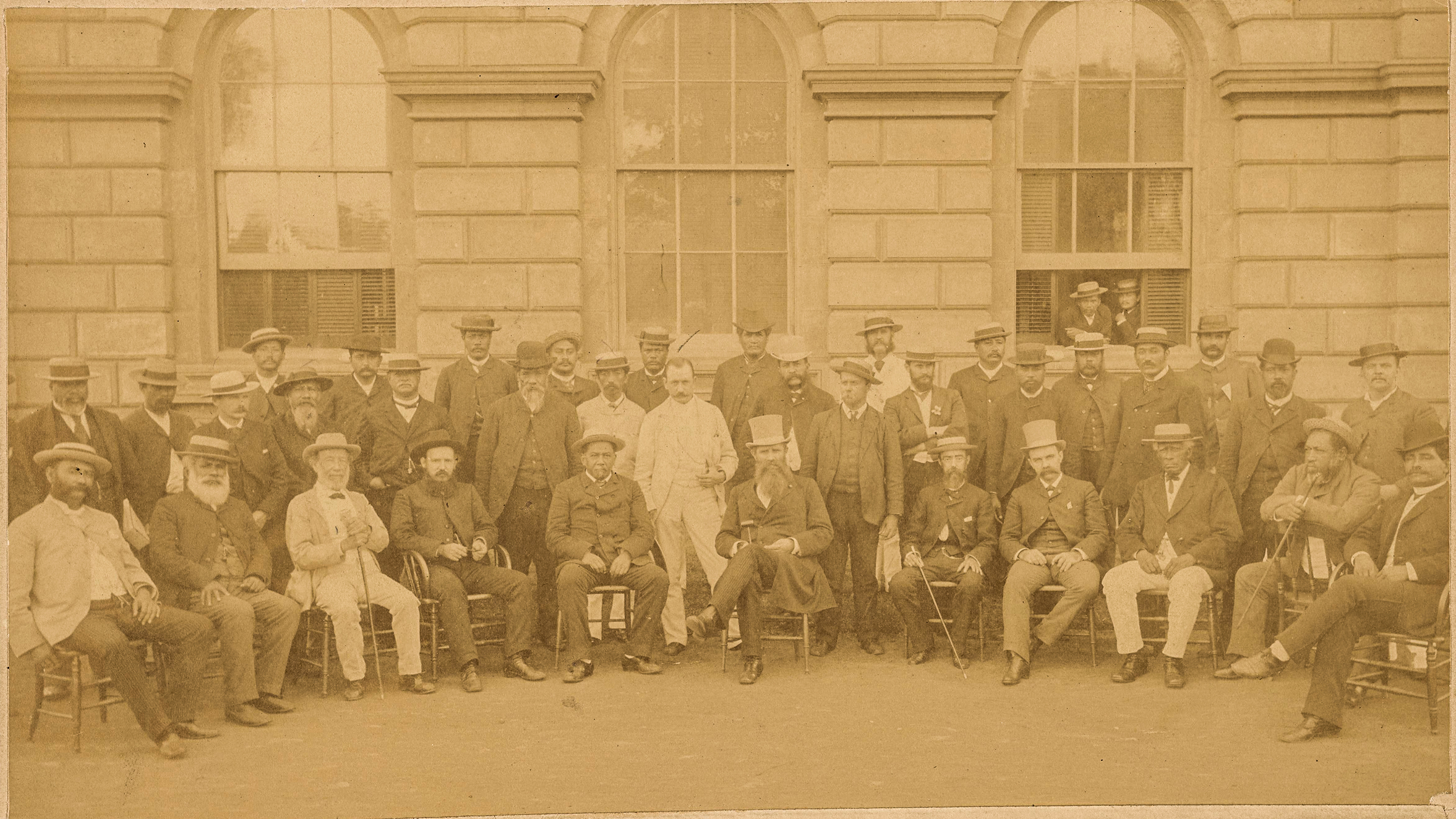
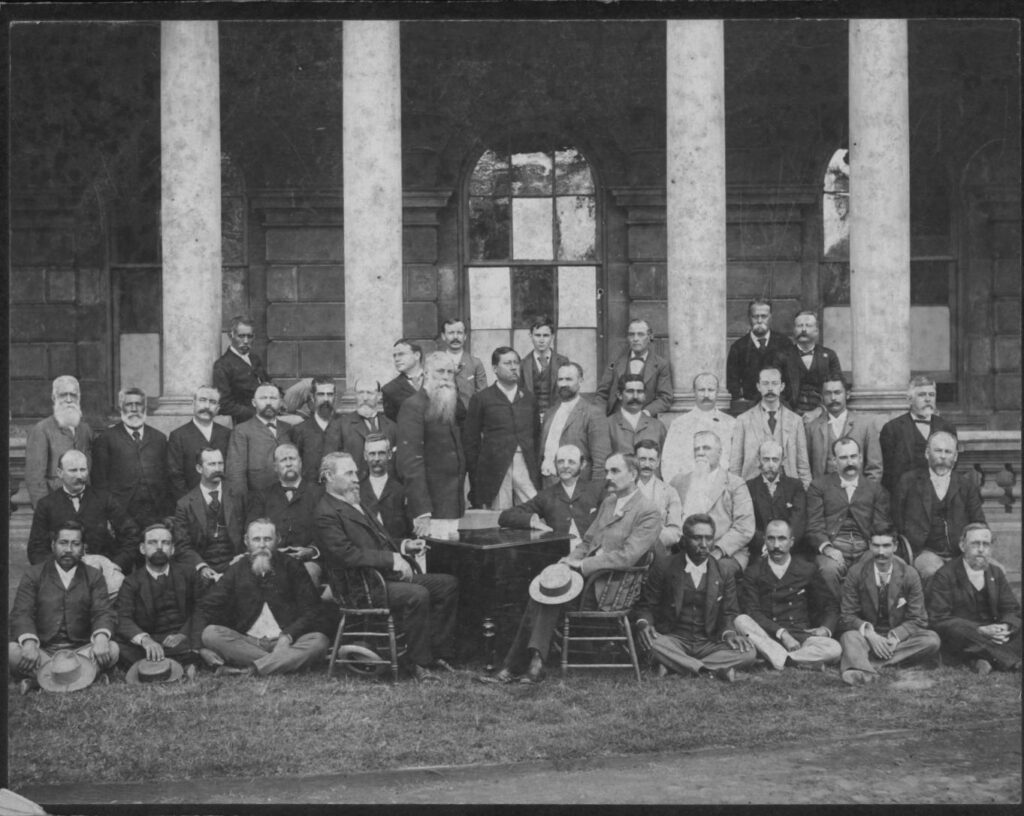
1886 Legislative Assembly of the Hawaiian Kingdom outside Aliiolani Hale; From the front: 1. President J. S. Walker; 2. Vice President L. Aholo; 3. His Ex. P.P. Kanoa, Minister of Finance; 4. His Ex. Attorney General J.T. Dare; 5. Hon. J. O. Dominis, Nobles; 6. Hon H. Kuihelani, Nobles; 7. Hon. J.S.H. Martin, Nobles; 8. Rep. Fred Heyselden, Honolulu; 9. Rep. Keau, Honolulu; 10. Rep. Baker, Honolulu; 11. Rep. Kaulukou, Hilo; 12. Rep. Pahia, Hilo; 13. Rep. Kaunamanu, Hamakua; 14. Rep. Jas. Wight, M.D., Kohala; 15. Rep. Nahale, North Kona; 16. Rep. Nahinu, South Kona; 17. Rep. Amara, Waialua; 18. Rep. Kaulia, Koolaupoko; 19. Rep. Kaukau, Kaanapali; 20. Rep. Richardson, Wailuku; 21. Rep. Castle, Wailuku; 22. Rep. Dickey, Makawao; 23. Rep. Kaai, Hana; 24. Rep. Thurston, Molokai and Lanai; 25. Rep. Paehaole, Molokai and Lanai; 26. Rep. Kauai, Waimea; 27. Rep. Palohau, Lihue; 28. Secretary E.A. Peltree; 29. Interpreter W. Luther Wilcox; 30. Sergt-at-Arms S.W. Nowlein; 31. Chaplain Rev. Waiamau; 32. Messenger Robert Kalanipoo; 33. "Advertiser" Reporter, W. Taylor; 34. Native Reporter.; Note. - Representatives Aholo and Kaulukou having been appointed to Ministerial positions resigned their seats October 14, 1886. (Hawaii State Archives, reference no, PPWD-4-2-006)

Excerpts from Aliiolani Hale: A Century of Growth and Change, 

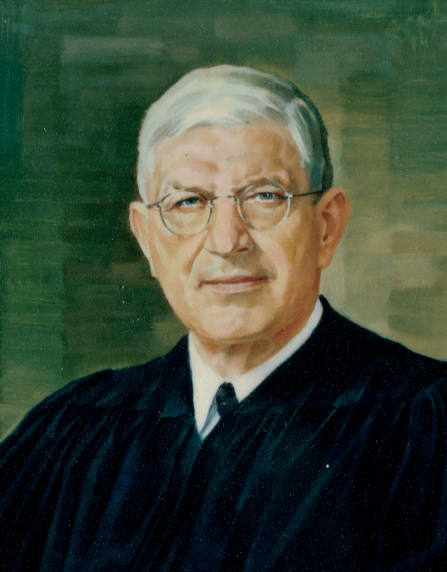
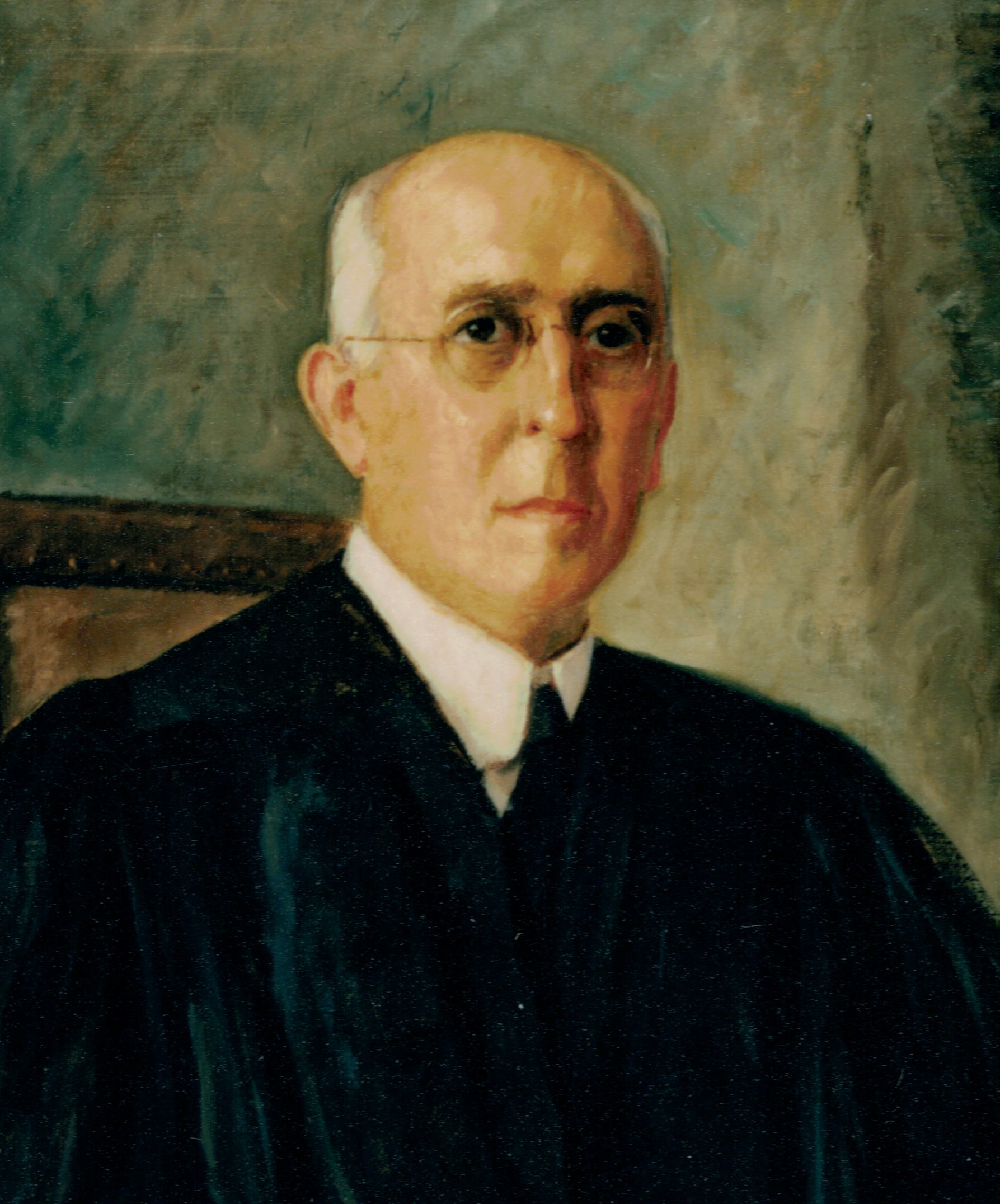
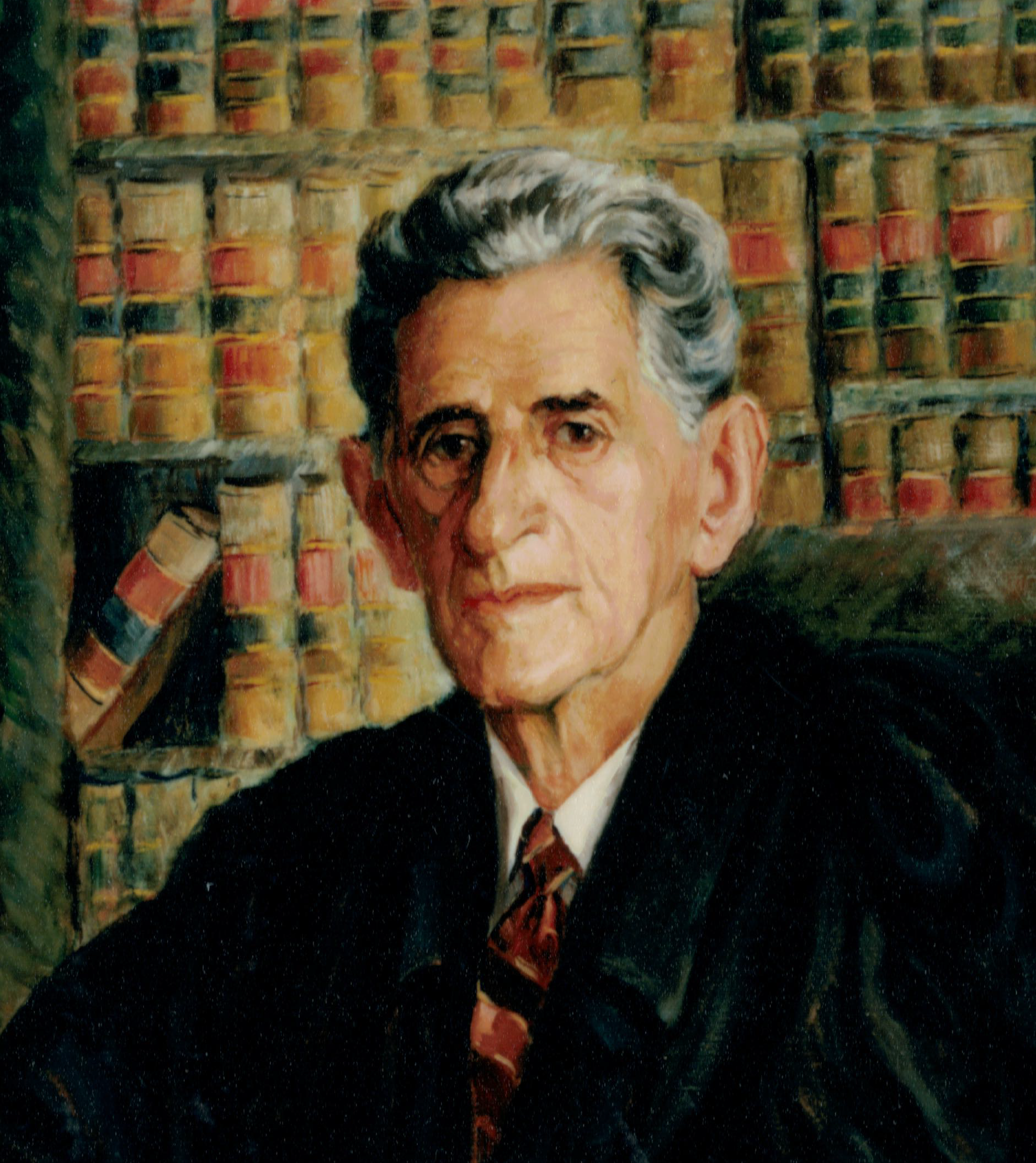
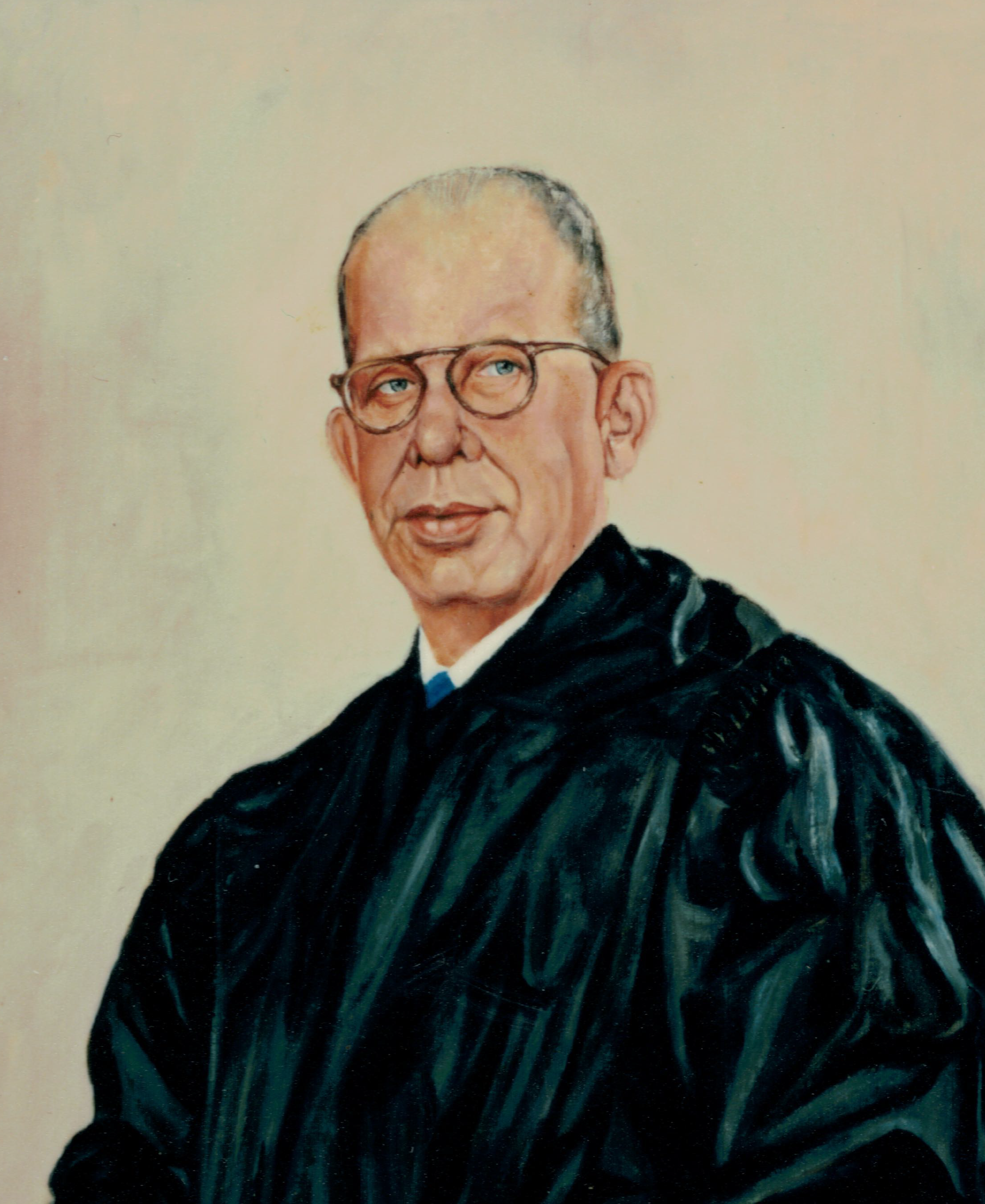
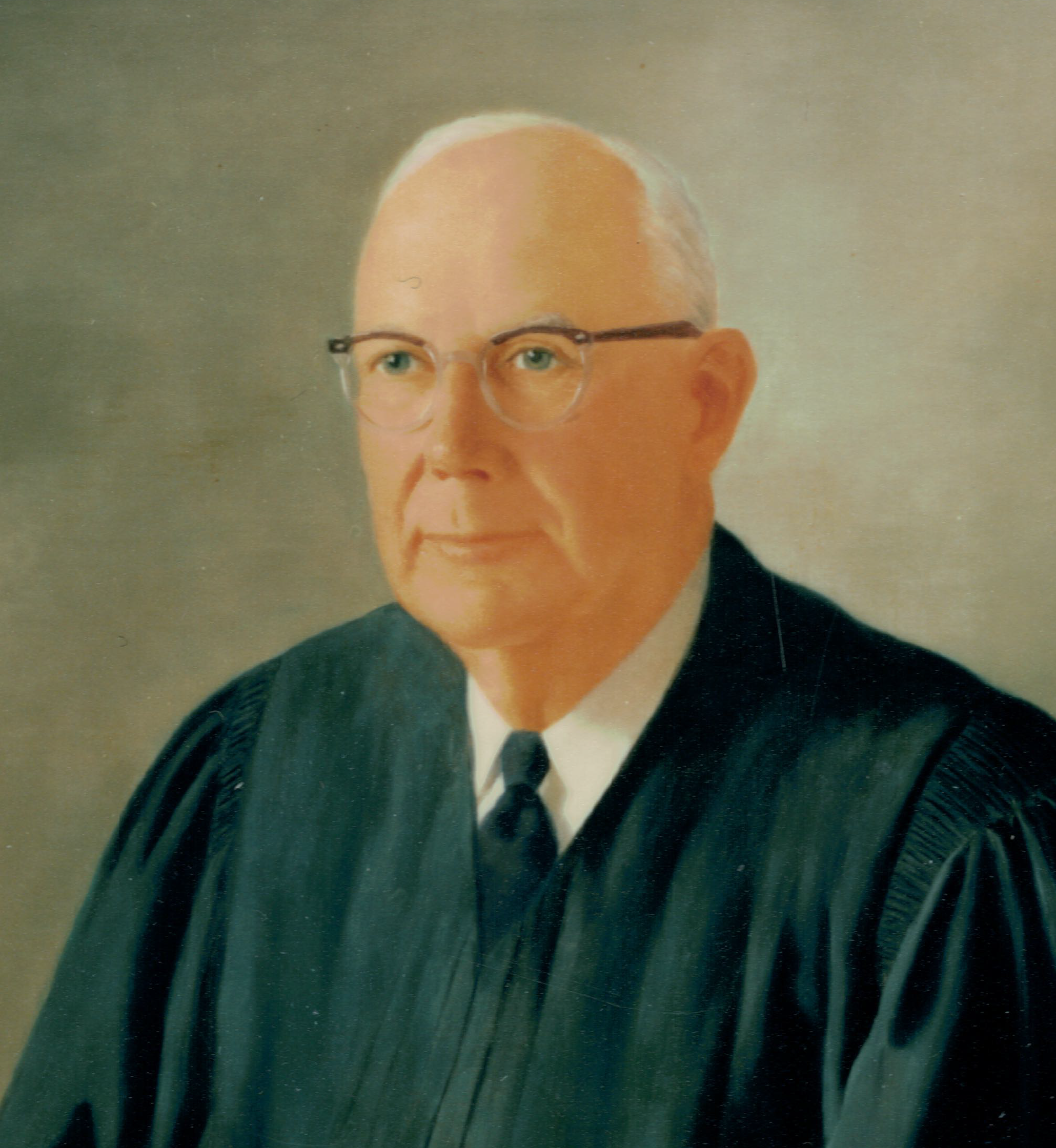
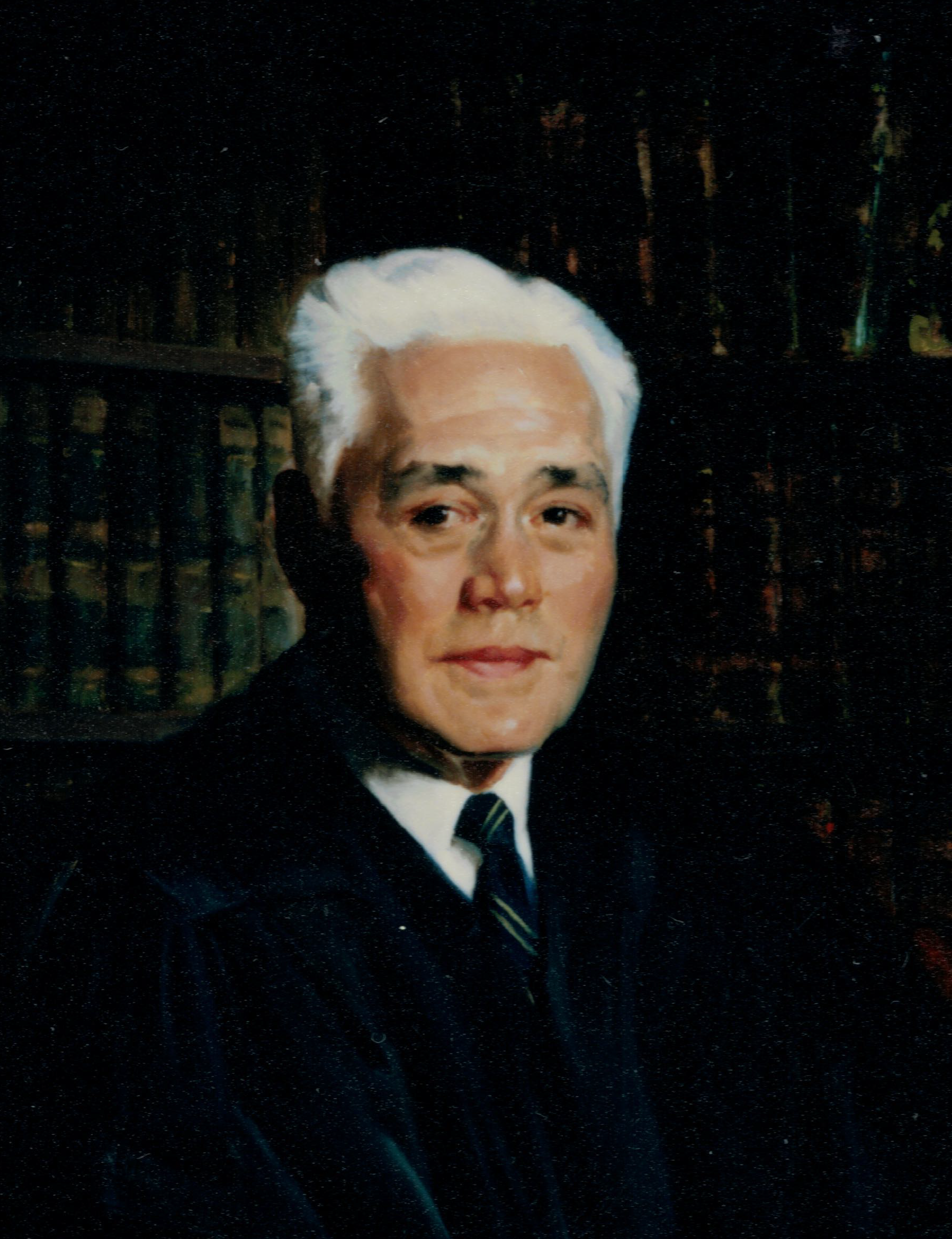
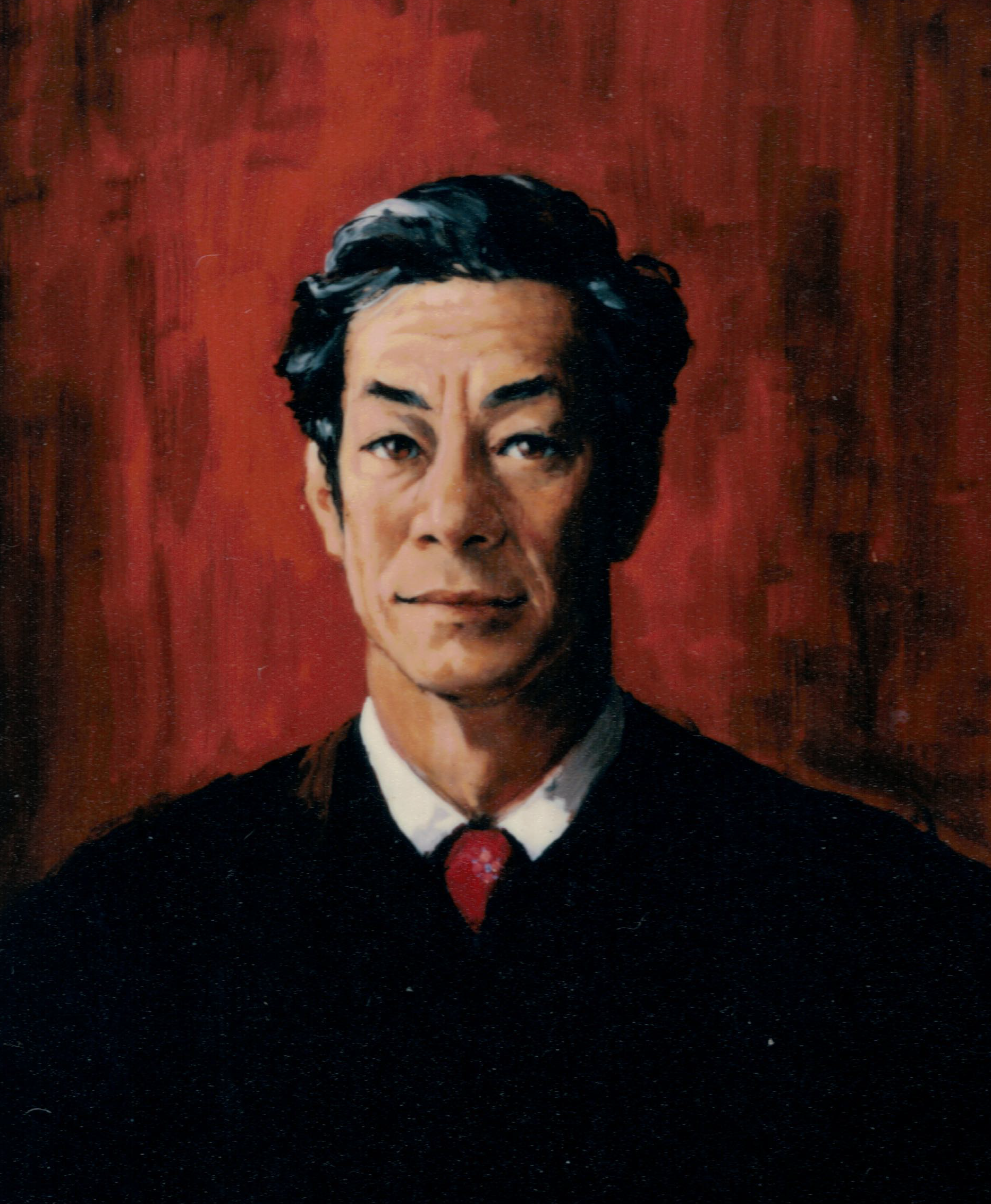
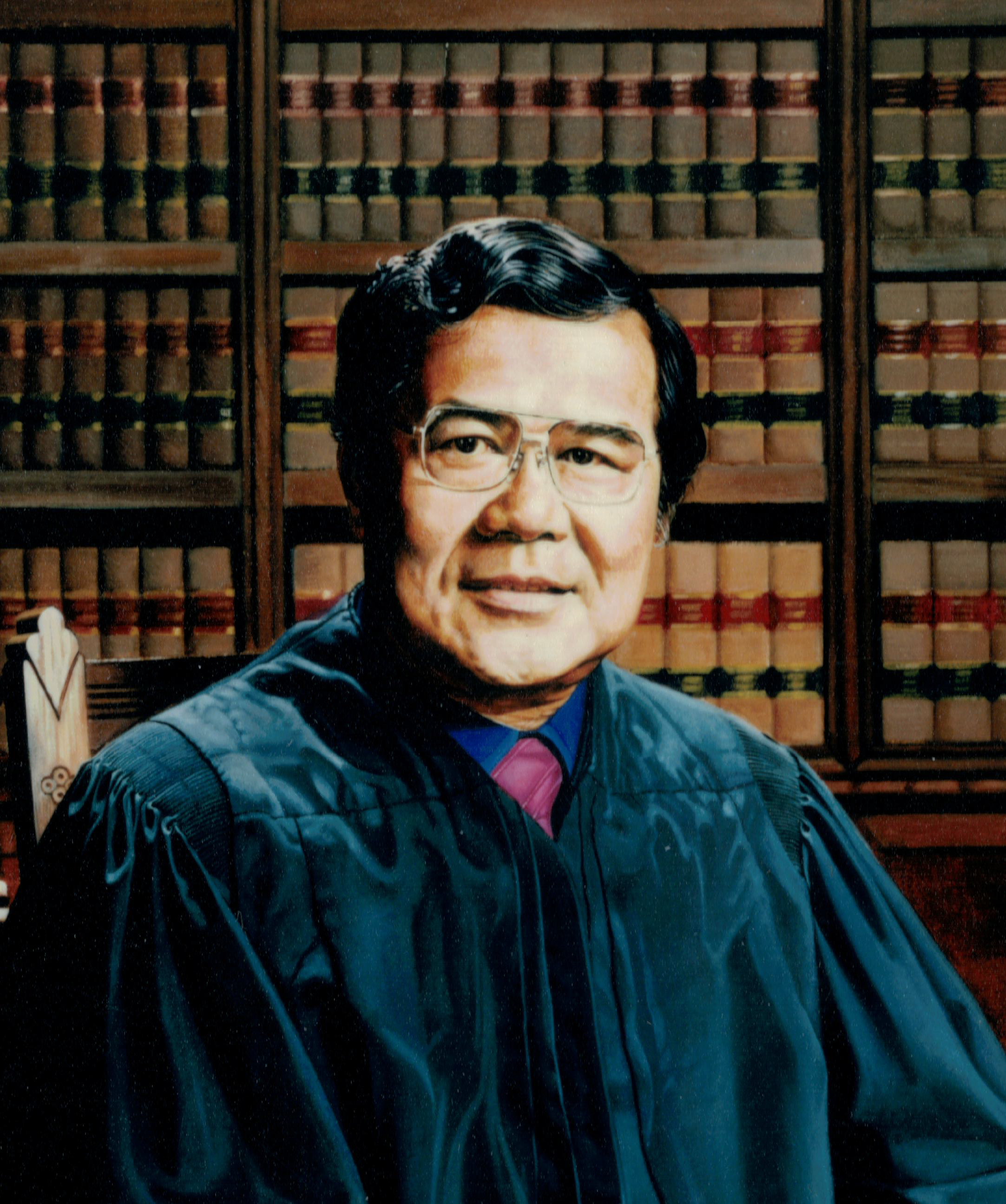
Chief Justices of Hawaii's Supreme Court: 1839 to Present

1887-1898: Shifts in Power, A Nation Overthrown

The Hawaiian Islands were an independent kingdom until American businessmen, supported by a diplomat and US Marines, overthrew Queen Liliuokalani on January 17, 1893. Forming a provisional government, the victors requested annexation to the United States. After initial annexation efforts failed, Congress passed the Newlands Resolution to annex Hawaii in 1898. Congress approved an Organic Act in 1900 to give Hawaii territorial status and provide a territorial government. The Organic Act permitted Hawaii one nonvoting delegate to the US House of Representatives. Hawaii’s first delegate, Robert W. Wilcox, served from 1900 to 1903.

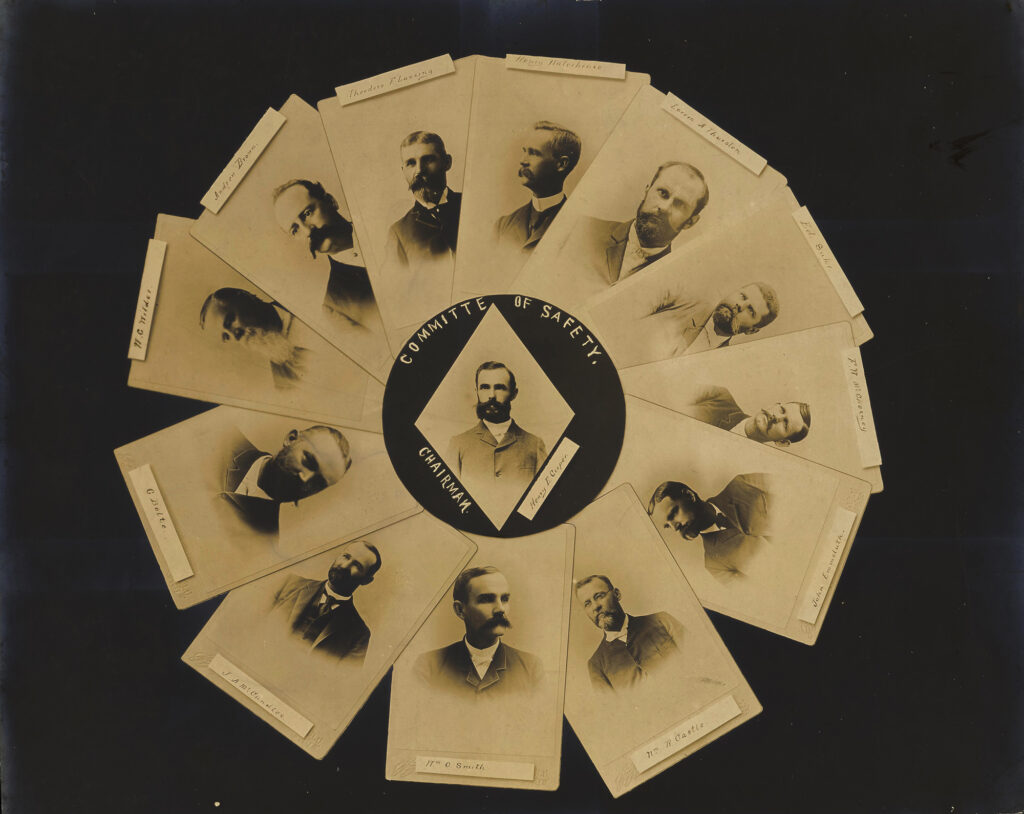
Committee of Safety members: Theodore F. Lansing, Henry Waterhouse, Lorrin A. Thurston, Ed Suhr, F. M. McChesney, John Emmeluth, William R. Castle, J. A. McCandles, C. Bolte, W. C. Wilder, Andrew Brown, Henry E. Cooper - Chairman. (Photo courtesy of Hawaii State Archives, PPWD-4-2-009)

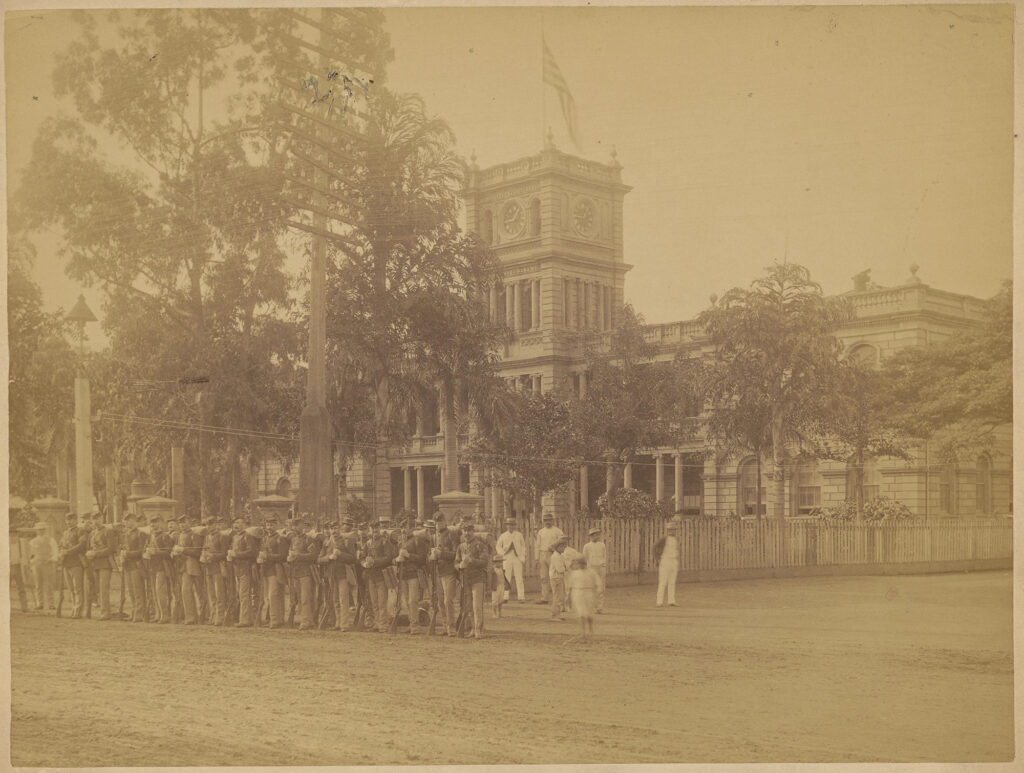
Seeking to abolish the Hawaiian Monarchy, the self-proclaimed “Committee of Public Safety” took over Aliiolani Hale on January 17, 1893. The Honolulu Rifles, a volunteer group of men who supported the Committee of Safety, assembled there in opposition to the loyalist guard stationed across King Street at Iolani Palace.

With horse blankets and boxes of hard tack, the Honolulu Rifles camped in the halls of Aliiolani Hale. Queen Liliuokalani, to avoid violence, abrogated the monarchy and the troops did not engage in armed conflict.

After declaring a provisional government, the American oligarchy in power renamed Aliiolani Hale, “The Judiciary Building.” The Legislature then moved next door to Iolani Palace, which was renamed the “Executive Building.”

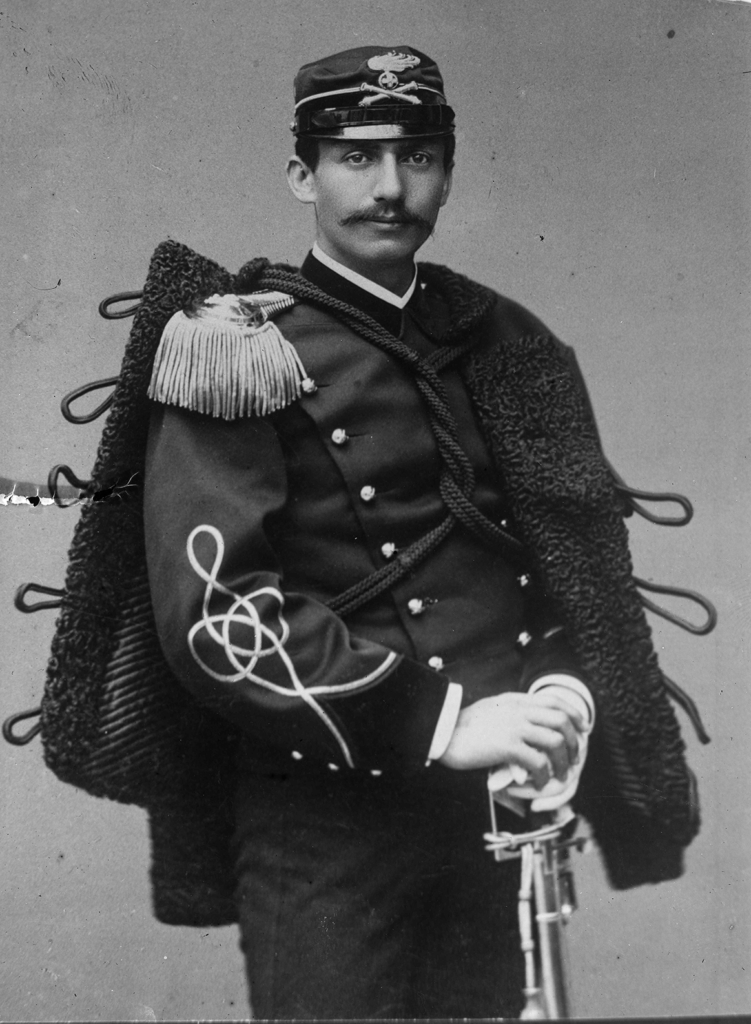
In 1887, in response to increased political tension between the legislature and the king, a group of government ministers led by Interior Minister Lorrin A. Thurston with the support of an armed militia, forced King David Kalākaua to promulgate the 1887 Constitution of the Kingdom of Hawaii. The constitution stripped Asians of their voting rights while at the same time limited suffrage to wealthy native Hawaiians, Americans and other Europeans. The king’s own powers were limited substantially. A native Hawaiian officer and veteran of the Italian militaryRobert William Wilcox, organized a rebellion on July 30, 1889, to revive the powers of the monarch over administration. The rebellion was thwarted by the absence of the King at ʻIolani Palace (who was needed to promulgate a new constitution), and the Honolulu Rifles. Wilcox was tried for treason, and acquitted despite his obvious guilt.

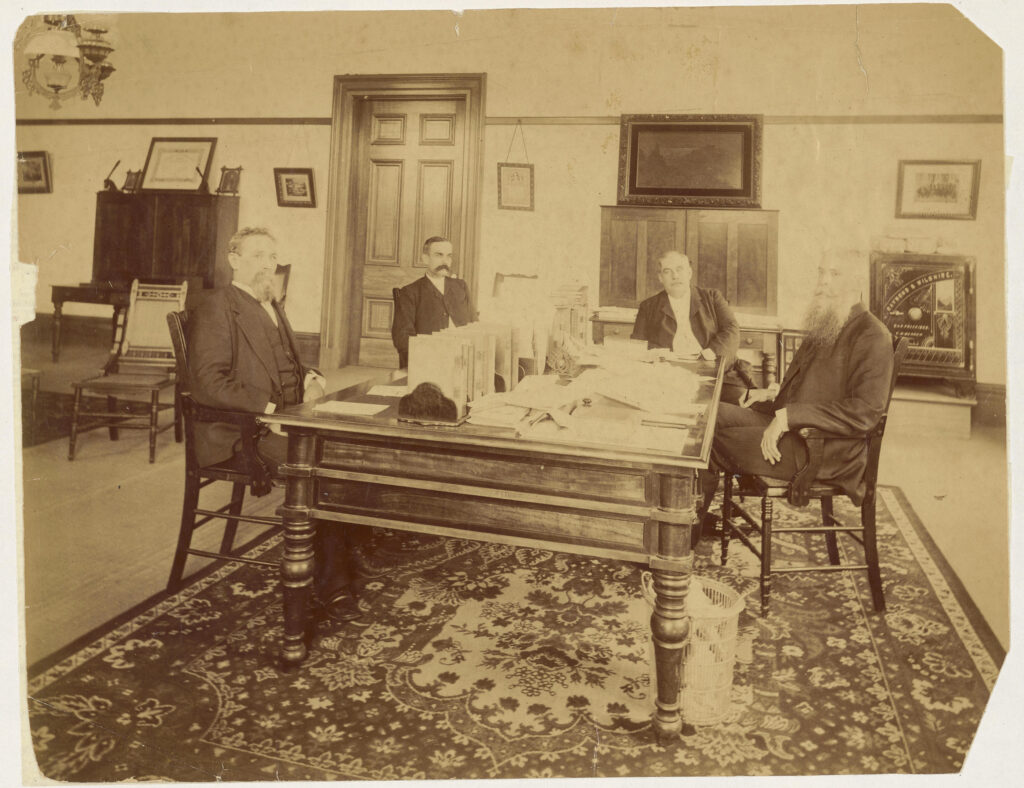
Government Officials of the Provisional Government and Republic of Hawaii (Hawaii State Archives, reference no. PP-28-7-023)
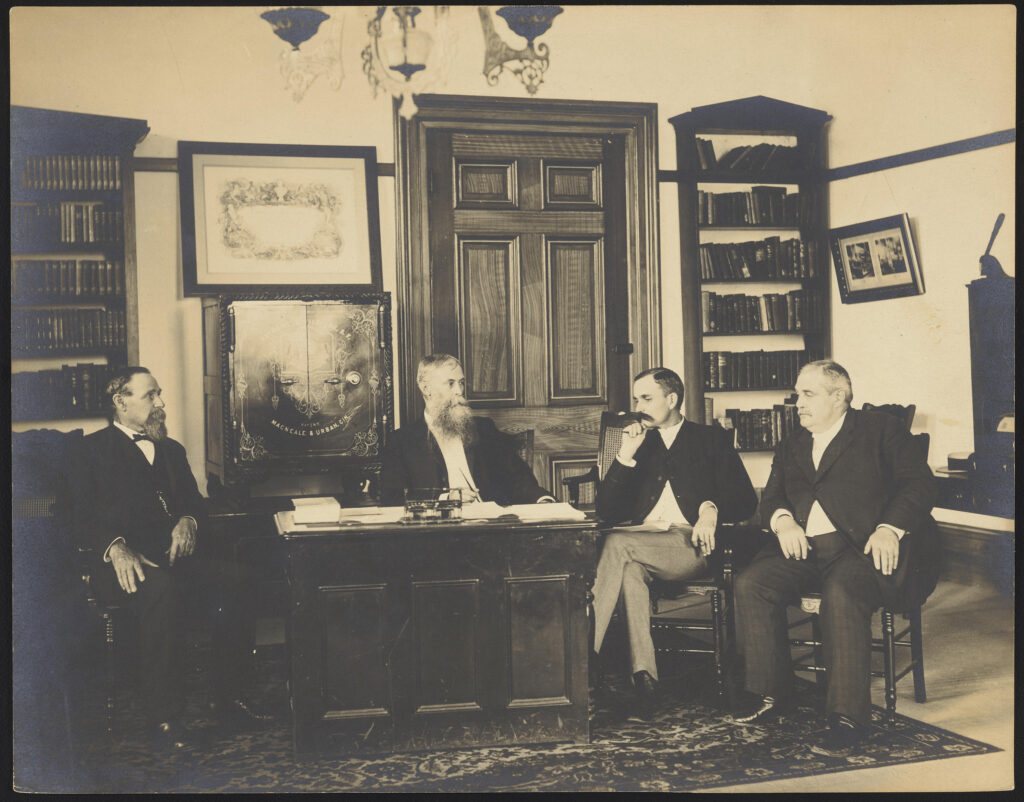
Pres. S. B. Dole and Cabinet after overthrow c. 1893; L to R: Justice A. King, Minister of Interior; Sanford B. Dole, Pres. & Minister Foreign Affairs; W. O. Smith, Attorney General; P. C. Jones, Minister of Finance. (Hawaii State Archives, reference no. PPWD-4-2-008)

Aliiolani Hale played a role in the Wilcox insurrection. Unhappy with the changes in the constitution of 1887, the young hapa-Hawaiian, Robert Wilcox, and several hundred armed men marched into the neighborhood on the morning of July 30, 1889. At 6:00 a.m., twelve of the men took over Aliiolani Hale, and the rest moved into the Iolani Palace yard. By noon, volleys of rifle shots were exchanged between Wilcox’s men and government forces. Wilcox’s men, stationed in the Palace yard, were surrounded by the government troops whose sharpshooters were placed in nearby buildings, including the tower of Kawaiahao Church. The rebellion came to a halt when government authorities hurled homemade dynamite bombs into the Palace yard scattering the rebellious constituent.

In the small room beneath the clock tower, often used as an artist’s studio at Aliiolani Hale, a sculptor was working on a bust of Kalakaua. He reported, on that day, that stray bullets created “a disturbing background” for his artistic endeavor.

Dole and his Cabinet c. 1893. Left to Right: James A. King, W. O. Smith, P. C. Jones, S. B. Dole. (Hawaii State Archives, reference no. PPWD-4-2-011)

The Music Hall played a role in the Wilcox Rebellion, when Government sharpshooters occupied it to suppress the insurrection of Robert Wilcox in 1889.  (Daily Bulletin, February 12, 1895)

“Wilcox and I then marched towards the gate and came by Boyd’s cannon; he told us to get out of the way he wanted to fire then, because he saw some one in the Music Hall pulling down a window; Wilcox  stopped him; we walked on toward the gate when a gun fired from the Music Hall.”  (Kauhane, Hawaiian Gazette, October 29, 1889)

“Wilcox sung out to Music Hall to “stop firing! stop firing!” three or four more shots were fired from there and then Wilcox gave order to fire; cannons were then fired; think Wilcox knew that Government were gathering forces to drive us out; not my place to surrender.”  (Kauhane, Hawaiian Gazette, October 29, 1889)

Queen Liliuokalani leaving Aliiolani Hale in a horsedrawn carriage, after the overthrow of the Hawaiian Kingdom on January 17, 1893.

Aliiolani Hale Survives the Territorial Period – and Grows a Wing

Having overthrown the monarchy and resisted the US President Grover Cleveland’s order to reestablish the monarchy … 

The Provisional Government occupied the first floor offices of Aliiolani Hale and US troops guarded the building (see K at 76-77 with photo). They then moved into Iolani Palace and renamed AH the Court House. Most of their work revolved around creating the mechanisms for the US annexation of the islands as an organized U.S. territory governed by a governor appointed by the US government in Washington, D.C. While waiting for annexation, which the citizens of Hawaii opposed, the The Supreme Court courtroom in AH became the site of a constitutional convention for the new republic in May of 1894. A key provision required anyone wishing to vote for delegates to the convention had to swear allegiance to the new regime and never to support restoration of the monarchy. The republic inaugurated itself July 4, 1894 and Sanford Dole declared himself president. Six months later “an uprising of royalists led to the arrest of Queen Liliuokalani” and hundreds of her supporters. She then signed a letter of abdication and was tried for treason against the republic before a military commission that sentenced her to five years hard labor, reduced to imprisonment in Iolani Palace, and fined her $5,000.

(Kneubuhl pp. 91-93)

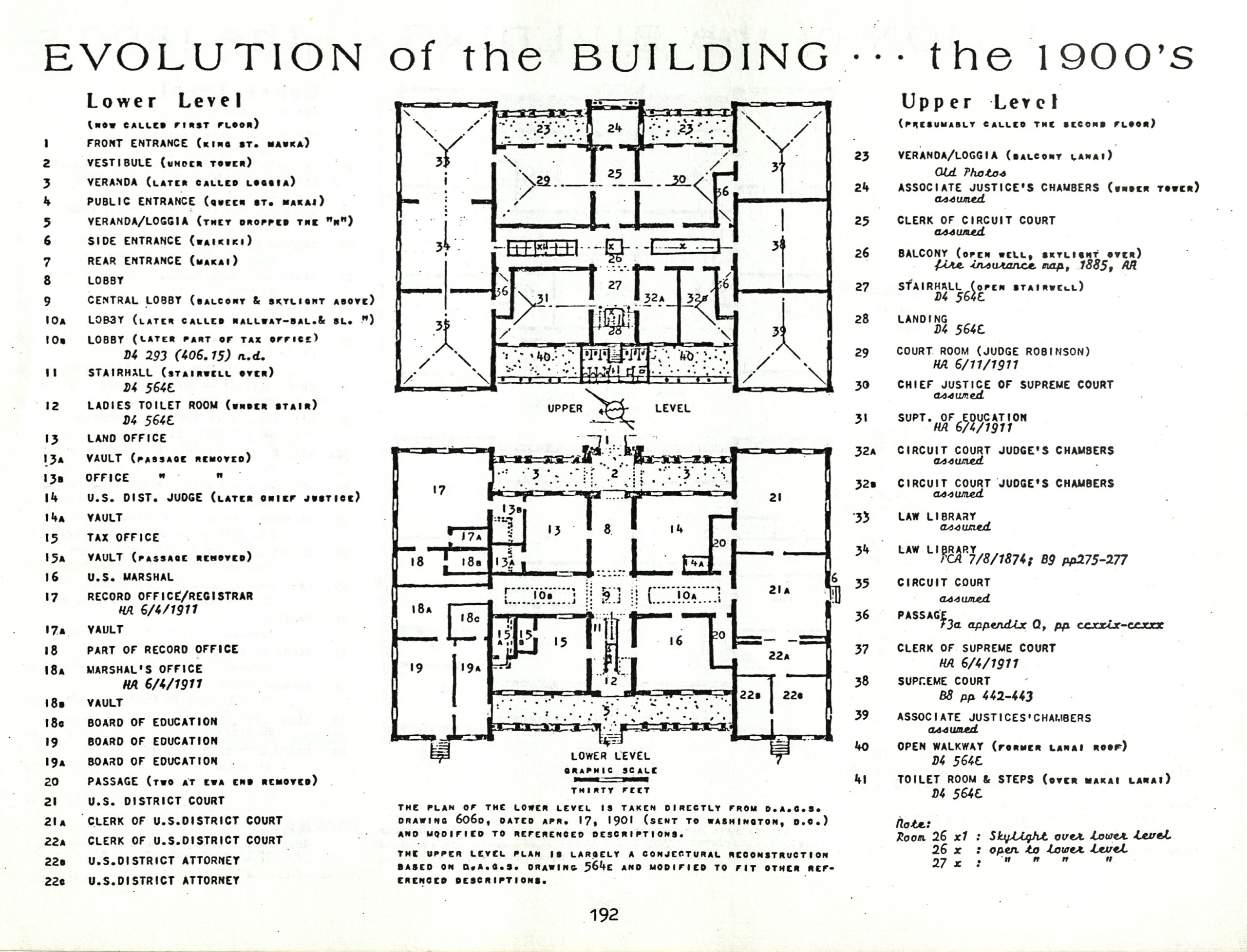
Annexation by the U.S. president occurred in 1898 at the outbreak of the Spanish American War and then officially with the enactment of the Organic Act of 1900, which “ushered in the new territorial government and increased demands for space that AH, now over 25 years old, could barely accommodate. In 1906, the territorial supervisor of public works recommended the construction of a new building or the entire remodeling of the interior. “In 1911, AH was gutted for an interior renovation” leaving only the exterior walls intact (see photo in K at p. 80).

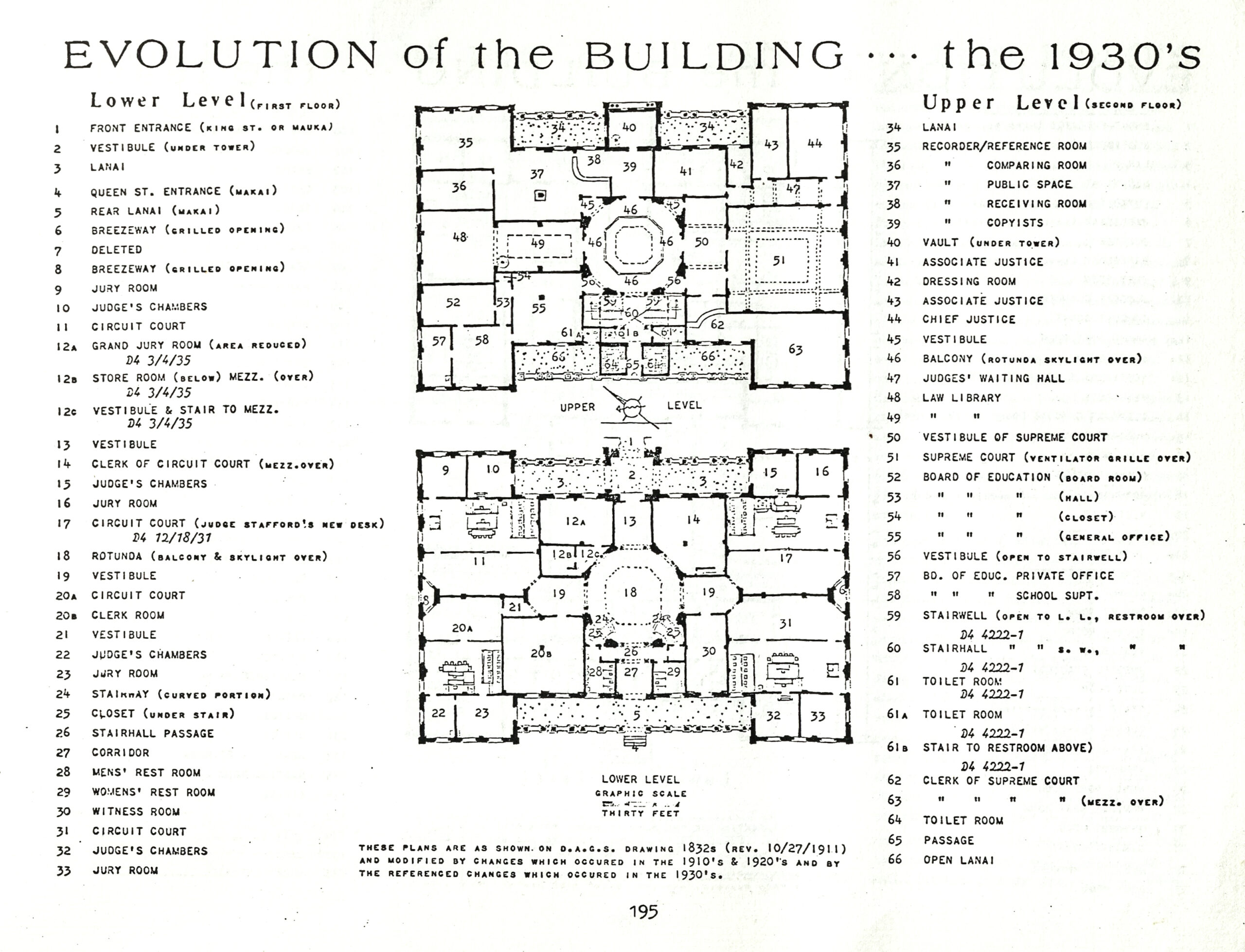
“By the 1930s, the ever-growing needs of the judiciary once again caught up with the space available in AH. In 1937, an appropriation of $122,000 was made to extend and improve the building. The next year, the Territorial Planning Board suggested that, instead of extending and renovating the building, AH be razed and a brand-new judiciary building constructed. At this time, plans for a new civic center were in the works as part of a 10-year development plan. 

“Fortunately, vocal members of the Hawaiian Historical Society vehemently opposed the razing of AH.  The Historic Sites Act, passed by Congress in 1935, made it a national policy to preserves sites, buildings, and structures important to our culture. Although the preservation movement was in its infancy in the United States, Hawaii was fortunate to have residents with the foresight to insist on saving AH. The HH Society found a passionate spokesperson in former chief justice Walter Francis Frear.

Frear was appointed as a circuit judge in January 1893 by Queen Liliʻuokalani. Following the overthrow, he was promoted to serve on the Supreme Court of the Provisional Government. Frear became Chief Justice of the Supreme Court during the territorial period after the death of then Chief Justice Albert Francis Judd, on July 5, 1900. On August 15, 1907, US President Theodore Roosevelt appointed Frear as governor of the territory and he served until November 30, 1913.

Frear appeared before the Territorial Planning Board on June 16, 1938, and as president of the society read a letter on behalf of its members and trustees, which included these thoughts:

But you suggest that [AH] is “old fashioned” and wedged in between the federal and territorial office buildings. Old-fashioned also are Iolani Palace and Iolani Barracks, which you so greatly desire to retain; also Kawaiahao church and Faneuil hall and the Old State House in Boston and Independence Hall in Philadelphia…. If the territorial office building is a fair sample of modernity in architecture, the less we have of it the better…. Protest was made against it at the time but without avail. I am asking why not tear down that building rather that the Judiciary Building. The latter is really a charming building, well situated and fragrant with the atmosphere of Hawaii. I can hardly imagine an Hawaii legislature authorizing its destruction.”—Walter F. Frear

Joining the former Chief Justice in these sentiments was then-current Chief Justice, James L. Coke, who found it degrading for the Judiciary to move into the “backyard,” referring to the proposed new location on the makai (ocean) side of Queen Street.

 A solution to the dilemma came from a prominent private attorney, Joseph Garner Anthony. Anthony proposed the building of an extension that would house the Law Library.

 President of the local bar association, Anthony would in a matter of two short years rise again to the defense of the Judiciary by challenging the military takeover of the justice system after the U.S. territorial governor declared martial law on December 7, 1941. 

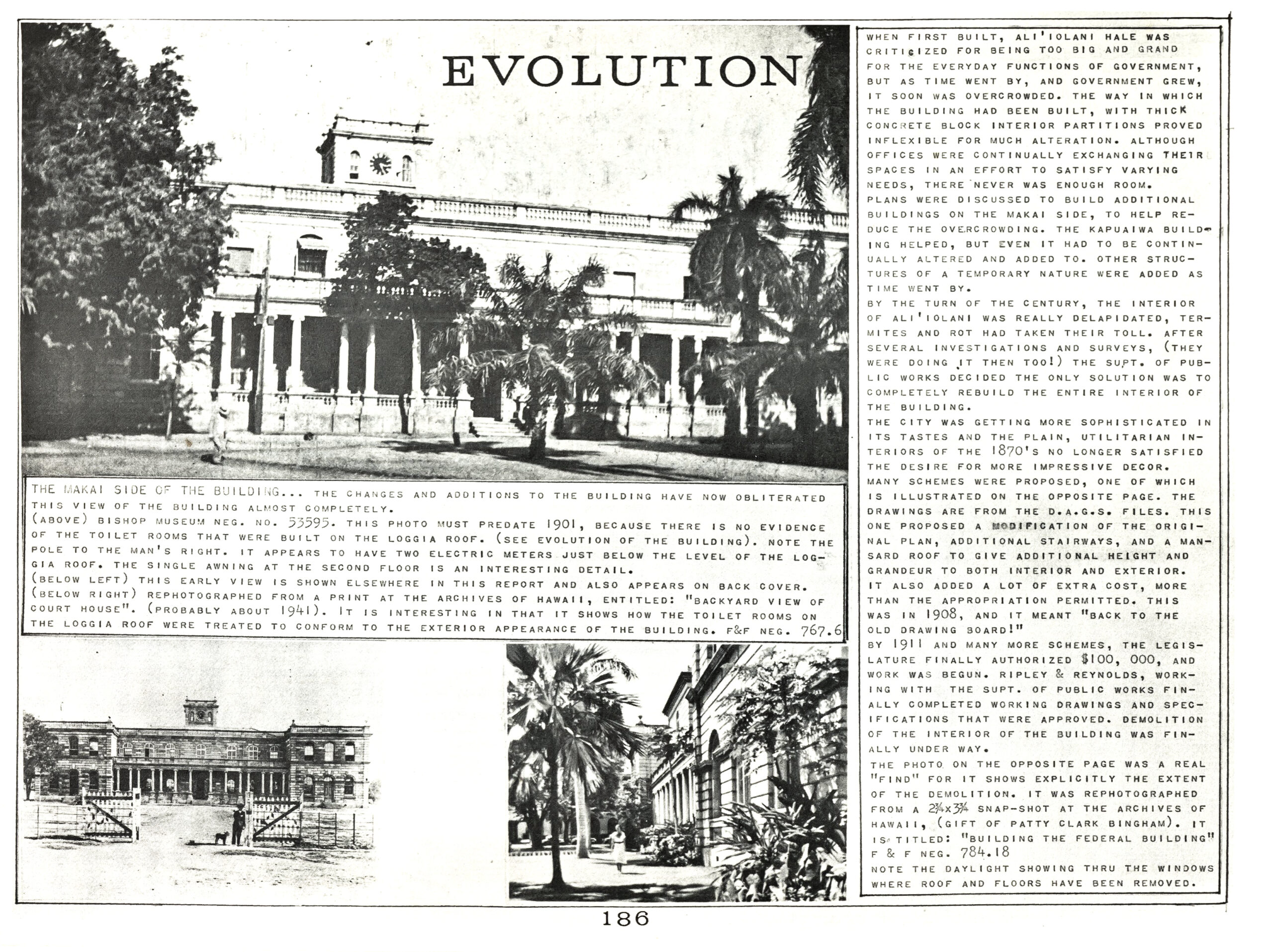
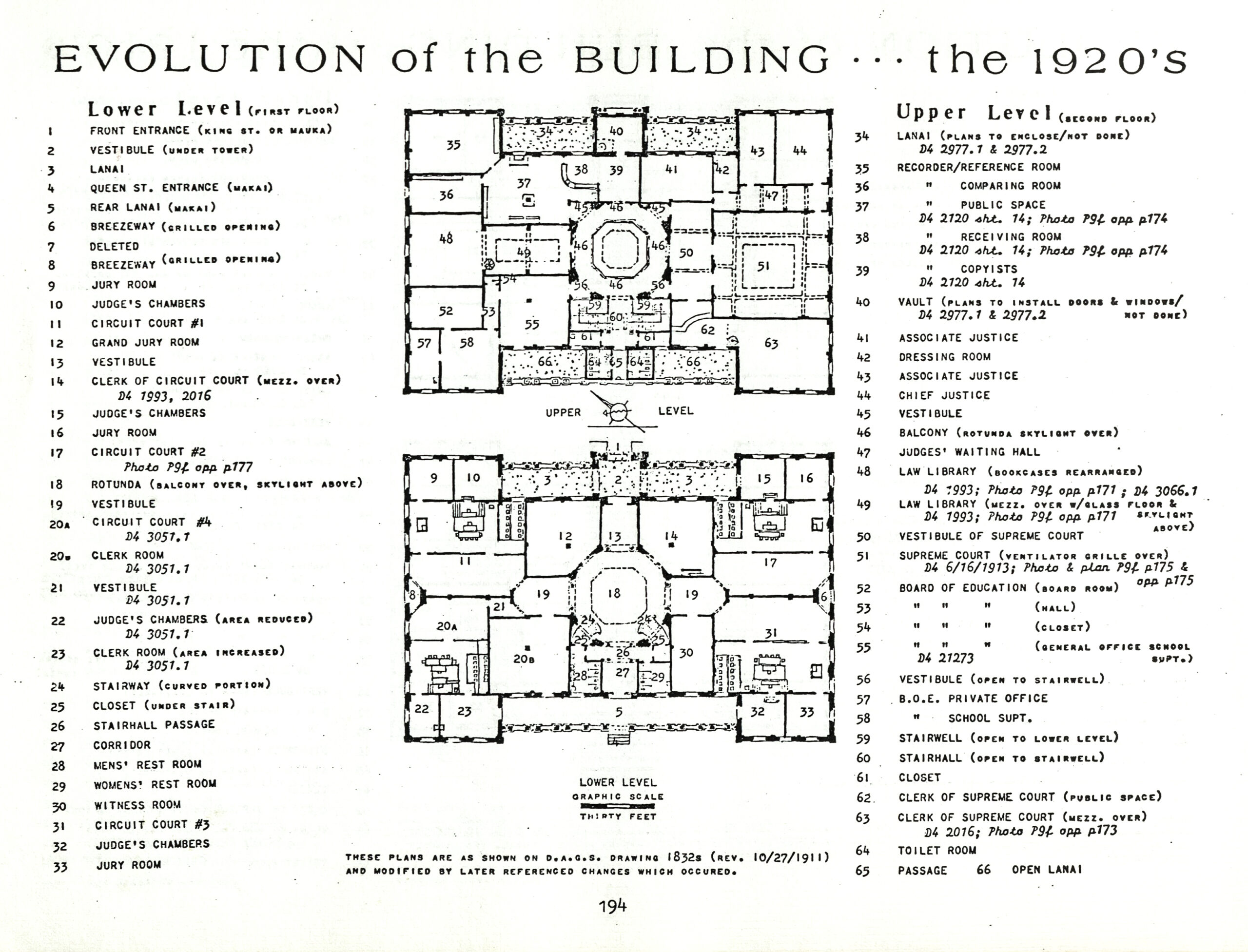
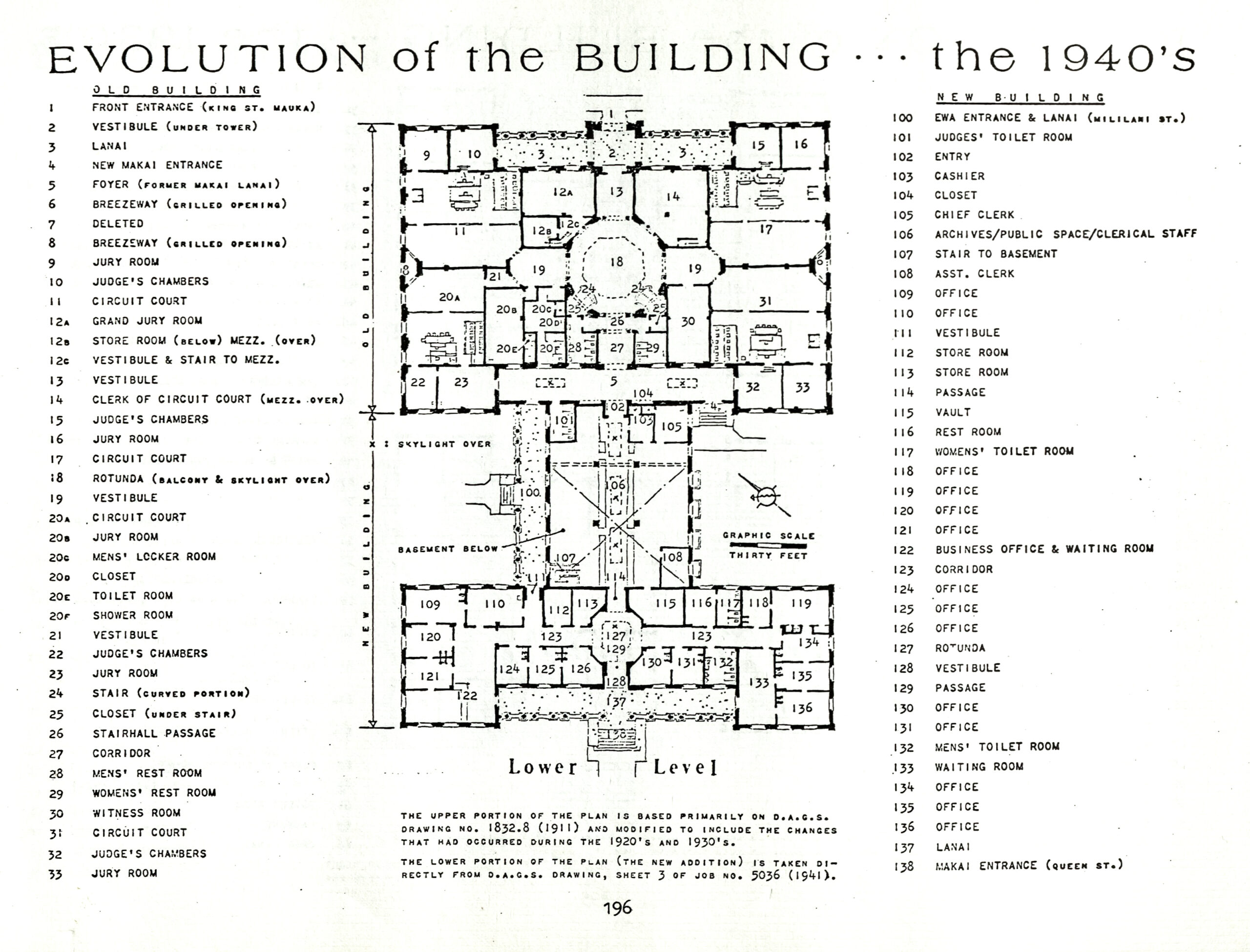
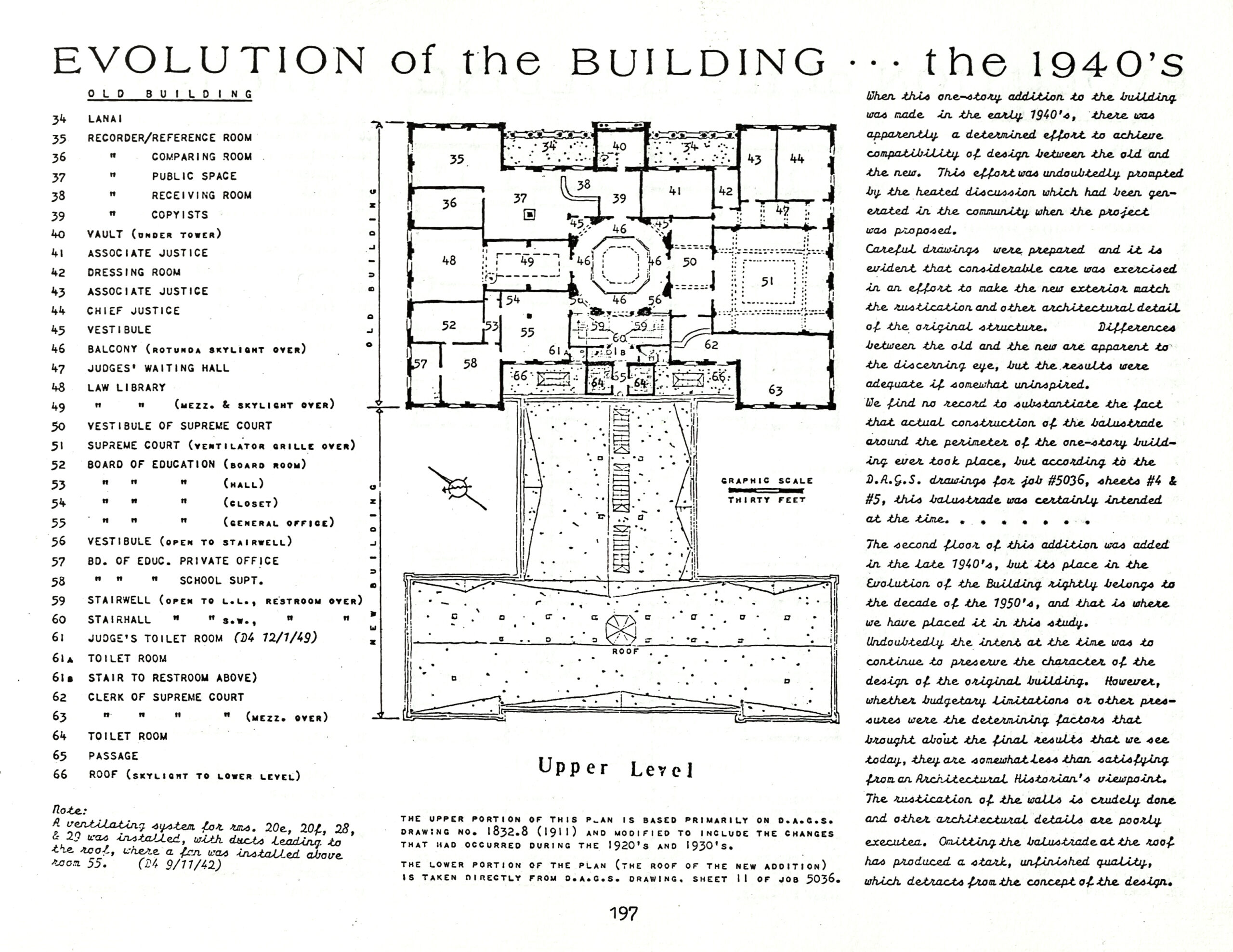
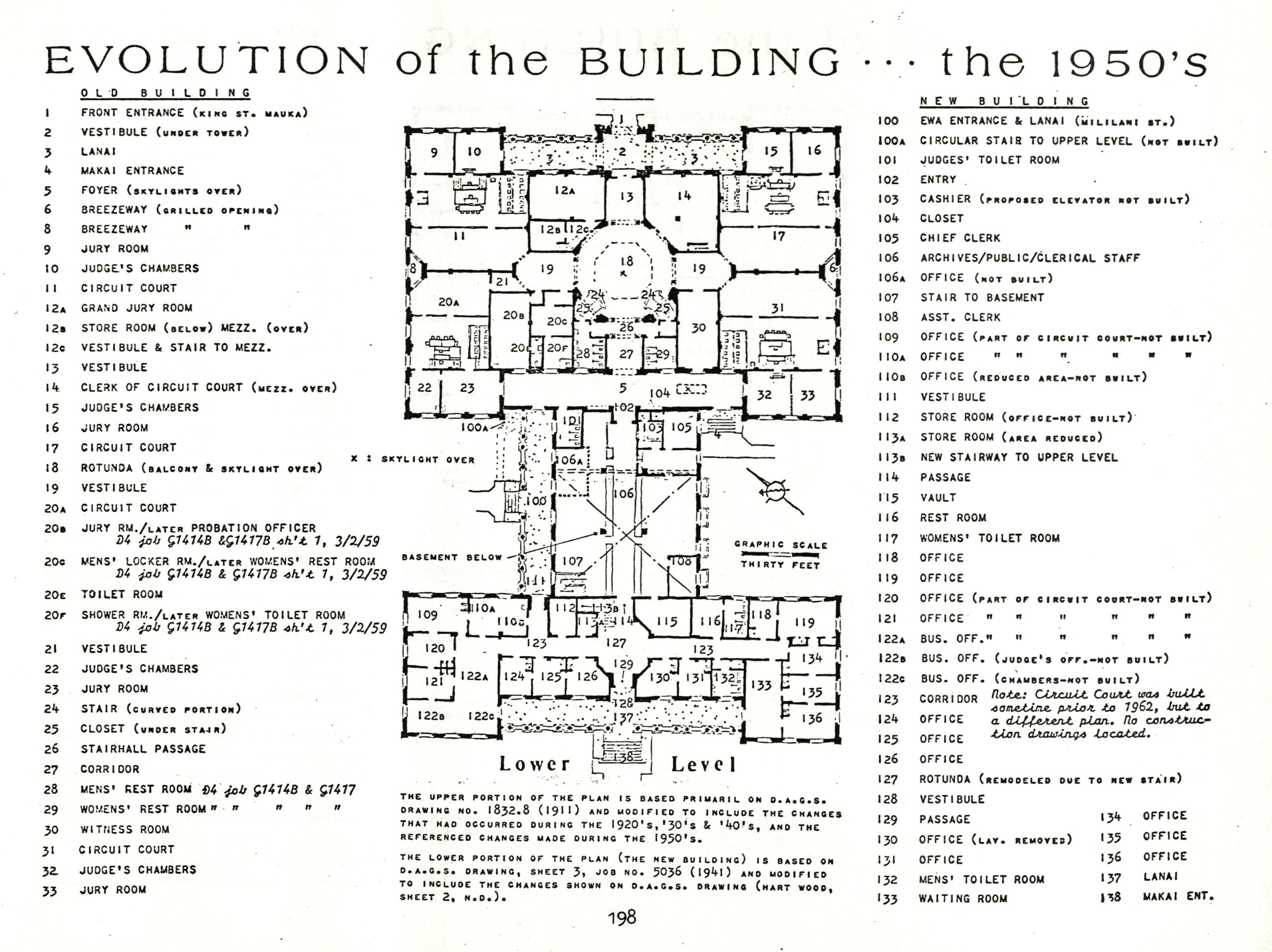
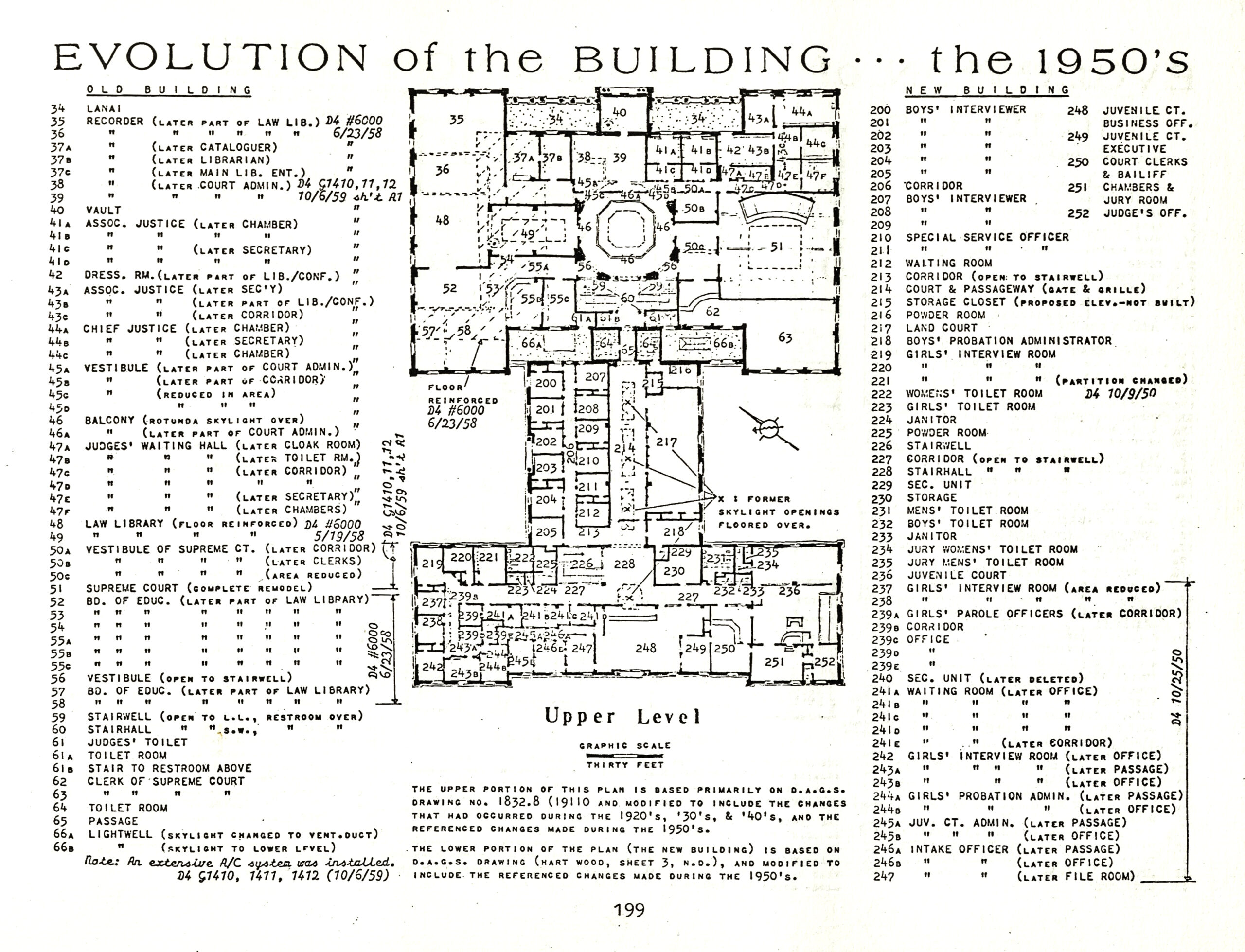
… After plans were drawn up and construction contracts awarded, construction was begun and it continued despite the labor and materials shortage that characterized the wartime period. The first floor of the new rear wing opened in February 1942, constructed with assistance of the Federal Works Administration and legislative appropriation. The second floor of the addition was not finished until long after the war was over, at the end of 1949. This completed the structural configuration of the present-day Aliiolani Hale. The addition blends well with the original structure but regrettably covered over the back lanai of Aliiolani Hale where important history was played out, including the overthrow of the Hawaiian Kingdom in 1893.

King Kamehameha Statue

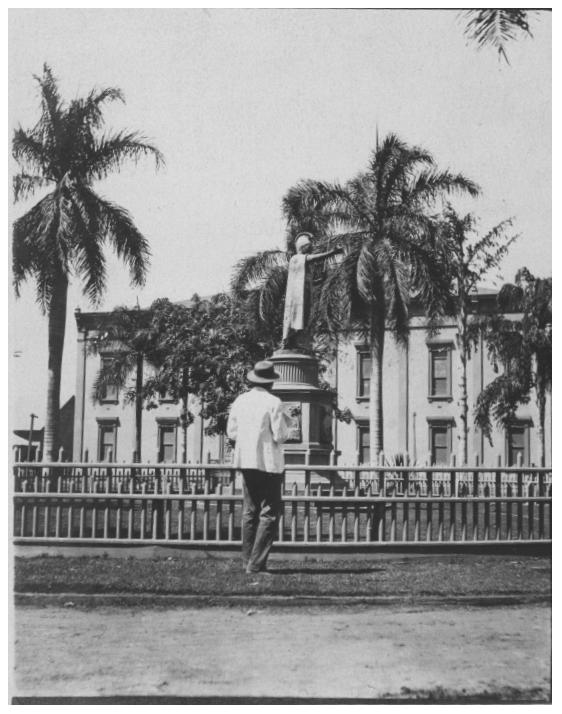
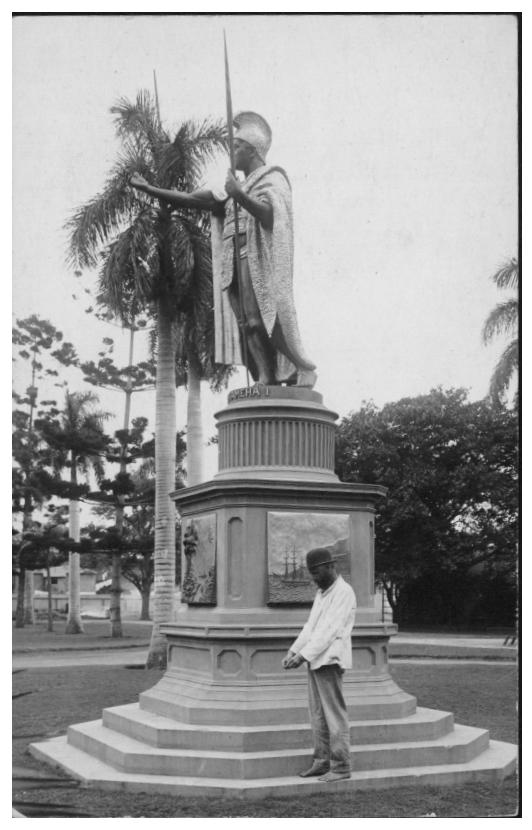
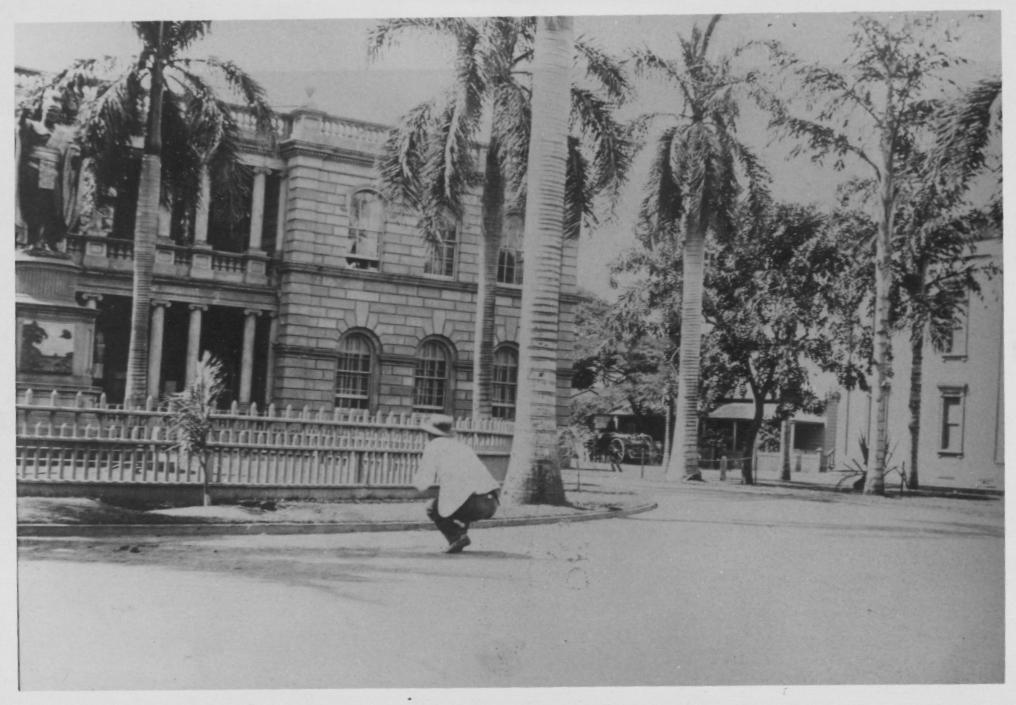
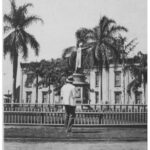
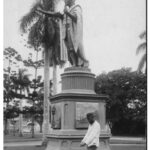
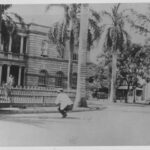
As early as 1896, a man in tattered clothes paid daily visits to the statue of Kamehameha

As early as 1896, a man in tattered clothes paid daily visits to the statue of Kamehameha. He was Jose de Medeiros. One author claims that as a child Jose was on an immigrant ship, the Earl of Dalhousie. This vessel brought the original statue of Kamehameha from the Falkland Islands (Islas Malvinas) to Hawaii. The Statue, which was almost lost at sea, had been salvaged and brought aboard the ship, prompting great “awe and superstition” among Jose and the other passengers. Another story places Joe in Kohala as a boy, frightened by the Kamehameha statue at the Kohala Courthouse on Hawaii Island. When his family moved to Honolulu, Joe’s behavior reversed; instead of avoiding the statue, he visited it daily.

Over the years, Joe was treated kindly, and many people gave him small gifts of food and clothing. Sometime in 1930, after 34 years, he stopped making his routine visits. Joe had become ill and died in 1932. A reporter once asked Joe about seeing Kamehameha every day. Joe replied, “He step down someday. Then, I see him.”

ark_70111_0gvJ.0
ark_70111_0gvH.0
ark_70111_07lz.0
ark_70111_0gvJ.0
ark_70111_0gvH.0
ark_70111_07lz.0

Witness to History: Historic Cases Heard in Aliiolani Hale

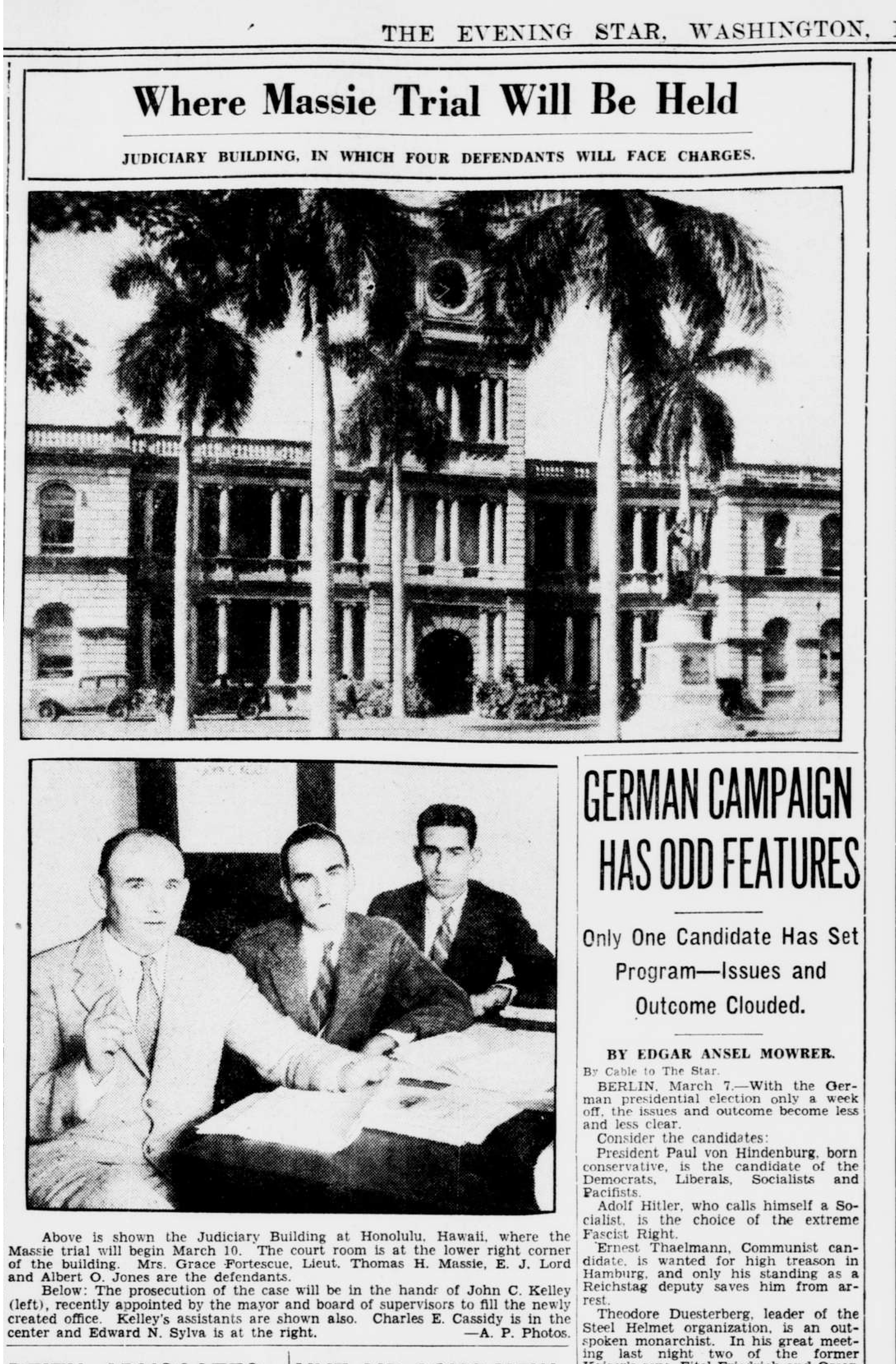
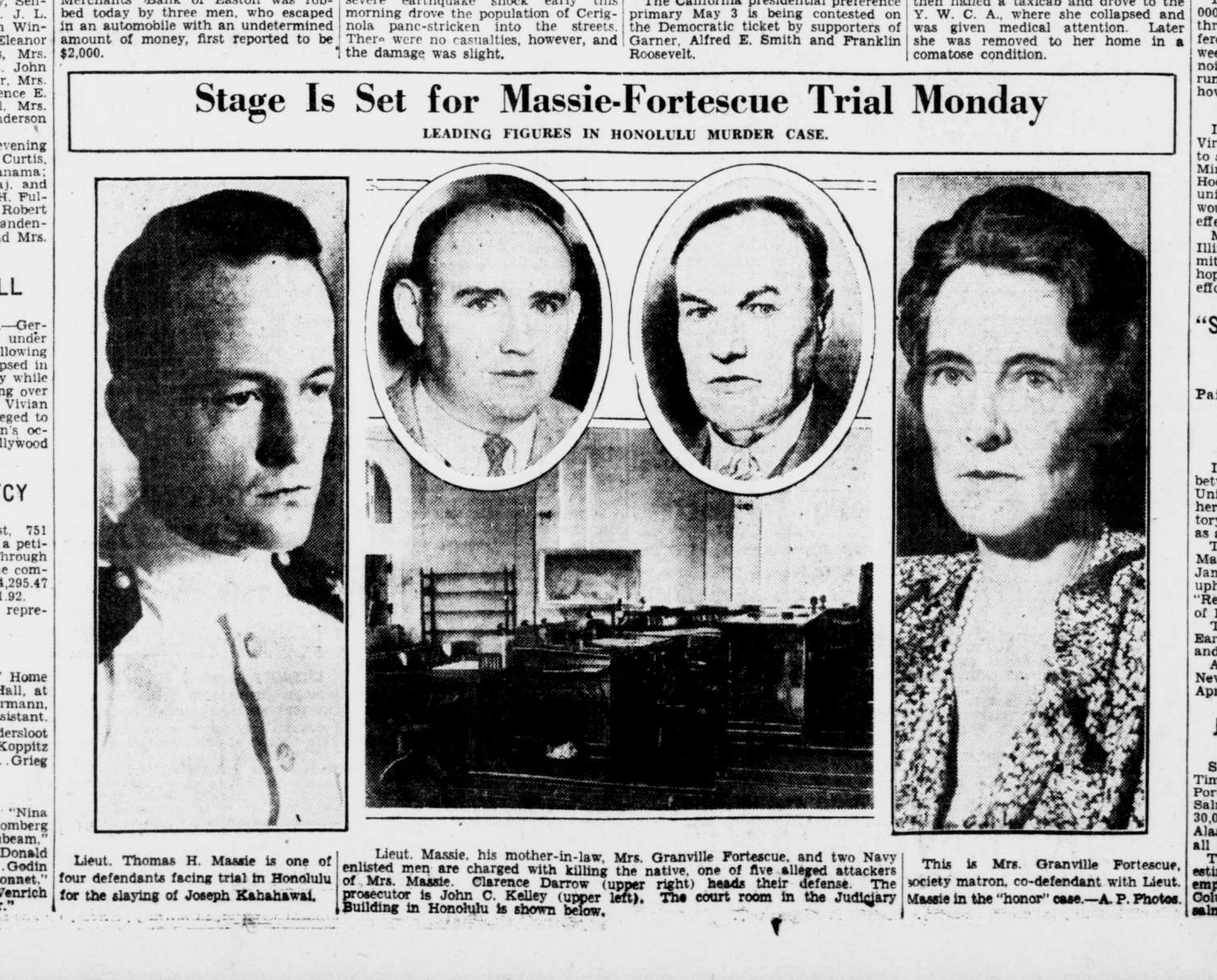
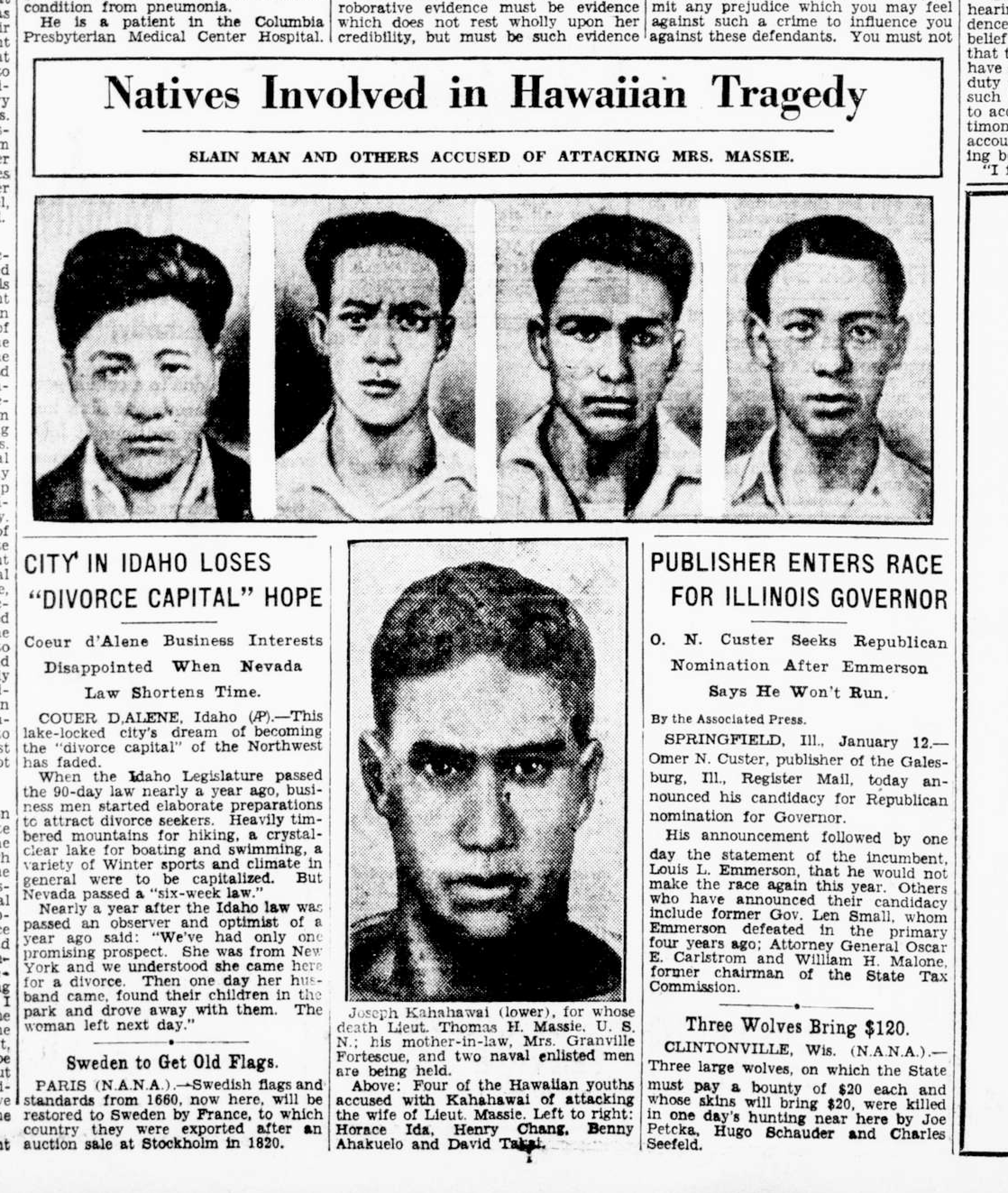
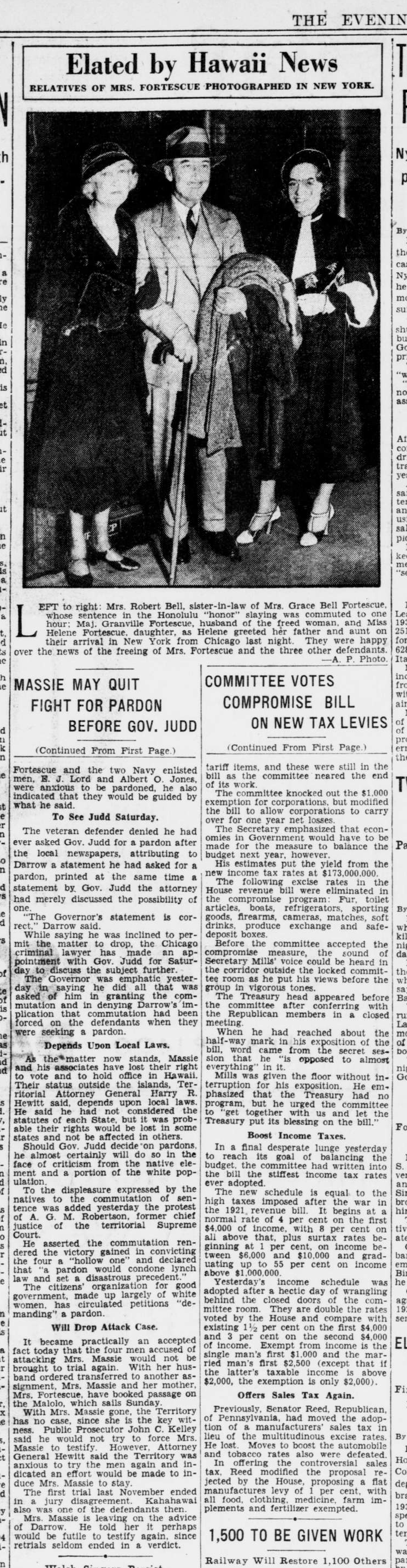
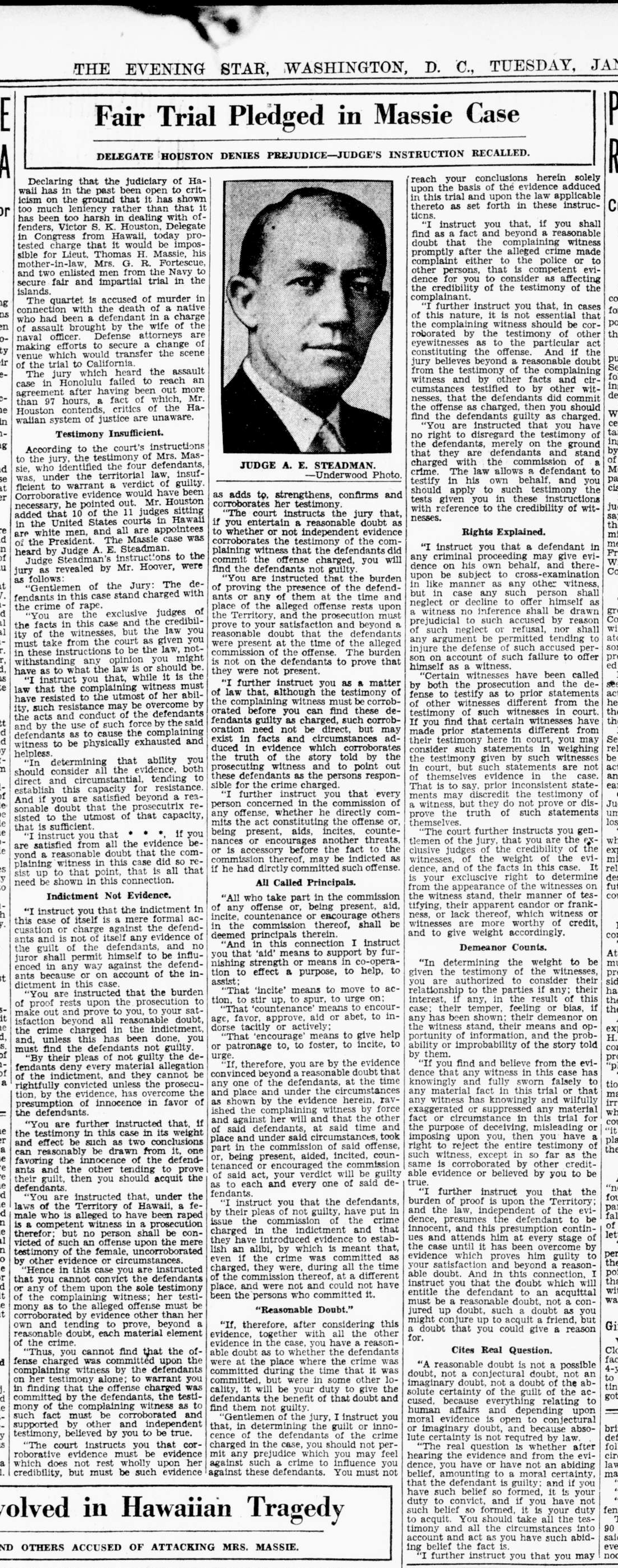
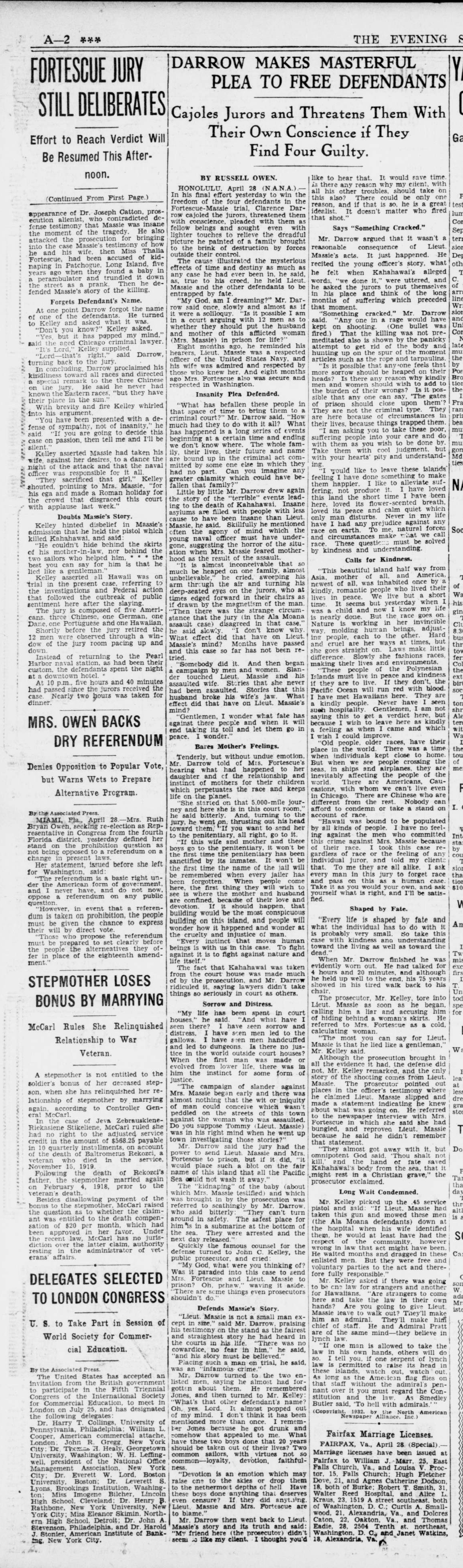
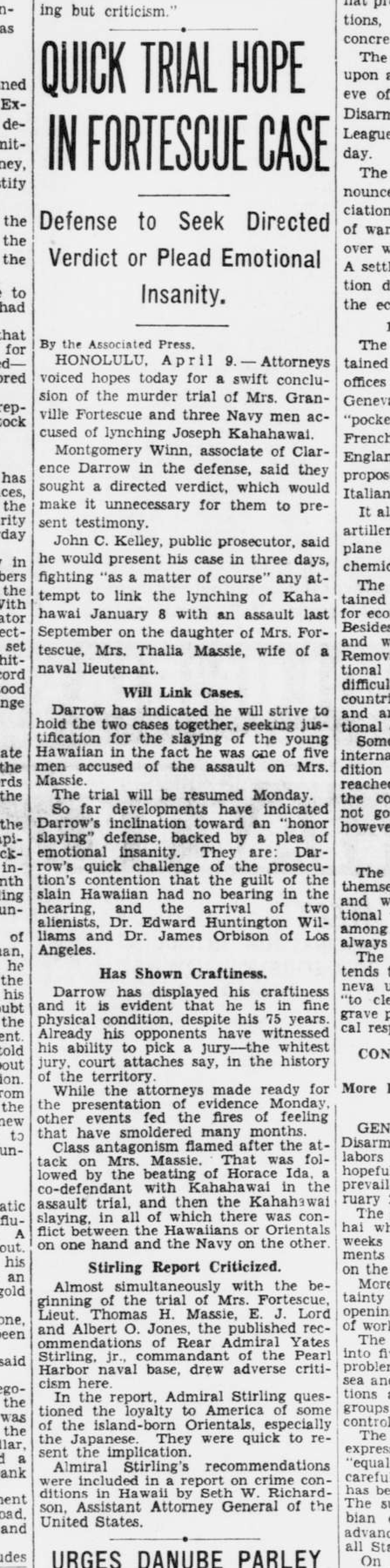
Trial of the Century: The Massie-Kahahawai Trials, 1931-32

The early years of the Great Depression brought a fraying social order and growing tensions between Hawaii’s multi-ethnic community. Military stationed in Hawaii had a job to protect national security, but their behavior while off-base was problematic. Prohibition did not dampen the consumption of alcohol nor the gambling and nightlife that surrounded the large and transient military population.

The Massie-Kahahawai cases of 1931-1932 shook the Territory of Hawaii to its very core. Thalia Massie, young Navy wife of Lieutenant Thomas Massie, alleged that she had been assaulted and robbed by “some Hawaiian boys” in Waikiki, after a night out with her husband and other Navy couples on Saturday, September 12, 1931.

A few days later, five young men stood accused of her rape. The trial for Territory of Hawaii v. Ben Ahakuelo et al. took place in Aliiolani Hale. Mishandling of evidence and contradictory testimony led to a mistrial. Before a second trial convened, the alleged victim’s husband and mother, Grace Fortescue took the law into their own hands. From the driveway of Aliiolani Hale, the Massie’s kidnapped one of the accused, Horace Ida, who was beaten by a group of Navy men. Another, Joseph Kahahawai was killed in Grace Fortescue’s home from a gunshot wound. Thalia’s husband, Thomas Massie, her mother Grace Fortescue, and two Navy men were convicted of the lesser crime of manslaughter.

Charged with manslaughter, the Massie family members and their accomplices were convicted and sentenced to 10 years of hard labor. However, Territorial Governor L.M. Judd commuted their sentence to one-hour in his office in Iolani Palace, after which the four were set free. Judd later stated in his memoirs he had no choice to commute their sentences because of pressure from the US Navy and Congress.

During the trial, Territory of Hawaii v. Grace Fortescue, et al., the military convinced the tight-fisted territorial government to construct a room on the roof of Aliiolani Hale where Mrs. Fortescue could compose herself during the trial. For their safety, the defendants were housed on a Navy ship anchored in Pearl Harbor. 

Martial Law During World War II

Garner Anthony’s challenge to the military governor’s suspension of the civil courts was brought before the Federal District Court of the Territory of Hawaii. It is unclear if this case was heard in a courtroom in the federal building or in Aliiolani Hale before it went to the US Supreme Court. Anthony won the case and martial law was lifted in 1946. 

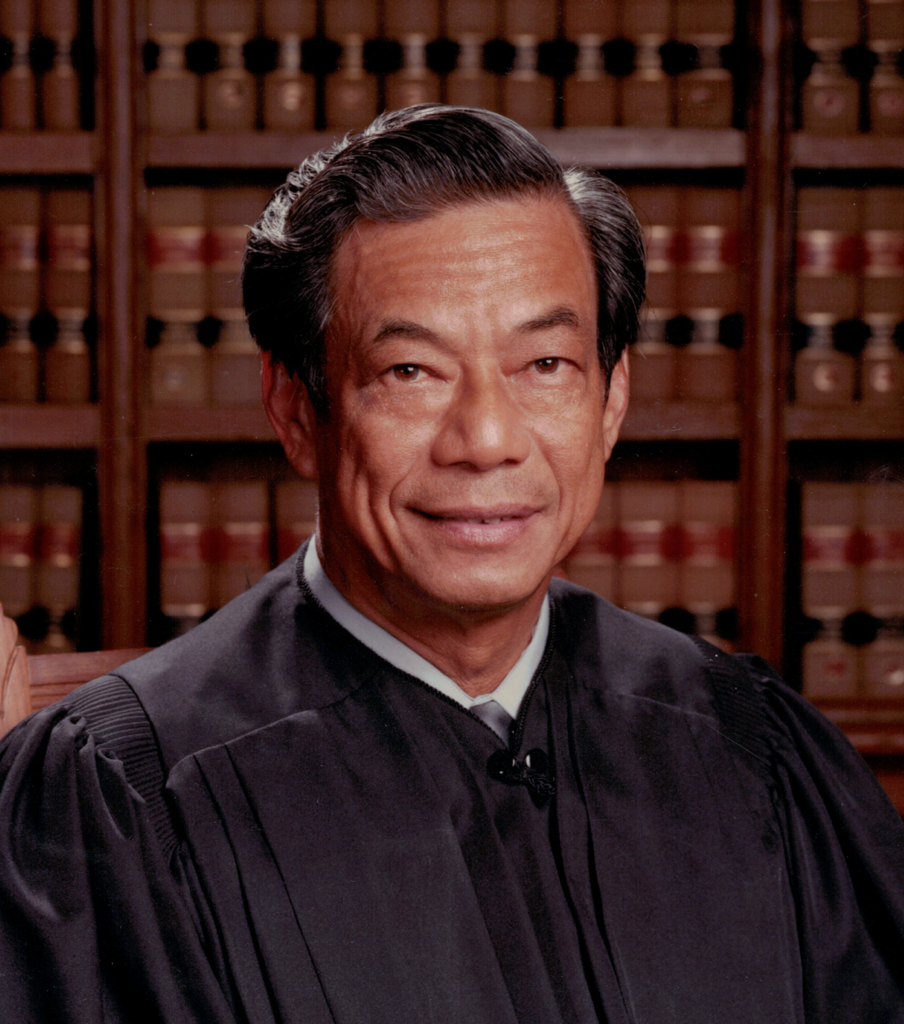
1966-1982: The Richardson Court

Shortly after statehood was achieved on March 11, 1959, William Shaw Richardson, a lawyer and official of the newly ascendant state Democratic Party, was elected to be lieutenant governor. In 1966, his political mentor, Governor John A. Burns, nominated him to fill the post of chief justice of the Hawaii Supreme Court, the first chief justice of Hawaiian ancestry since the time of Kamahameha III. His interest and involvement in preserving and protecting the history of Hawaii were directly reflected in the instrumental role he played in ensuring that Aliiolani Hale remain an enduring symbol for future generations. As chief justice, Richardson would administer the state’s court system and provide stewardship of both the law of Hawaii and the halls and grounds of Aliiolani Hale. 

[B]orn in 1919 in Honolulu of European, Hawaiian, and Chinese ancestry, he graduated from Roosevelt High School and attended the University of Hawaii and Cincinnati School of Law, from which he received a J.D. in 1943 and an honorary L.L.D. in 1967. After graduation he served in the Army’s Judge Advocate General Corps until 1946. Richardson subsequently joined with other leaders in Hawaii to advocate for statehood and strengthen the Democratic Party. …

“The Richardson court proved unique in the history of legal jurisprudence. In making decisions, it recognized the validity of both traditional native Hawaiian culture and Anglo-American tenets of law. In cases that led to unresolvable conflict and contradiction between Hawaiian and Anglo-American cultures, the court relied on the practice and traditions of the native Hawaiian culture. Seminal decisions were made by the Richardson court about water rights and shoreline boundaries which affected two of Hawaii’s most precious resources, fresh water and the sea. In both instances, the court made decisions that favored the interests of the public over private interests and emphasized the role of the state as the guardian of public resources. These decisions changed the tenor of island justice and, in many eyes, aligned the law with a new vision fashioned appropriately for the islands from ancient Hawaii traditions. Richardson eloquently stated his views in the Honolulu Advertiser on Feb. 26, 1966: The man who is Chief Justice must balance the rules of the past to conform with the state of society today. He must bring the old rules in line with modern times…. He must adopt the fundamental principles of the past and bring them into focus with the present. And in Hawii, the present – like the past—is a time of migration.” (Kneubuhl at 102). 

Professor Mari Matsuda was a member of the first graduating class of the University of Hawaii law school the Chief Justice founded in the 1970s.  In an essay written in tribute to Chief Justice Richardson after his passing, she described the qualities of a “Richardson lawyer” with the following story:

…When he became more frail, CJ Richardson still insisted on being at every major law school event. At one forum where he was asked to speak, he was helped to the podium by Professor Melody MacKenzie, and she was prepared to cut the program short if he became fatigued. He spoke slowly. He was asked about the McBryde case, perhaps the most important Richardson-era decision, and he told the story slowly, and then stopped altogether. We waited, caring so much for our aging patron, and worrying that we were asking too much of him. Then, after a long pause, he said, “Think of the little guy, the guy downstream.” McBryde was a huge, convoluted case involving decades of litigation, multiple parties, and complex issues in several areas of law, but its essence, and indeed the essence of everything CJ Richardson ever did as a lawyer and a leader, came down to thinking of the little guy downstream. Whatever we do, there is someone downstream who will bear the consequences. If we could learn to think that way, with an eye to the consequences, we could stop global warming and nuclear proliferation, stop doing things today that will have devastating consequences for future generations. The struggling taro farmer, the kahuna lapa'au who needs to gather roots and berries, the little boy holding his step-grandmother's hand at the crosswalk right before a speeding car takes her life - the small and ordinary people who lack money and power were at the center of CJ Richardson's jurisprudence. He judged the righteousness of legal doctrine by what it did for the least among us. He judged with his heart. He judged well.
A Richardson lawyer will help make Hawai'i a better place for those living downstream.

Professor Matsuda’s most compelling illustration of CJ Richardson’s jurisprudence of compassion is from his 1974 decision in Leong v. Takasaki, allowing a child to recover emotional distress damages when his step-grandmother was struck and killed by a car while they were crossing a street together. Matsuda wrote, “While most jurisdictions would not award emotional distress damages to a child who is not legally related to his caretaker, CJ followed Hawaiian conceptions of family, stating:

Neither should the absence of a blood relationship between victim and plaintiff-witness foreclose recovery. Hawaiian and Asian families of this state have long maintained strong ties among members of the same extended family group. The Hawaiian word ohana has been used to express this concept. It is not uncommon in Hawaii to find several parent-children family units, with members of three and even four generations, living under one roof as a single family.

John Doe-

Acknowledging that Western common-law rules of negligence required a plaintiff to prove a blood relationship to the decedent in order to recover for emotional distress, Richardson explained the Hawaiian principles that should pertain to the 10-year old boy who was the plaintiff in this case:

The Hawaiian concept of adoption also differs from that in other common law jurisdictions. The ancient Hawaiians cherished the principle of adoption, which took two forms: A child or adult one loves, but for whom one might not have exclusive care, might be adopted as a keiki ho'okama (child), … A child so adopted would be adopted as a child of the family, and entitled to inherit through his parents, while an adult would be adopted as a form of showing affection or respect. On the other hand, a keiki hanai is a child given to another to raise, as a foster child. … As adoption under the statute replaced ancient Hawaiian custom and usage, the term ho'okama has fallen into disuse and the term hanai has since been used to refer to all types of adoption. Nevertheless the custom of giving children to grandparents, near relatives, and friends to raise whether legally or informally remains a strong one. Hence the plaintiff should be permitted to prove the nature of his relationship to the victim and the extent of damages he has suffered because of this relationship.

Renovating Justice Under Richardson

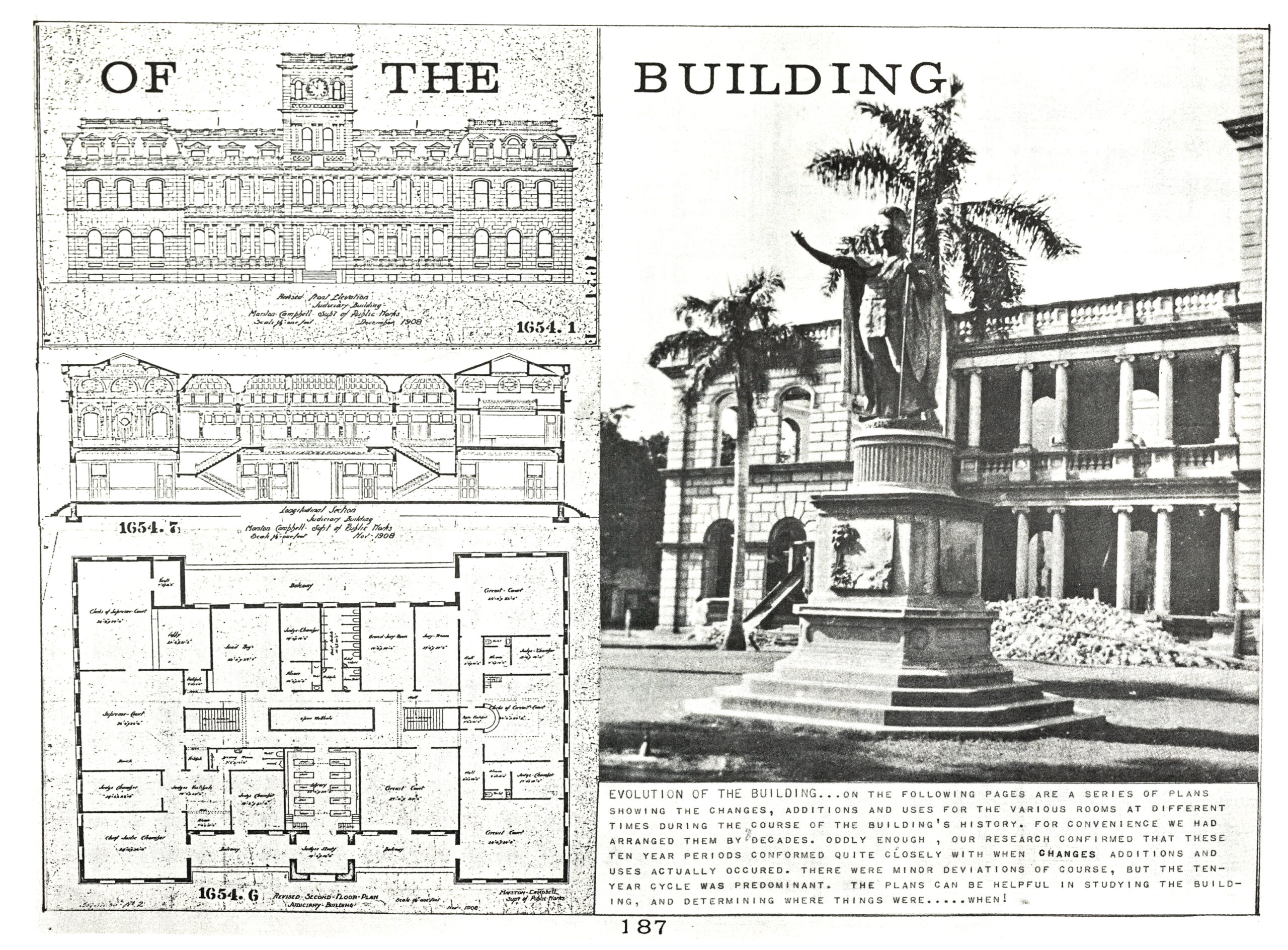
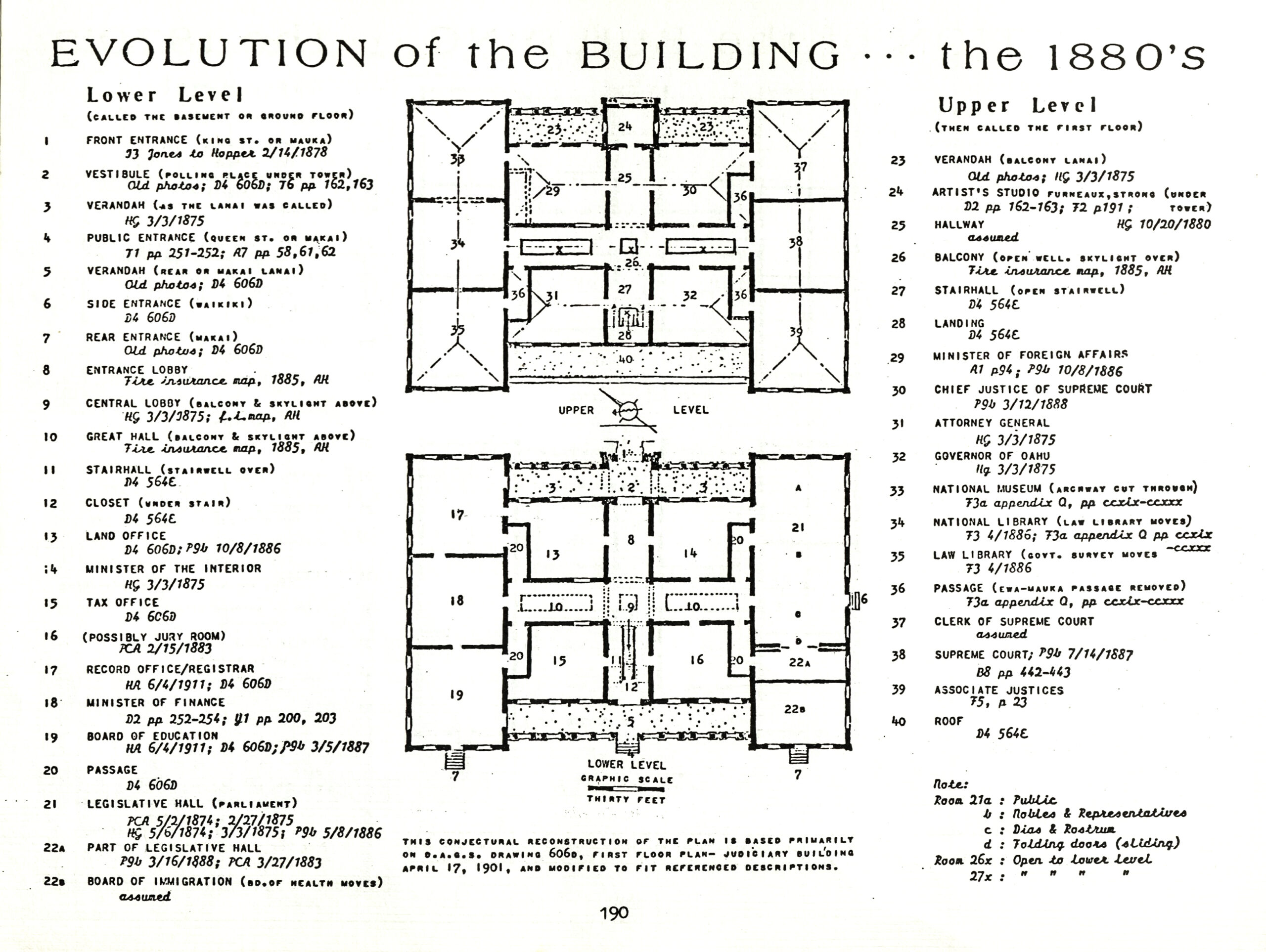
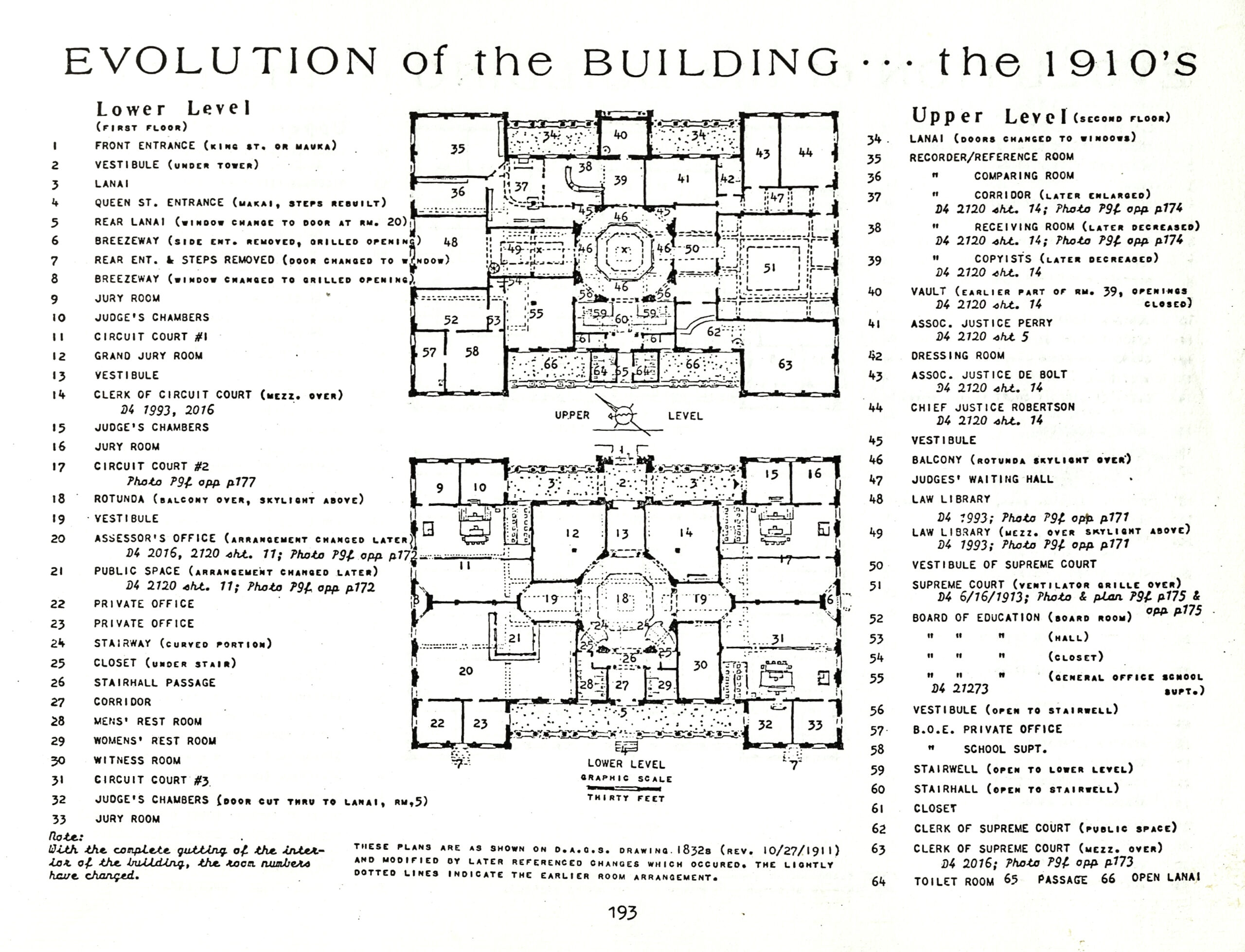
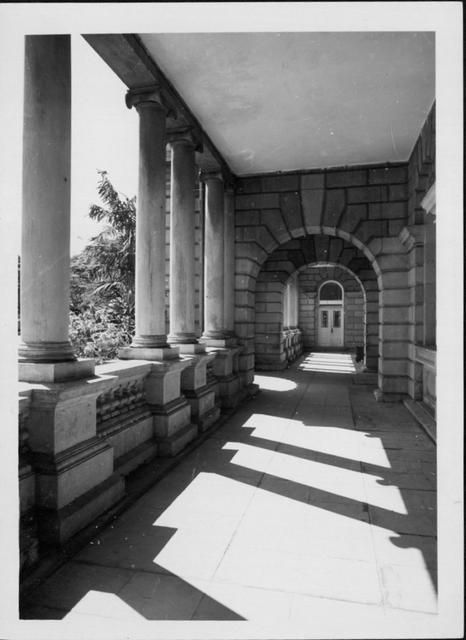
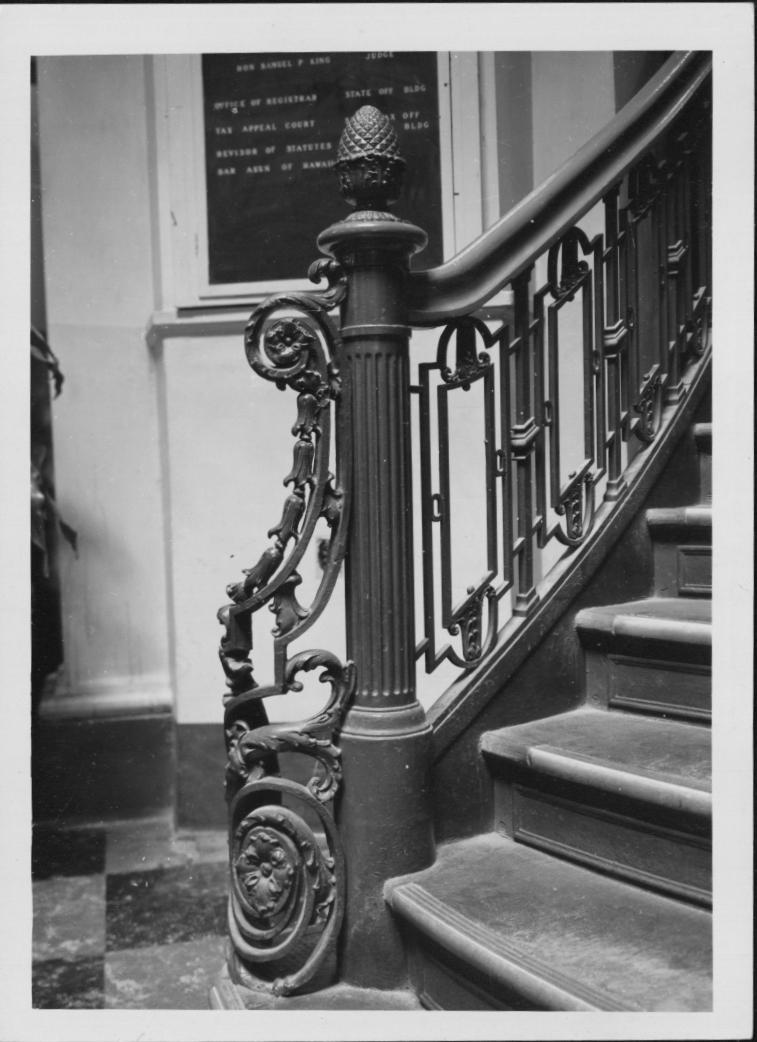
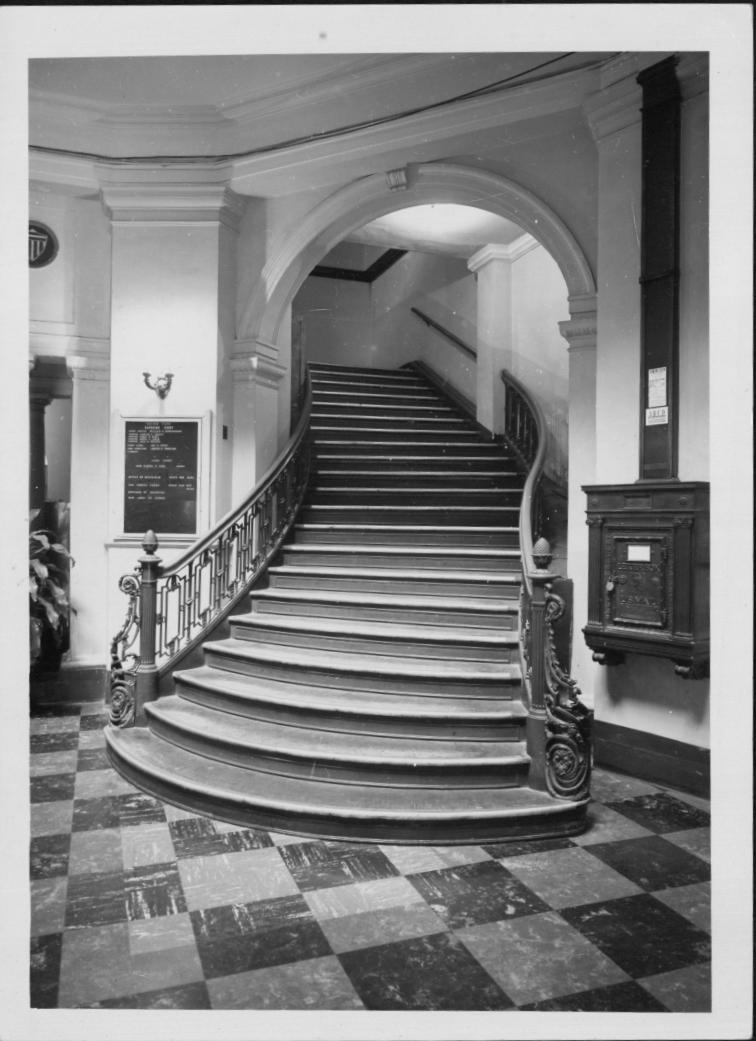
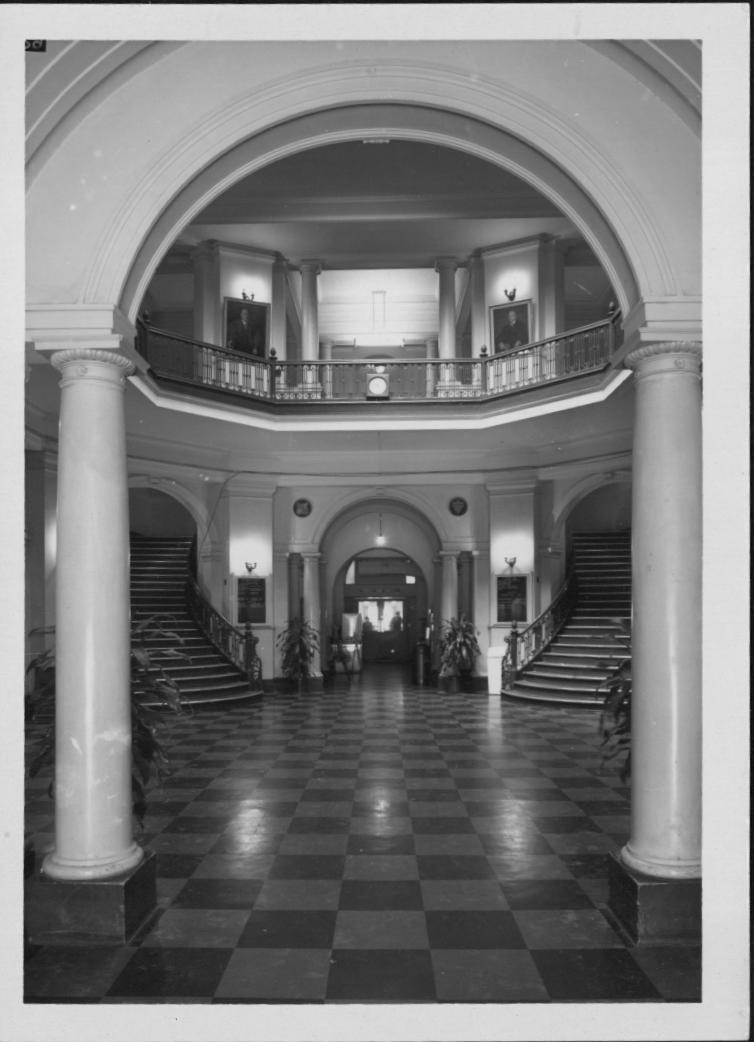
The first major reconstruction of Aliiolani Hale took place in 1911. The wooden beams and floors were badly eaten by termites, and the building was considered unsafe because it was not fireproof. The termite damage and safety factors were of such great concern, that rather than repairing, the interior, it was set on fire and only the exterior walls were left standing. Architects Ripley and Reynolds were engaged, and the result was the basic floor plan existing today, with a rotunda and double staircase. Steel beams were used to reinforce the floor and roof.

Hawaii almost lost Aliiolani Hale in 1937 when the territorial planning board drafted plans to demolish the structure and build a new Judiciary Building. Former Chief Justice and Governor Walter Frear strongly opposed the idea, and the Honolulu Advertiser picked up the torch in support of Frear announcing that “The Old Judiciary Building is threatened by the march of progress.” Instead of demolition, repairs and plans for a new wing were approved. Construction began in March of 1941 but was considerably hampered by the bombing of Pearl Harbor in December. With the attack and the declaration of Martial Law in Hawaii, the availability of building materials and workers became uncertain. Military justice supplanted the territory’s judicial process, and Aliiolani Hale was filled with military personnel. The new wing was finally completed in 1944, the same year that Martial law was lifted. In 1949, a second story was added to the new wing to finish the structure that stands today as Aliiolani Hale.
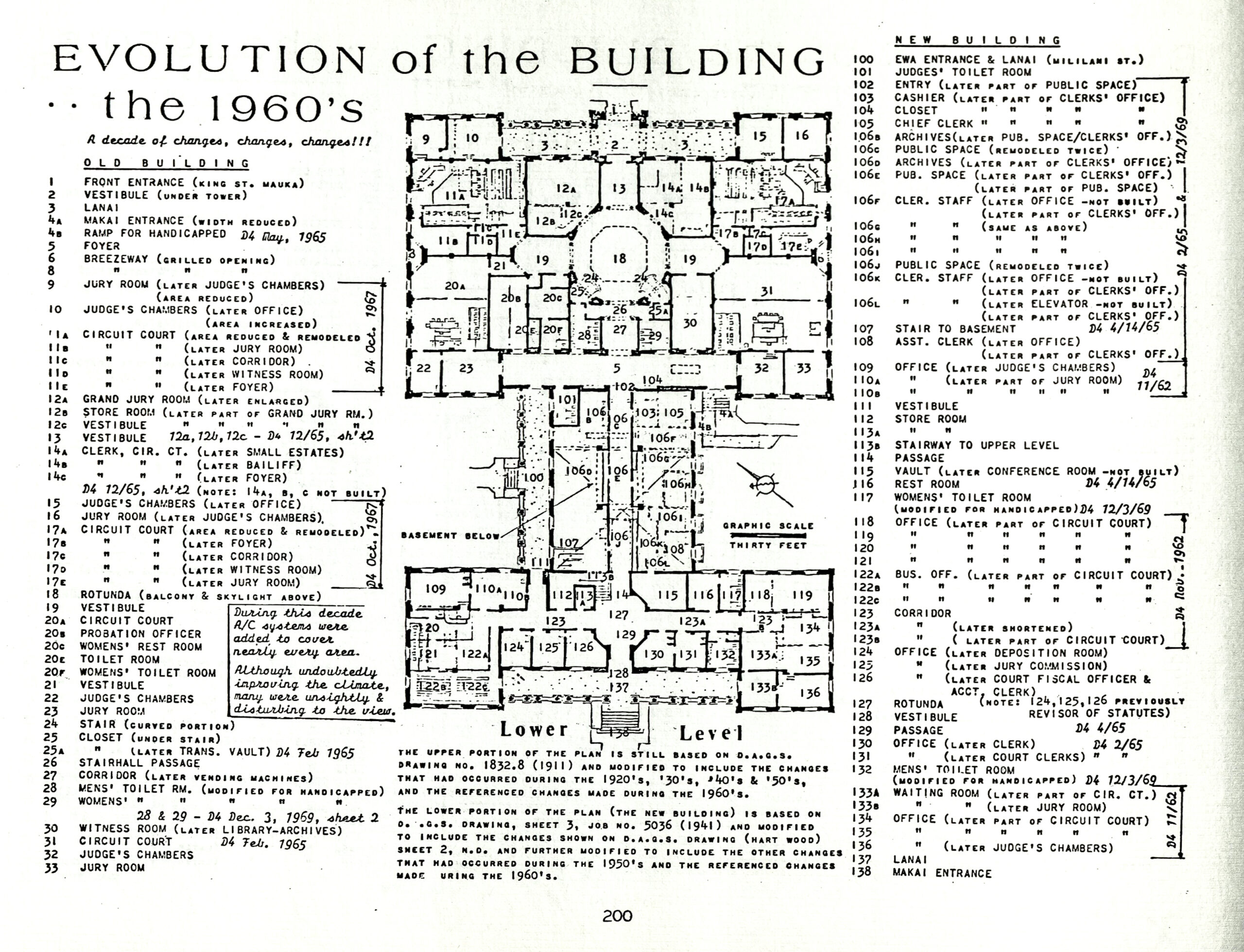
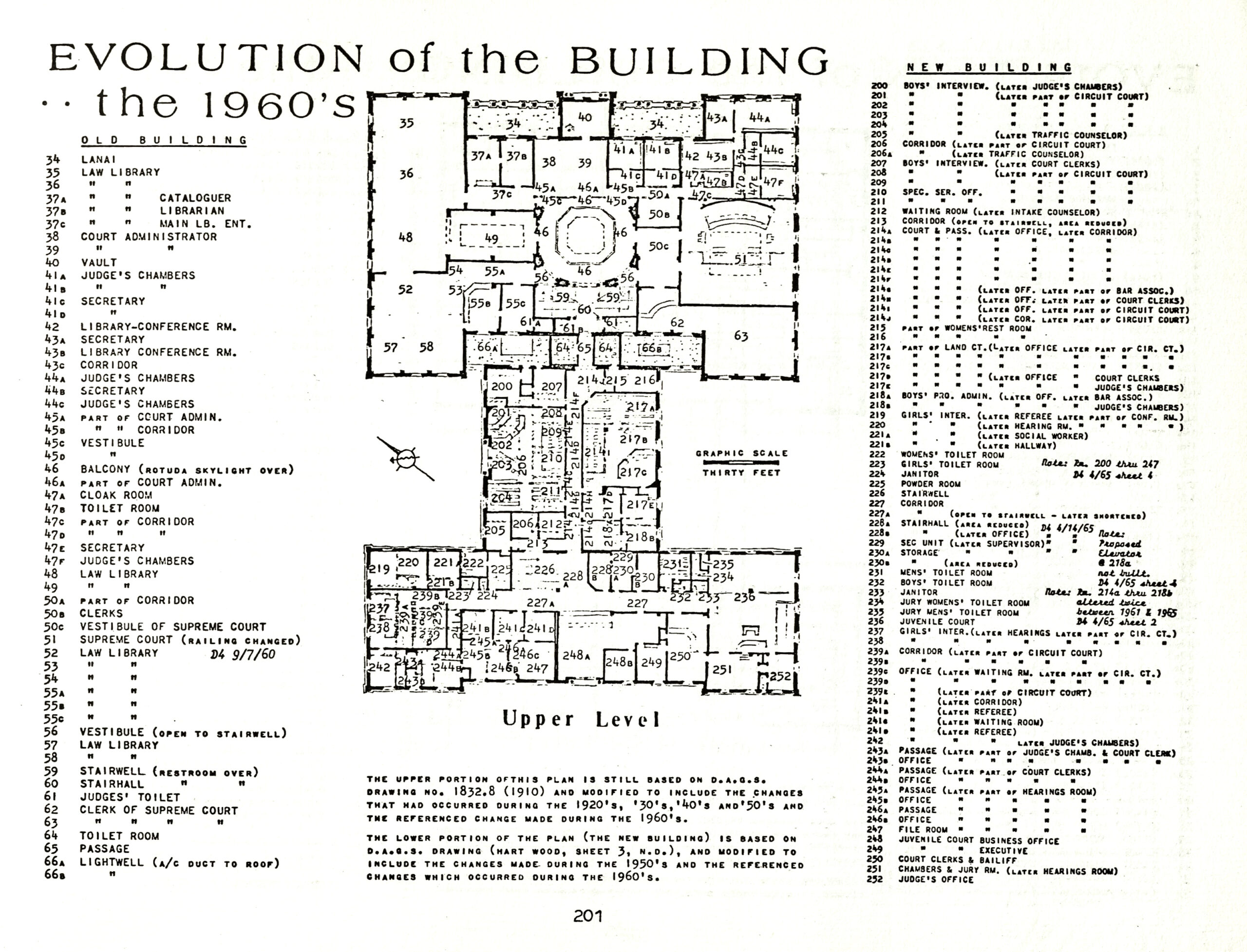
By 1951, the building, even with the new wing, was overcrowded and not providing adequate space for the needs of a growing Judiciary. In 1960, it was recommended that a new court building be constructed and that Aliiolani Hale retain the Supreme Court, the Land Court, the Administrative Offices, and the Law Library. In 1965, the interior of the building was refurbished at a cost exceeding the total expenditures for the building in 1874.

The celebration of the centennial of the laying of the cornerstone on February 19, 1972, was a doubly joyous event. Earlier that month, it was announced that Aliiolani Hale had been placed on the National Register of Historic Places. An 18 member Restoration Committee for Aliiolani Hale was appointed in 1976, by Chief Justice William Richardson. The three-phased restoration and renovation began in 1978. The first phase covered the second story, the second the ground level, and the third, the grounds and Kamehameha Statue.

———-

The origins of the Judiciary History Center date back to the 1970’s. In 1976, Chief Justice William S. Richardson appointed an advisory committee of private citizens and Judiciary personnel during the restoration of Aliiolani Hale. The advisory committee recommended an educational facility be established within Aliiolani Hale to assist the public and Hawaii’s people to better understand today’s judicial system, Hawaiian concepts of law, and the history and development of Hawaiʻi’s Judiciary.

Renovating Justice Under Richardson

The first major reconstruction of Aliiolani Hale took place in 1911. The wooden beams and floors were badly eaten by termites, and the building was considered unsafe because it was not fireproof. The termite damage and safety factors were of such great concern, that rather than repairing, the interior, it was set on fire and only the exterior walls were left standing. Architects Ripley and Reynolds were engaged, and the result was the basic floor plan existing today, with a rotunda and double staircase. Steel beams were used to reinforce the floor and roof.

Hawaii almost lost Aliiolani Hale in 1937 when the territorial planning board drafted plans to demolish the structure and build a new Judiciary Building. Former Chief Justice and Governor Walter Frear strongly opposed the idea, and the Honolulu Advertiser picked up the torch in support of Frear announcing that “The Old Judiciary Building is threatened by the march of progress.” Instead of demolition, repairs and plans for a new wing were approved. Construction began in March of 1941 but was considerably hampered by the bombing of Pearl Harbor in December. With the attack and the declaration of Martial Law in Hawaii, the availability of building materials and workers became uncertain. Military justice supplanted the territory’s judicial process, and Aliiolani Hale was filled with military personnel. The new wing was finally completed in 1944, the same year that Martial law was lifted. In 1949, a second story was added to the new wing to finish the structure that stands today as Aliiolani Hale.
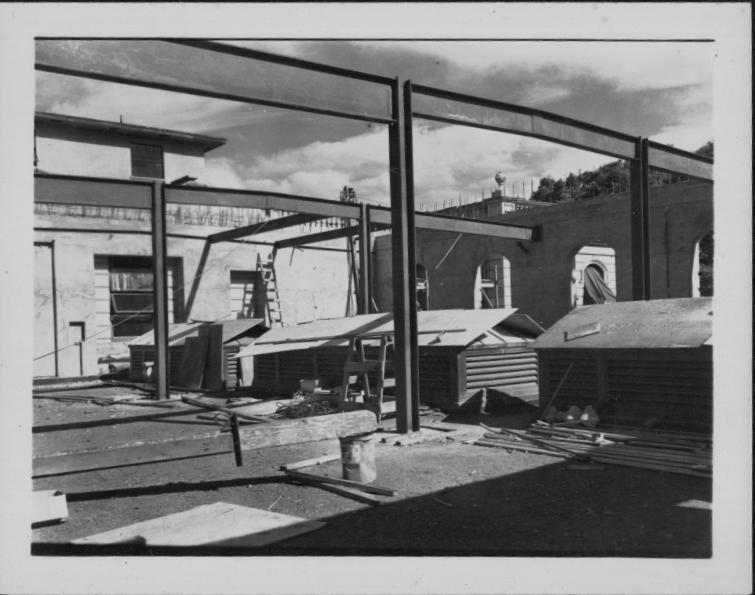
By 1951, the building, even with the new wing, was overcrowded and not providing adequate space for the needs of a growing Judiciary. In 1960, it was recommended that a new court building be constructed and that Aliiolani Hale retain the Supreme Court, the Land Court, the Administrative Offices, and the Law Library. In 1965, the interior of the building was refurbished at a cost exceeding the total expenditures for the building in 1874.

The celebration of the centennial of the laying of the cornerstone on February 19, 1972, was a doubly joyous event. Earlier that month, it was announced that Aliiolani Hale had been placed on the National Register of Historic Places. An 18 member Restoration Committee for Aliiolani Hale was appointed in 1976, by Chief Justice William Richardson. The three-phased restoration and renovation began in 1978. The first phase covered the second story, the second the ground level, and the third, the grounds and Kamehameha Statue.

———-

The origins of the Judiciary History Center date back to the 1970’s. In 1976, Chief Justice William S. Richardson appointed an advisory committee of private citizens and Judiciary personnel during the restoration of Aliiolani Hale. The advisory committee recommended an educational facility be established within Aliiolani Hale to assist the public and Hawaii’s people to better understand today’s judicial system, Hawaiian concepts of law, and the history and development of Hawaiʻi’s Judiciary.

Today

Today, Aliiolani Hale houses the Hawaii State Supreme Court, court administration offices, the Judiciary’s Law Library, and the Judiciary History Center. The Center interprets over 200 years of law and judicial history across the Hawaiian Islands, highlighting our unique legal history from the days of Kapu to Monarchy to Statehood.

Kings and queens have walked the halls of Aliiolani Hale. Sensational cases have been tried in its courtrooms. Since 1874, Supreme Court rulings affecting the future of Hawaii and its people have been decided here. Over 150 years after the laying of the cornerstone, we might look back on the words which Attorney General Phillips spoke in 1872 as prophetic. Aliiolani Hale continues to fulfilled its charge “of such an enduring character that traditions and memories may cluster around it.”

Today

Today, Aliiolani Hale houses the Hawaii State Supreme Court, court administration offices, the Judiciary’s Law Library, and the Judiciary History Center. The Center interprets over 200 years of law and judicial history across the Hawaiian Islands, highlighting our unique legal history from the days of Kapu to Monarchy to Statehood.

Kings and queens have walked the halls of Aliiolani Hale. Sensational cases have been tried in its courtrooms. Since 1874, Supreme Court rulings affecting the future of Hawaii and its people have been decided here. Over 150 years after the laying of the cornerstone, we might look back on the words which Attorney General Phillips spoke in 1872 as prophetic. Aliiolani Hale continues to fulfilled its charge “of such an enduring character that traditions and memories may cluster around it.”

1866

Kingdom Legislature appropriates $40,000 for a new palace and $40,000 for a new government building.

March 1870

Cornerstone for the Kamehameha V Post Office is laid.

April 1870

Legislature appropriates $60,000 for a new palace and $60,000 for new government building.

November 1870

Site chosen for government offices.

December 1871

Architect Thomas Rowe, from Sydney, Australia, submits two sets of plans for a palace. A decision is made to alter and use the second plan for a government office building.

January 1872

Work on the foundation of new government building begins.

February 1872

A formal ceremony for laying of the cornerstone led by Kamehameha V. Construction begins, and men from the Oahu Prison serve as laborers on the project.

December 11, 1872

Kamehameha V dies.

January 1873

Lunalilo is elected king in a plebiscite and an election in the legislative assembly.

February 3, 1874

Lunalilo dies.

February 12, 1874

The Legislature elects Kalakaua as king. The followers  of his opponent, Queen Emma, riot and damage the old Honolulu courthouse.

April 25, 1874

The clock for the tower of the new government building is installed.

April 30, 1874

Kalakaua opens the new government building at the beginning of the legislative session.

May 2, 1874

Kalakaua names the new government building “Aliiolani House” after Kamehameha V.

May 27, 1874

Supreme Court moves from the old courthouse to Aliiolani Hale.

September 9, 1874

Hawaii’s first National Museum is established in Aliiolani Hale.

September 22, 1874

The old courthouse is sold to Hackfeld & Co. for $20,000.

December 8, 1874

Observations of the transit of Venus are made from Aliiolani Hale.

1878

Legislature appropriates $5,000 for statue to commemorate the arrival of Captain Cook. It is deemed fitting that the statue be a likeness of Kamehameha I.  The statue is commissioned.

1880

King Kalakaua invites American painter Charles Furneaux to use the room below the clock tower as an art studio. Mauna Loa erupts on Hawaii island in November and Furneaux takes great interest, depicting the event.

July 1881

Music Hall opens next to Aliiolani Hale. (Name later changed to Royal Hawaiian Opera House.)

August 1881

Furneaux exhibits volcano paintings in Aliiolani Hale.

December 1882

Iolani Palace opens.

February 1883

Kalakaua’s coronation and the unveiling of the Kamehameha Statue.

1884

Kapuaiwa Building constructed, next to Aliiolani Hale. Originally intended to house the Kingdom Archives, the building is used for government office space. 

1885

American artist Joe Dwight Strong uses art studio in Aliiolani Hale’s clock tower.  Visiting actress Genevieve Ward copies one of his paintings in the “tower studio.”

July 6, 1887

Kalakaua is forced to sign new constitution at gunpoint, led by Minister of the Interior Lorrin A. Thurston and backed by volunteer military regiment the Honolulu Rifles. Document referred to as “the Bayonet Constitution.” 

July 30, 1889

The Wilcox Rebellion, led by Robert Wilcox in attempt to return power to the Hawaiian Monarchy and promulgate a new constitution.  

January 20, 1891

Kalakaua dies in San Francisco, Liliuokalani takes the throne.

1892

An act passes to reorganize the Judiciary.  The Supreme Court becomes an appellate court only.

January 17, 1893

The Hawaiian Monarchy is overthrown.  Legislature moves to Iolani Palace and Aliiolani is renamed “Judiciary Building.”

January 1895

Robert Wilcox leads a counter-revolution against the Republic of Hawaii.

1898

The National Museum’s collection, in Aliiolani Hale, is formally transferred to the Bishop Museum without compensation.

July 7, 1898

Spurred by imperialism and nationalism during the Spanish-American War, the United States annexed Hawaii in 1898 at the urging of US President William McKinley.

1898

A drawing is prepared for a vault door to be placed in Aliiolani Hale, leading to the tower studio.

1900

Organic Act of 1900 – Congress transferred Hawaii’s sovereignty to the United States, making it a US territory and defining its territorial government.

1907

$50,000 is appropriated for the reconstruction of Aliiolani Hale, but legislative funds are insufficient.

1910

Marston Campbell, head of Public Works, reports that Aliiolani Hale is in “such bad shape that nothing short of absolute reconstruction will be of any effect.”  He estimates the cost at $100,000.

1911

Ripley and Reynolds make remodeling plans for Aliiolani Hale. Work begins in December.

1913

Five government departments move back into newly renovated Aliiolani Hale.

1927

Kapuaiwa Building, nextdoor to Aliiolani Hale, is renovated.

1939

New makai wing extension to Aliiolani Hale is planned.

1941

Final plans for makai wing addition presented. In preparation, large Banyan tree is cut down creating some controversy.

1949

Second story of makai wing completed.

August 21, 1959

Hawaii becomes the 50th US State.

April 1967

The royal palms surrounding the Kamehameha Statue are ordered to be cut down through a fraudulent phone call to a tree trimming company. The tree trimmers cut down all of the palms before anyone realizes that the phone call was a hoax. The caller identifies himself as French philosopher, Albert Camus.

February 2, 1972

Aliiolani Hale is placed on the National and State Register of Historic Places. (National Register of Historic Places NRIS Number: 72000414)

February 1972

100th anniversary of the laying of Aliiolani Hale’s cornerstone.

1976

Chief Justice William S. Richardson appoints a restoration advisory committee for the renovation of Aliiolani Hale.

1989

The Judiciary History Center opens to the public.

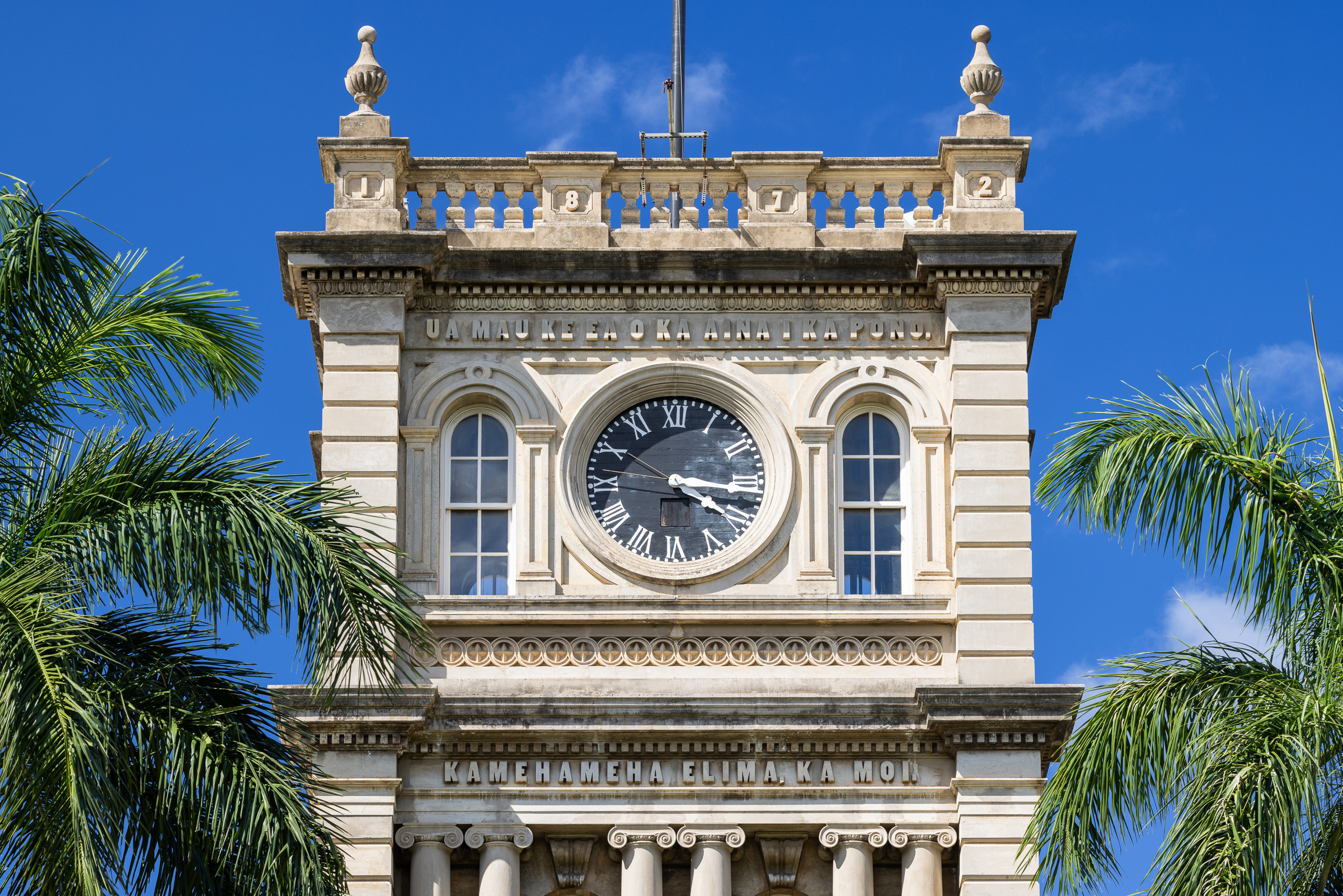
Clocktower inscriptions: "Ua mau ke ea o ka aina I ka pono" commonly interpreted as "The life of the land is perpetuated in righteousness." The saying is attributed to King Kamehameha III on July 31, 1843, when the Hawaiian flag was raised after a British admiral, briefly and without authority, usurped authority over the Hawaiian Kingdom; "Kamehameha Elima, Ka Moi" meaning Kamehameha the fifth, the King.
Verified by MonsterInsights