
Hungry Like a Horse
Grade Levels: 2–3
Animals and livestock were a common factor of everyday life in the 1800’s and accordingly animals were the subject of a large percentage of court cases. These types of cases are a great opportunity to link the “chores” of the past to our responsibilities today. The Judiciary History Center has prepared this teacher’s guide and mock trial for use in the classroom or our Restored 1913 Courtroom during your class visit. The lesson is designed for grades 2-3 and focuses on a dispute between neighbors to highlight the values of public safety and responsibility.
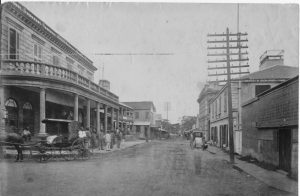
Furious Riding
Grade Levels: 2–3
Animals and livestock were a common factor of everyday life in the 1800s and accordingly animals were the subject of a large percentage of court cases. These types of cases provide an excellent opportunity to link the “chores” of the past to our responsibilities today. The Judiciary History Center has prepared this teacher’s guide and mock trial for use in the classroom as well as our Restored 1913 Courtroom during class visits. The lesson is designed for grades 2-3 and focuses on the values of public safety, courtesy/respect, and honesty.
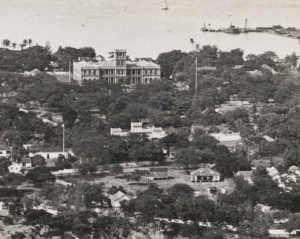
Power & Authority / Rules & Laws
Grade Levels: 2–3
The Center has two tour activities to address the DOE’s 3rd grade Social Studies Benchmarks. Authority and Power examines the legitimacy of power. Students learn to differentiate between power backed by might and power backed by right. In Rules and Laws, students compare the origins, purposes, and consequences of rules and laws. The two activities combine to create a powerful learning experience in the museum setting. Students gain a clear picture of legitimate authority and legislative intent. This tour is usually combined with one of the Animal Case mock trials. (45 – 60 minutes)
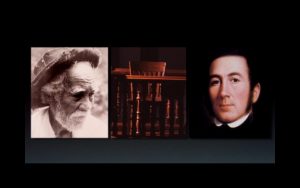
Oni v. Meek
Grade Levels: 4-6 & 7–12
In the second half of the 19th century, major decisions of the courts shaped and responded to the rapid changes in society. Oni v. Meek is one example of how the new laws created by the Kingdom’s Legislature supported private property ownership over the old system of shared land use rights.
The Judiciary History Center has prepared these scripts and teacher’s guide for use in the classroom and our Restored 1913 courtroom during class visits:
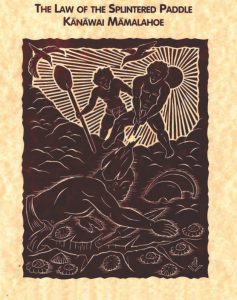
Ke Kānāwai Māmalahoe
Grade Levels: 2-4
Ke Kānāwai Māmalahoe, “Law of the Splintered Paddle,” was established by Kamehameha I in 1797. It assured that every person would be able to travel freely and in peace, with the right to “lie down to sleep by the roadside without fear of harm.”
Bacon’s Rebellion
Grade Level 5
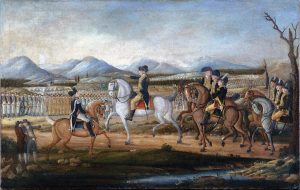
The Judiciary History Center developed this lesson to aid teachers in meeting Social Studies standards for grade 5. Bacon’s Rebellion in the Virginia Colony in 1676 is one the most intriguing events in colonial America. The event is put in the context of the colonization of North America by Europeans and correlations are made to the history of Hawaiʻi.
Hawaiʻi Court System & the Separation of Powers
Grade Levels: 4 – 6
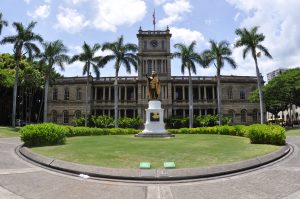
Which courts have jurisdiction over which cases? How many jurors must agree to determine the verdict in a civil trial? Students learn the answers and more during this presentation about the State Courts in Hawaiʻi. After a brief look at the three branches of government and their responsibilities, we take a closer look at the State’s Judicial Branch.
Martial Law in Hawaiʻi
Grade Levels: 8–12
Martial Law is the rule by military authority in times of emergency and the temporary suspension of civil authority. Just as killing or injuring another person may be justified under the extraordinary circumstance of a threat to one’s life, the suspension of civil authority (including judicial procedures) may be justified in times of war or insurrection. In societies placing a high premium on the rule of law and the rights of individuals, martial law is seen as an undesirable necessity. On December 7, 1941, Martial Law was declared in Hawaiʻi.
The Trial of the Queen
Grade Levels: 7-12
A curriculum guide that examines the 1895 military trial of Queen Liliʻuokalani on charges of misprision of treason. While role playing characters of various political backgrounds, students discover events leading up to the Queen’s trial, and gain both a legal and human perspective of the judicial process.
Judges in the Classroom
Grade Levels: 3 & 4–6 & 7–12
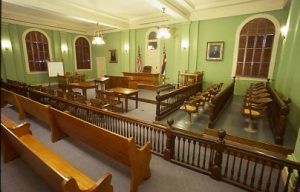
Judges in the Classroom is an education curriculum for judges by the Center. The curriculum offers judges either a three-lesson unit that requires three consecutive classroom visits or, one of several lessons requiring just one visit.