Martial Law in Hawaii:
1941 – 1944
Martial Law in Hawaii:
1941 – 1944

Click the button below to access the full booklet accompanying the Judiciary History Center’s Martial Law Gallery at Aliiolani Hale.

Support for this research was provided by a grant from Hawaii Council for the Humanities.


What is Martial Law?

Martial Law is military control imposed during emergencies that temporarily suspends civilian government authority. Its use is often compared to self-defense: just as harming another person may be justified to protect one’s life, suspending civil authority—including judicial processes—can be justified during war or rebellion. In societies that value the rule of law and individual rights, martial law is seen as an undesirable but necessary measure. History shows that deciding when to end martial law is as important as deciding when to start it. Many governments have been accused of prolonging martial law to suppress political opposition.

Key questions about martial law include when it should be imposed, when it should be lifted, and who has the power to make those decisions. The United States Constitution does not mention martial law, nor do federal or state laws clearly define it. Instead, martial law’s acceptance depends on its relationship to other constitutional powers—such as Congress’s authority to call out the militia to suppress insurrections and repel invasions, and laws allowing the president to use the military to enforce order.

Historically, presidents, governors, territorial leaders, and military commanders have all declared martial law during emergencies. The legality of such declarations, their continuation, and related actions have often been challenged, with civil courts sometimes called upon to rule on their validity.

This film depicts scenes near Pearl Harbor in the spring of 1942. Workers are shown as they harvested pineapples, a train filled with workers is seen as it approached a depot, soldiers with duffle bags are shown as they boarded trucks, A Navy band is seen near a flagpole at the Naval Air Station (NAS) at Kaneohe Bay, and a Marine Color Guard is shown as it hoisted colors at the NAS. (Courtesy the National Archives)

AN-PNS-79-16978.2-2
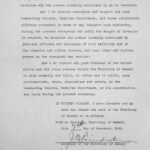
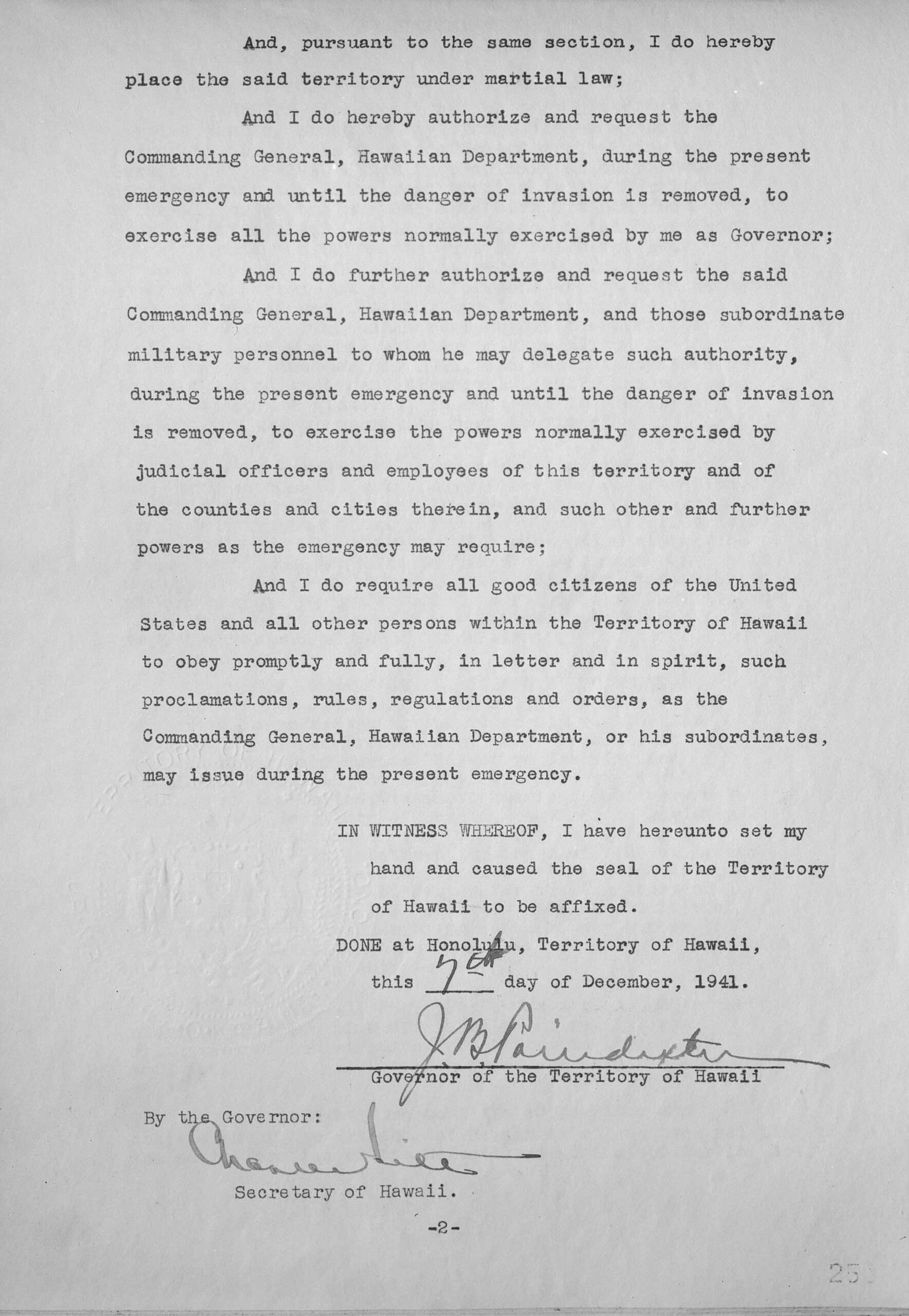
Proclamation Page 2
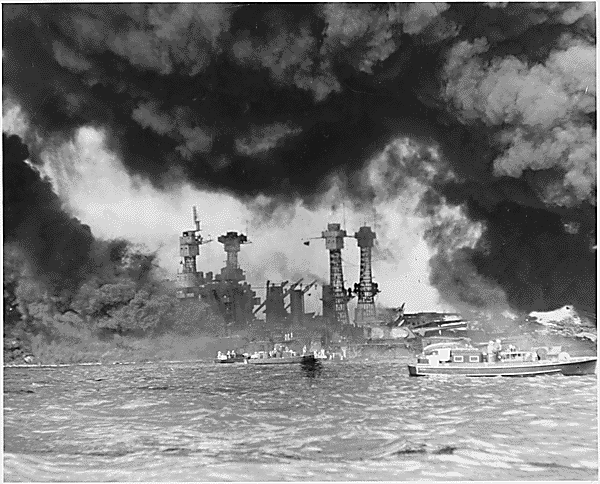
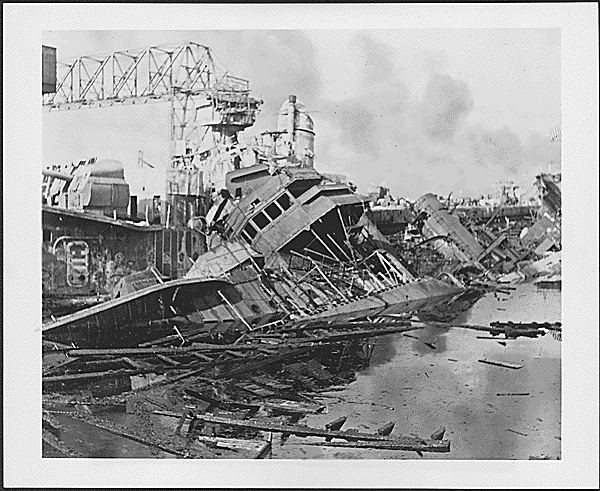
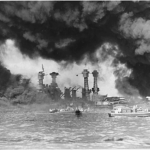
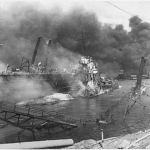
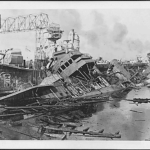
Burning and damaged ships after the Japanese attack on Pearl Harbor, Dec. 7 1941. Courtesy: National Archives
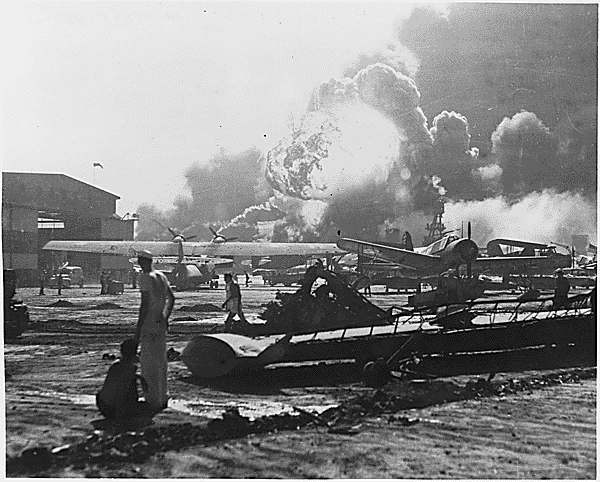
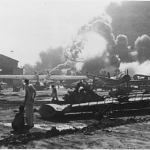
Burning and damaged ships at Pearl Harbor, Dec. 7 1941. Courtesy: National Archives
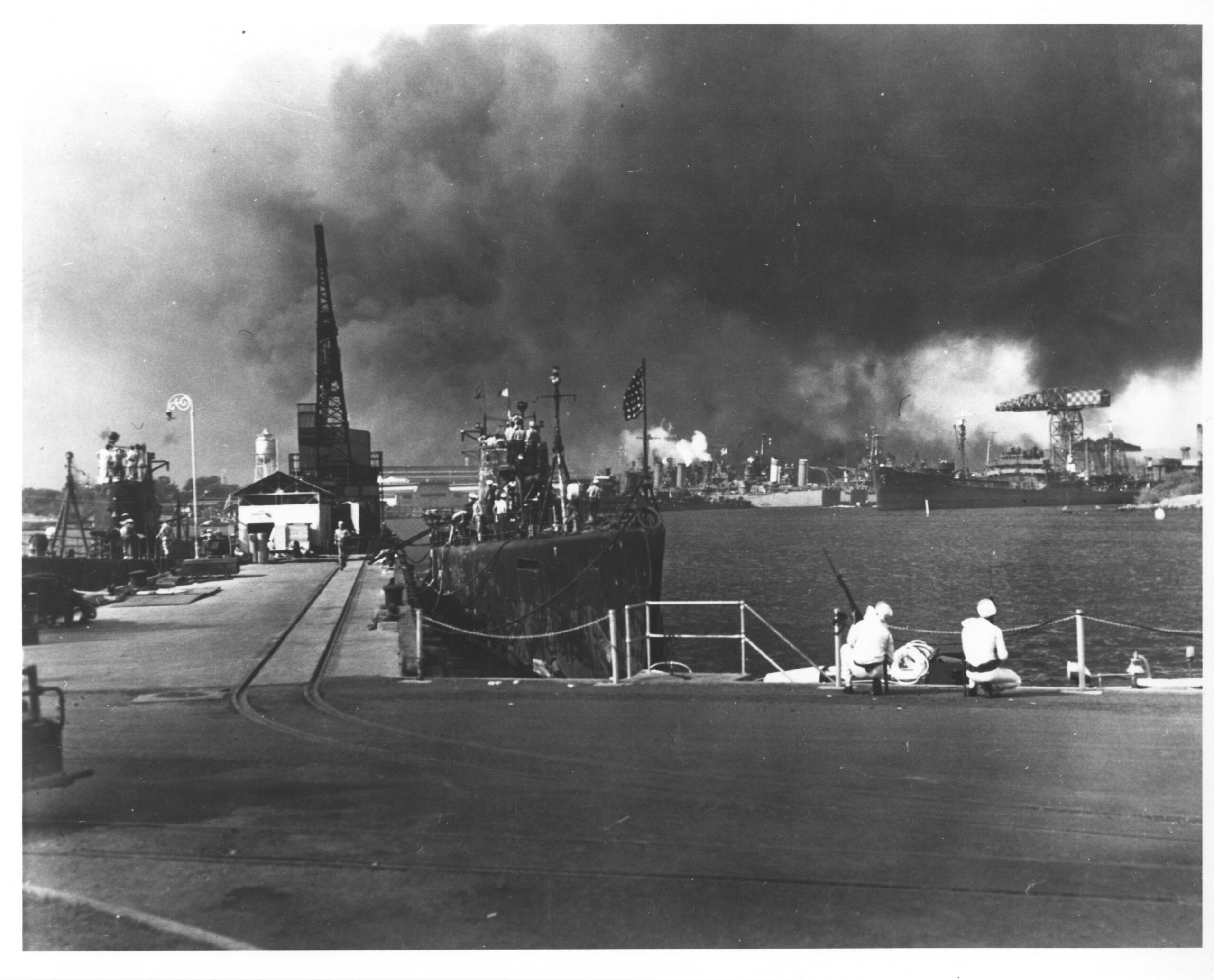
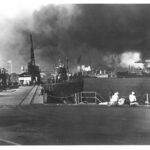
Burning and damaged ships after the Japanese attack on Pearl Harbor, Dec. 7 1941. Courtesy: National Archives
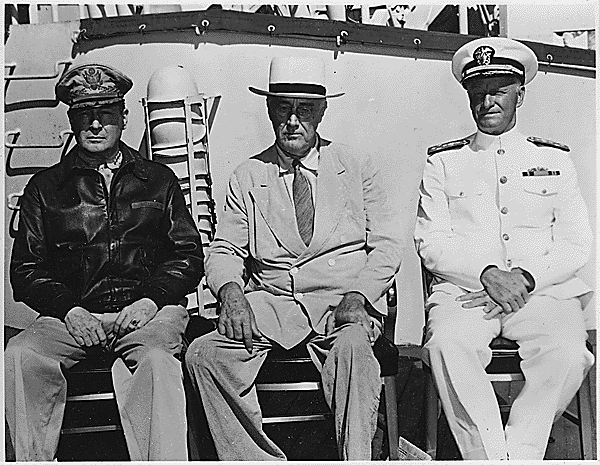
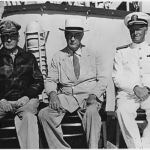
Franklin D. Roosevelt, General MacArthur, and Admiral Nimitz in Pearl Harbor, Hawaii. Courtesy: National Archives
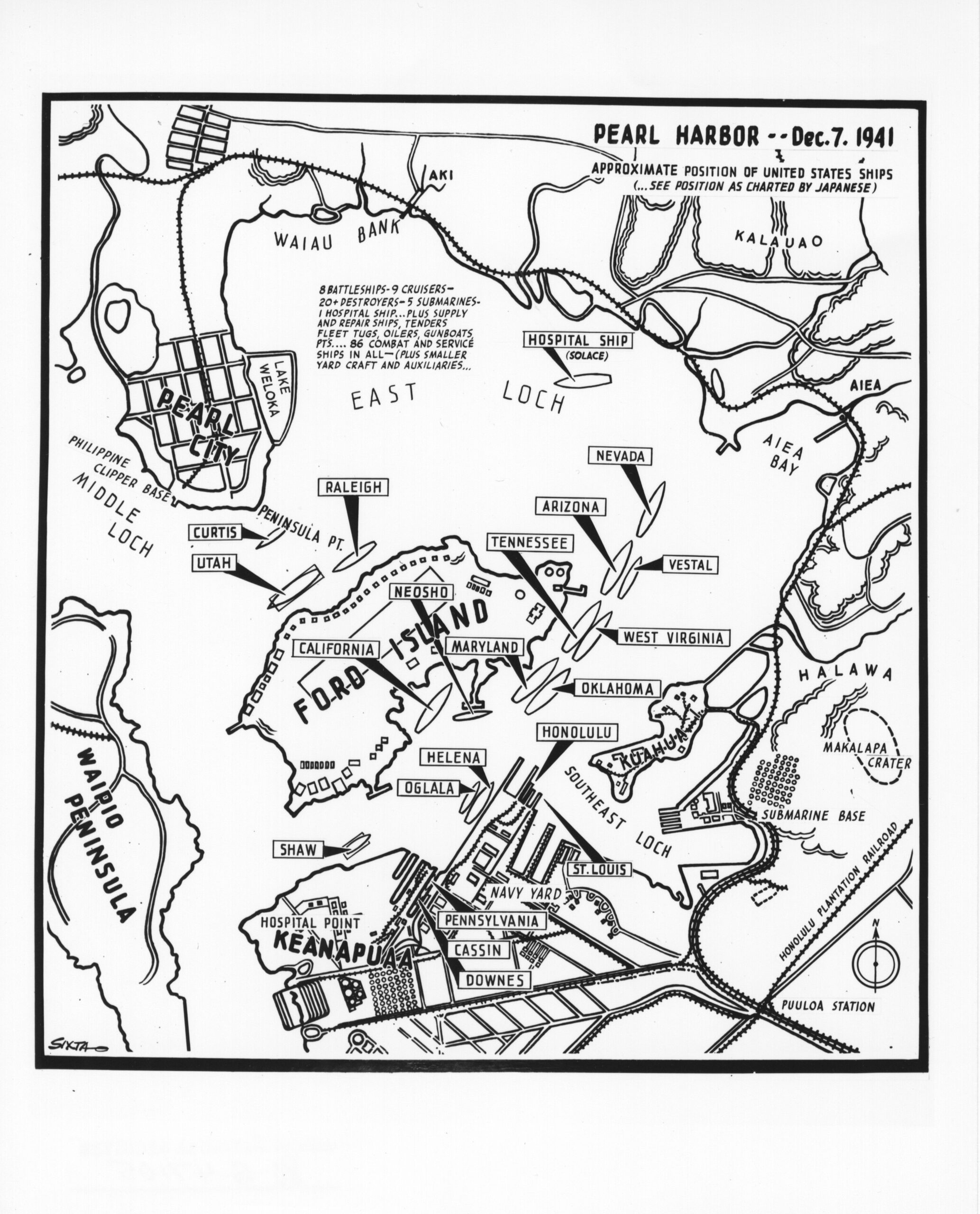
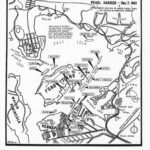
Original caption: Map of Pearl Harbor, one of approximately 40 new pictures of combat action during first six months of Pacific war, released in connection with publication of "Battle Report" by Comdr. Walter Karig, USNR and Lt. Welbourne Kelley, USNR. Rec'd Nov. 27, 1944. Courtesy: National Archives
ark_70111_08bH.0
ark_70111_08b3.0
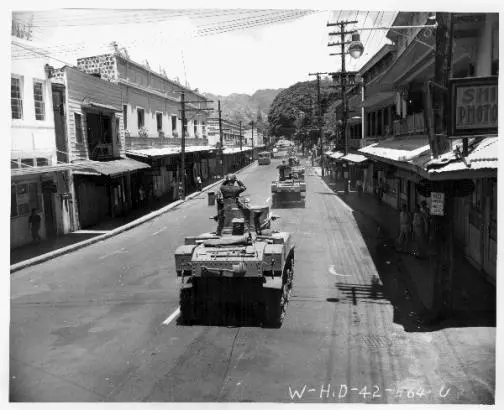
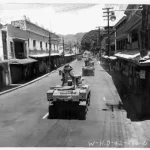
US Army M3 Stuart light tanks in maneuvers, Beretania Street in the Honolulu business district, Hawaii, 30 August 1942.
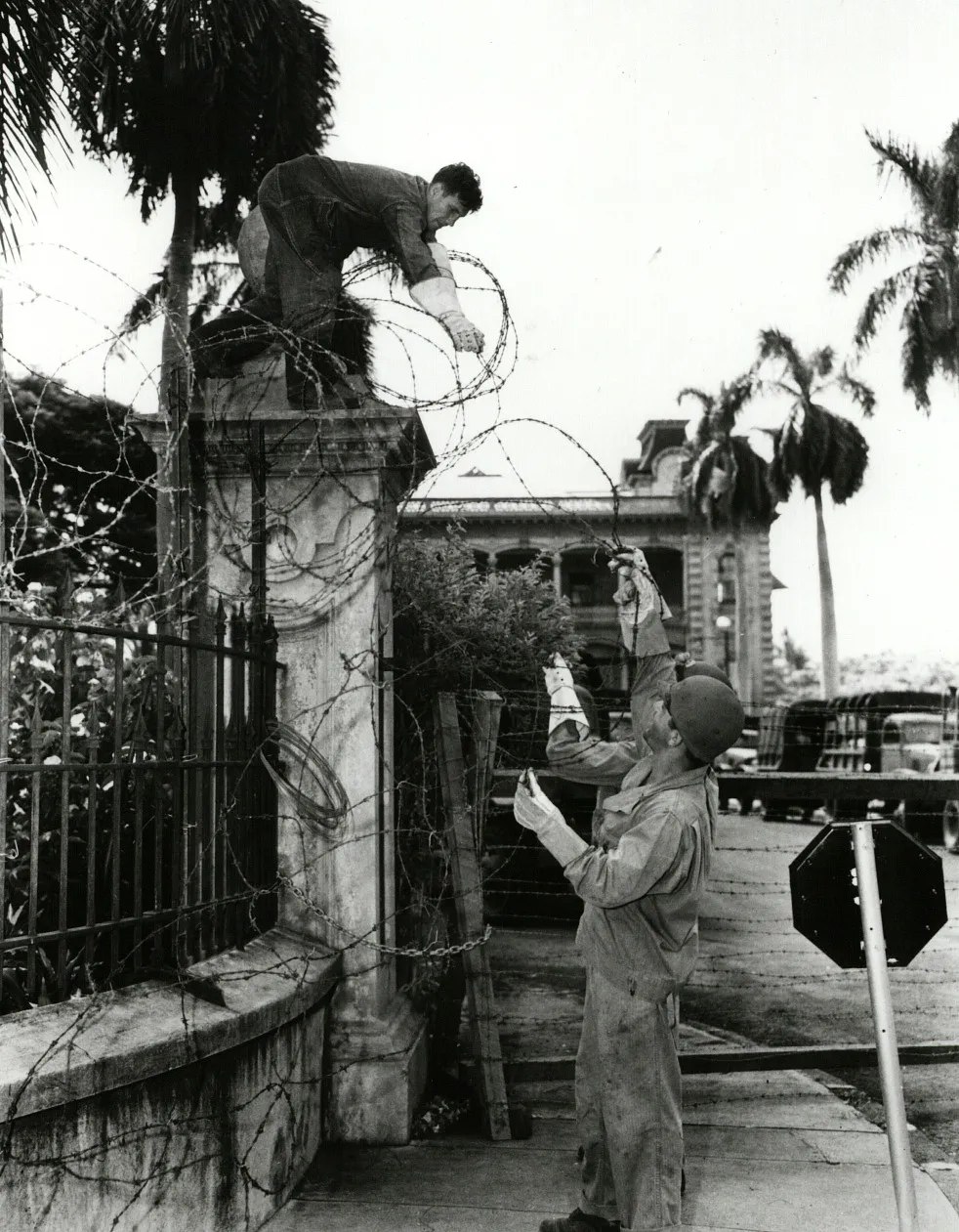
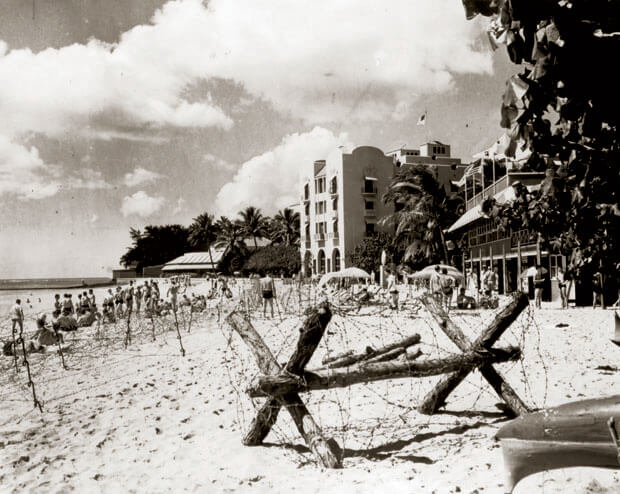
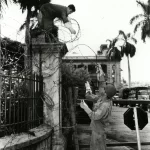
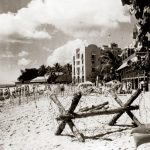
U.S. soldiers surround Iolani Palace with barbed wire during the rule of martial law in 1942.
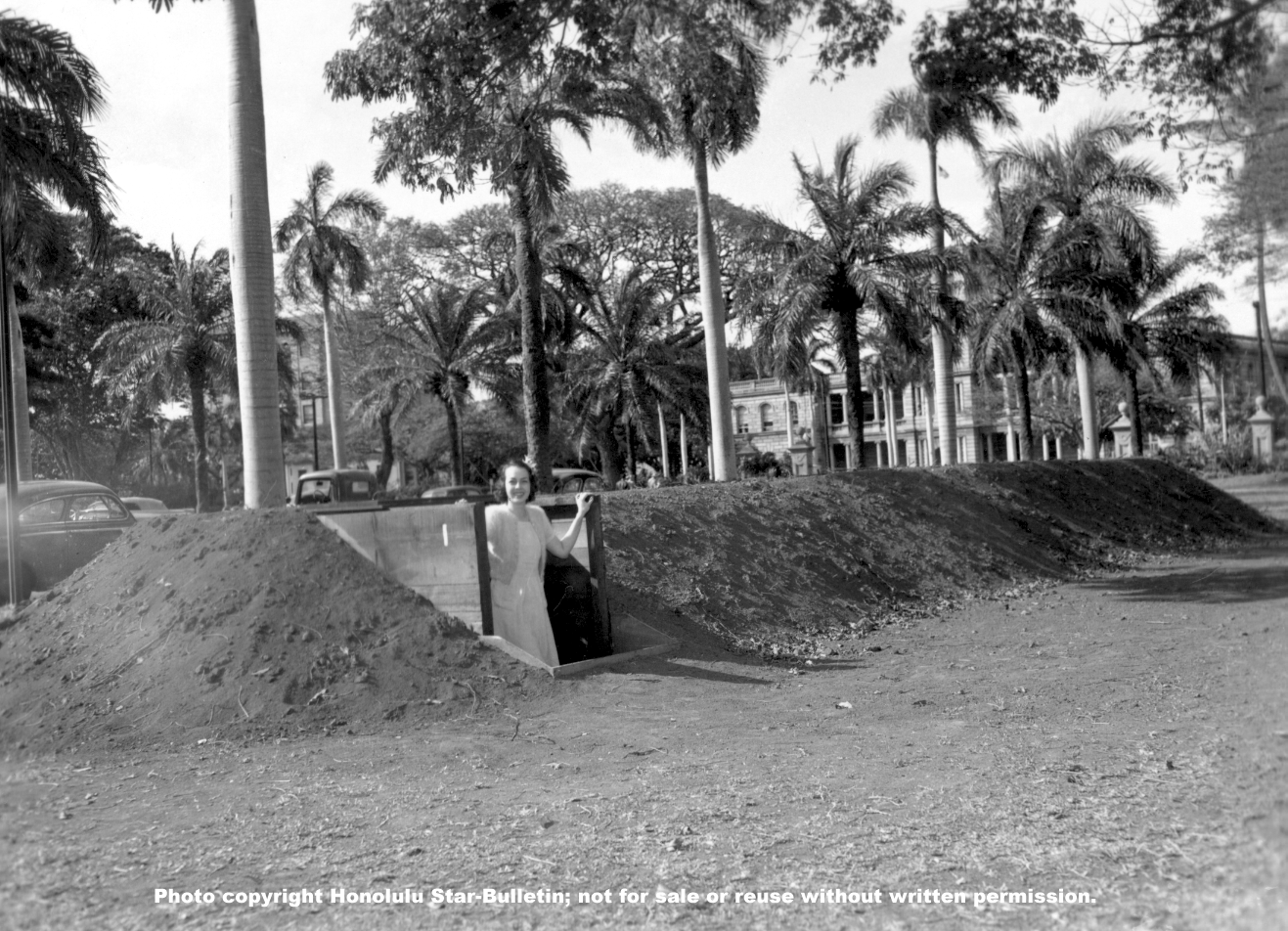
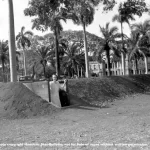
Air raid shelter showing Aliiolani Hale in background.
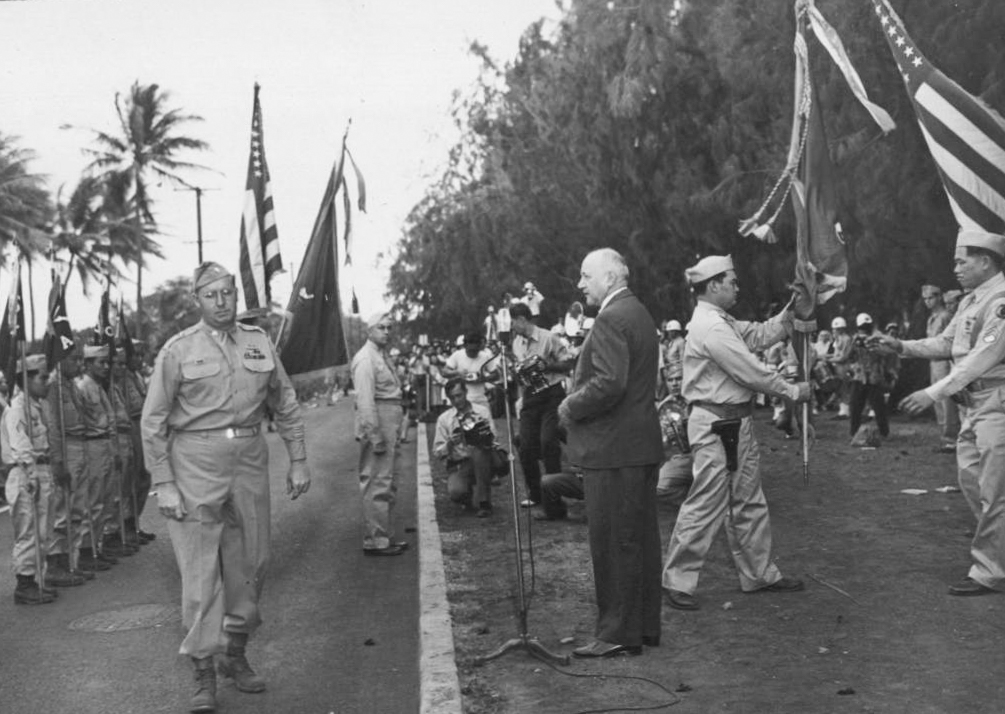
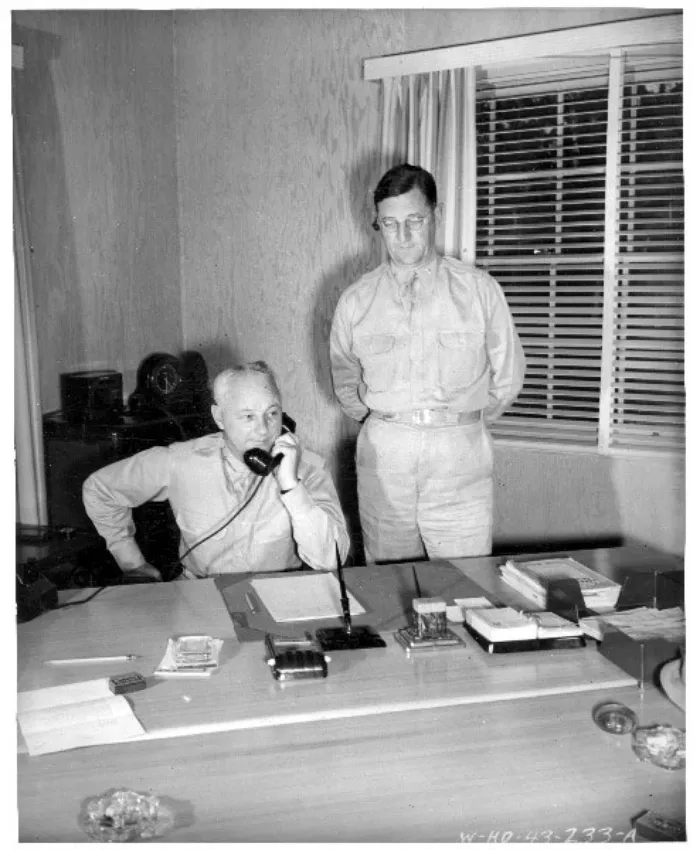
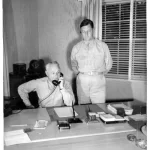
Lt General Delos C Emmons, Commanding General, Hawaiian Department – Brig General Thomas H Green, Military Governor - March 30, 1943.
WKK-barbed-wire
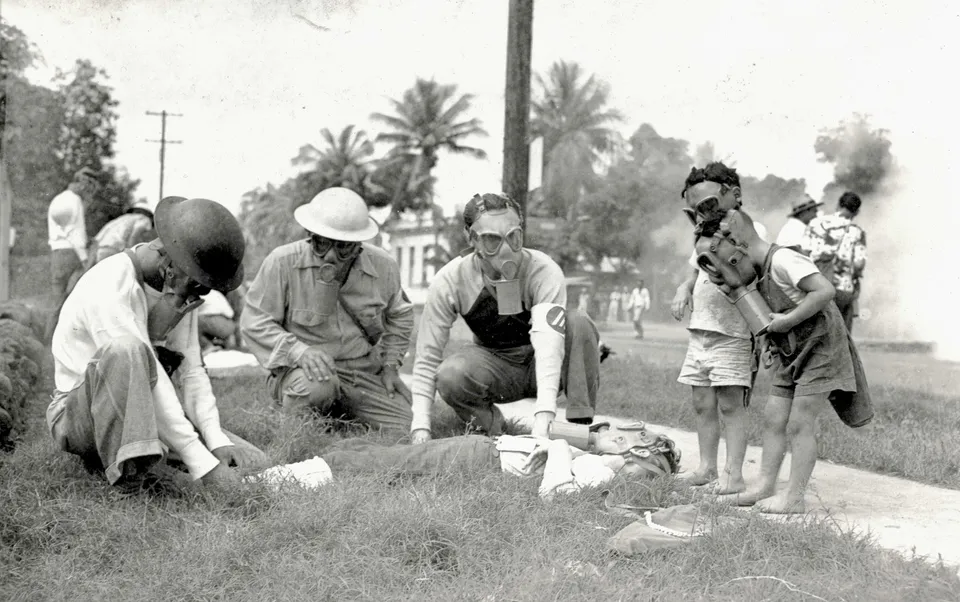
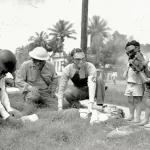
Volunteers conduct a poison-gas drill in Honolulu. Everyone over age 7 in Hawaii was issued a gas mask after the Dec. 7, 1941 attack. Courtesy: Desoto Brown Collection
AN-PNS-79-16978.2-2
Proclamation Page 2
Burning and damaged ships after the Japanese attack on Pearl Harbor, Dec. 7 1941. Courtesy: National Archives
Burning and damaged ships at Pearl Harbor, Dec. 7 1941. Courtesy: National Archives
Burning and damaged ships after the Japanese attack on Pearl Harbor, Dec. 7 1941. Courtesy: National Archives
Franklin D. Roosevelt, General MacArthur, and Admiral Nimitz in Pearl Harbor, Hawaii. Courtesy: National Archives
Original caption: Map of Pearl Harbor, one of approximately 40 new pictures of combat action during first six months of Pacific war, released in connection with publication of "Battle Report" by Comdr. Walter Karig, USNR and Lt. Welbourne Kelley, USNR. Rec'd Nov. 27, 1944. Courtesy: National Archives
ark_70111_08bH.0
ark_70111_08b3.0
US Army M3 Stuart light tanks in maneuvers, Beretania Street in the Honolulu business district, Hawaii, 30 August 1942.
U.S. soldiers surround Iolani Palace with barbed wire during the rule of martial law in 1942.
Air raid shelter showing Aliiolani Hale in background.
Lt General Delos C Emmons, Commanding General, Hawaiian Department – Brig General Thomas H Green, Military Governor - March 30, 1943.
WKK-barbed-wire
Volunteers conduct a poison-gas drill in Honolulu. Everyone over age 7 in Hawaii was issued a gas mask after the Dec. 7, 1941 attack. Courtesy: Desoto Brown Collection

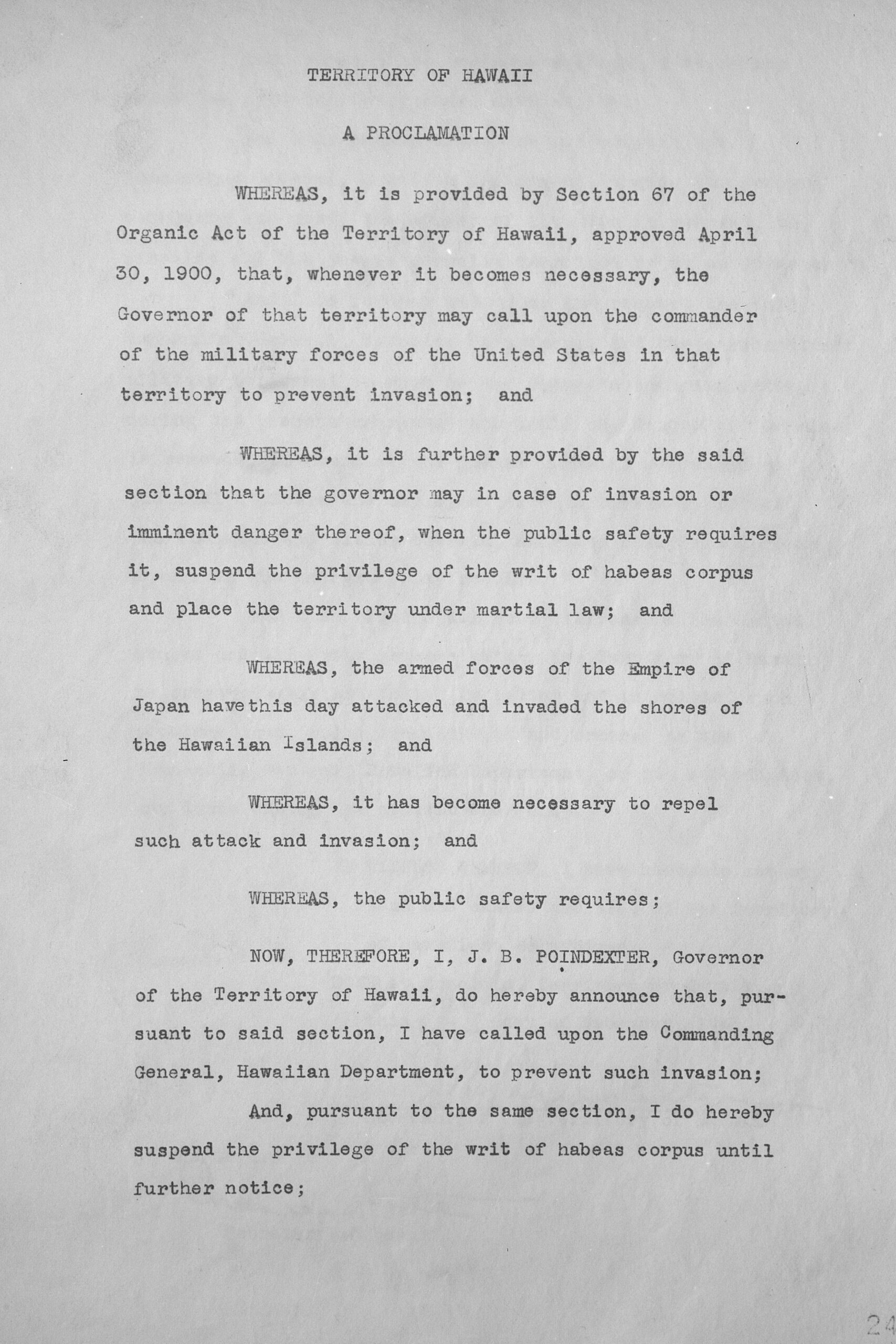
"That the governor shall be responsible for the faithful execution of the laws of the United States and of the Territory of Hawaii within the said Territory, and whenever it becomes necessary he may call upon the commanders of the military and naval forces of the United States in the Territory of Hawaii, or summon the posse comitatus, or call out the militia of the Territory to prevent or suppress lawless violence, invasion, insurrection, or rebellion in said Territory, and he may, in case of rebellion or invasion, or imminent danger thereof, when the public safety requires it, suspend the privilege of the writ of habeas corpus, or place the Territory, or any part thereof, under martial law until communication can be had with the President and his decision thereon made known." Hawaii Organic Act, 1900

Martial Law in Hawaii

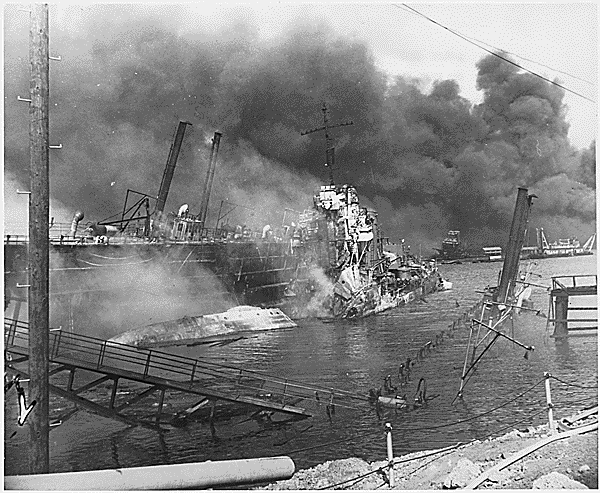
Imperial Japan’s attack on Pearl Harbor on December 7, 1941, shifted America’s concerns from economic stability to national defense overnight. Within hours, Hawaiʻi’s territorial governor declared martial law under the authority of the Hawaiian Organic Act of 1900, which allowed such action “in case of rebellion or invasion, or imminent danger thereof, when the public safety requires it.” All civilian authority was transferred to the U.S. military, which quickly removed people from militarily sensitive areas, imposed curfews, restricted night driving, censored newspapers and radio broadcasts, and regulated prices on everything from food to prostitution. Civil courts were closed, and the writ of habeas corpus was suspended.

Freed from most constitutional constraints, the military radically reshaped daily life in Hawaiʻi. Fearing a chemical attack, authorities required every home to keep gas masks on hand. All correspondence in and out of the islands faced strict censorship, with any information deemed sensitive blacked out. To thwart enemy bomb targeting, residents had to install blackout curtains to conceal interior light. In the wake of Pearl Harbor—and the difficulty of identifying victims—the Military Authority ordered every resident over age six to be fingerprinted and issued a mandatory ID card. The program proved so effective that it continued voluntarily even after martial law ended.

Martial law itself was not new to Hawaiʻi. In the nineteenth century, both French and British forces seized and briefly ruled the islands. A sailors’ riot in Honolulu in 1852 led the Kingdom’s marshal to declare martial law, and in 1895, supporters of Queen Liliʻuokalani attempted to overthrow the Republic of Hawaiʻi, prompting another declaration. That year, a military court tried 191 rebels and sentenced five—including Robert Wilcox—to death, though the sentences were later commuted and all were released within a year.

Public protest against martial law in 1941 and early 1942 was minimal. But as the threat of invasion receded, prominent territorial leaders—including Attorney General J. Garner Anthony—began calling for its end. Over military objections, President Roosevelt partially restored the civil governor’s powers and reopened civilian courts in February 1943. Martial law was fully lifted in October 1944.

The first legal challenge came from Dr. Hans Zimmerman, a German-born U.S. citizen and osteopath in Hawaiʻi. Detained as a security risk shortly after Pearl Harbor, Zimmerman petitioned for a writ of habeas corpus, which the federal district court granted. The Ninth Circuit Court of Appeals overturned that decision, ruling the military had full authority to declare and maintain the emergency. Another case involved Saffery Brown, sentenced to death by a five-man military tribunal for murdering his wife. The death sentence—unprecedented in living memory on Maui—sparked public outrage. President Roosevelt later commuted it to life imprisonment.

The most consequential case was Duncan v. Kahanamoku (1946). While the U.S. Supreme Court declined to address the constitutionality of suspending habeas corpus—because the writ had already been restored—it ruled that military tribunals trying civilians in Hawaiʻi were illegal. The Court found that the Hawaiian Organic Act permitted martial law only during an actual invasion or rebellion, and affirmed that its purpose was to guarantee Hawaiʻi’s civilians the same constitutional protections as citizens in the rest of the United States.

Internment of Japanese Americans

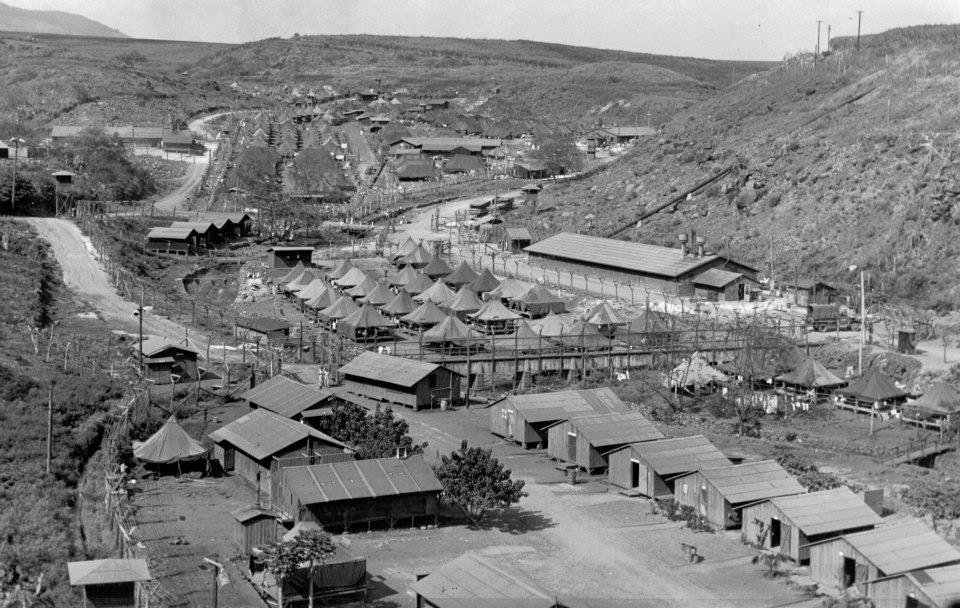
Honouliuli Camp

One of the U.S. military’s greatest concerns during World War II was Hawaiʻi’s large Japanese American population. Of the territory’s 159,000 residents of Japanese descent—124,000 American citizens and 35,000 non-citizens—nearly half the population, mass internment was deemed impractical. Some discussion was given to transporting them to mainland camps, but in the end, 1,466 were detained on suspicion of disloyalty, and many others were removed from militarily sensitive areas.

On the mainland, martial law was never declared. Instead, President Roosevelt’s Executive Order 9066 granted military commanders sweeping authority to secure the West Coast against possible Japanese attack. On March 2, 1942, General J. L. DeWitt of the Western Defense Command designated Military Areas No. 1 and No. 2, stretching from Washington State to Mexico. In these zones, curfews were imposed on German and Italian nationals and all persons of Japanese ancestry. A March 27 proclamation barred Japanese Americans from leaving the coastal area, and a May 9 order formally excluded them altogether. In practice, these overlapping directives forced Japanese Americans to report to Civil Control Stations, from which 112,000 people—more than 70,000 of them U.S. citizens—were sent to inland “Relocation Centers.” Many remained there for years, losing most of the property they left behind.

The internment policy was tested before the U.S. Supreme Court in three landmark cases. The first was Hirabayashi v. United States (1943). Gordon Hirabayashi, a University of Washington senior and U.S. citizen, violated two military orders: a curfew imposed on persons of Japanese ancestry and a directive requiring him to report to a Civil Control Station for relocation. Convicted in federal court on both counts, he appealed, arguing the orders were unconstitutional racial discrimination and exceeded military authority. The Supreme Court unanimously upheld his conviction for the curfew violation, ruling that in time of war the government could impose such restrictions in designated military zones to prevent espionage and sabotage. The Court avoided addressing the broader question of forced relocation, leaving the legality of mass internment unresolved.

The second case, Korematsu v. United States (1944), directly addressed the exclusion policy. Fred Korematsu, a native-born U.S. citizen from Oakland, California, volunteered for military service but was rejected due to a medical condition of ulcers. Refusing to leave the war zone, he defied the evacuation order, was arrested, and convicted for remaining in a restricted area. In a 6–3 decision, the Court upheld his conviction, holding that the exclusion order was a valid exercise of military authority during wartime. The Court’s majority accepted the government’s claim that the measures were based not on racial prejudice but on military necessity. In dissent, Justice Robert Jackson warned that the decision “lies around like a loaded weapon” for future abuses, while Justice Frank Murphy denounced it as “legalization of racism” and a “fall into the ugly abyss of racism.”

Decided the same day, Ex parte Endo (1944) involved Mitsuye Endo, a California-born Nisei who had been fired from her state job and sent to the Tule Lake War Relocation Center despite the government conceding her loyalty. Represented by the Japanese American Citizens League and pro bono attorneys, she petitioned for a writ of habeas corpus. In a unanimous decision, the Court ordered her release, ruling that the War Relocation Authority had no legal power to detain a citizen whose loyalty was unquestioned. By framing the ruling narrowly as an abuse of administrative authority rather than a judgment on the constitutionality of Executive Order 9066, the Court avoided directly overturning the internment policy—though the decision hastened the closure of the camps.

Despite the drastic measures and intense scrutiny placed upon Japanese-Americans by the government and military, no Japanese-American citizen was found guilty of committing espionage or sedition during the war. In fact, Takeo Yoshikawa, the head Japanese spy in Hawaii in the leadup to the attack on Pearl Harbor, did not try to employ Japanese-Americans at all, claiming that they were “unanimously uncooperative” due to their loyalty to the United States.

The wartime internment of Japanese Americans has since been recognized as a profound injustice. In 1948, Congress passed the Japanese American Evacuation Claims Act to provide compensation for property losses, but strict proof requirements meant that less than $37 million of an estimated $400 million in losses was ever paid. In 1983, the Commission on Wartime Relocation and Internment of Civilians declared the internment a “grave injustice” born of “race prejudice, war hysteria, and a failure of political leadership,” not military necessity. The following year, Korematsu’s conviction was vacated in federal court. In 1988, Congress issued a formal apology and awarded $20,000 to each surviving internee.
This film depicts scenes near Pearl Harbor in the spring of 1942. Men, women, children with bags and gas masks are shown as they stood in line in a schoolyard and were handed medicine by nurses, and children are seen in formation as they entered the school. (Courtesy of the National Archives)

Martial Law in American History

In the United States, the deployment of troops in an emergency does not automatically create a state of martial law. When President George Washington sent federal troops to Pennsylvania in 1794 to suppress the Whiskey Rebellion, he explicitly ordered the commanding officer to operate within existing civil laws and to deliver arrested rebels to regular courts for trial. To ensure compliance, a federal judge and the district attorney accompanied the force.
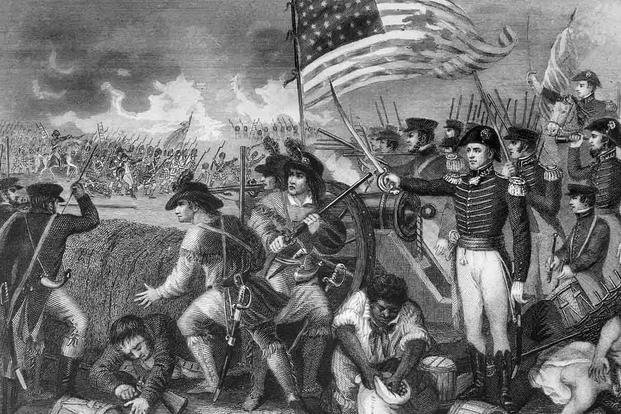
Such restraint was absent during the War of 1812, when New Orleans faced the threat of British attack. Fearing that Louisiana’s legislature might capitulate, General Andrew Jackson declared the city “under strict martial law.” He barred the legislature from meeting and ordered the state’s governor to take command of the militia. Even after the American victory at the Battle of New Orleans on January 8, 1815—and the removal of any immediate threat—Jackson kept martial law in place. He did not lift it when word arrived that a peace treaty had been signed.
Tensions escalated when a legislator publicly criticized Jackson’s policies. Jackson had him tried as a spy before a military tribunal. When a federal judge granted the legislator a writ of habeas corpus so his case could be heard in a civil court, Jackson placed the judge under house arrest and expelled him from the city. Only after martial law was finally lifted did the judge return to the bench—where he promptly fined Jackson $1,000 for contempt of court.

The Battle of New Orleans, 1814. Courtesy: Army.mil
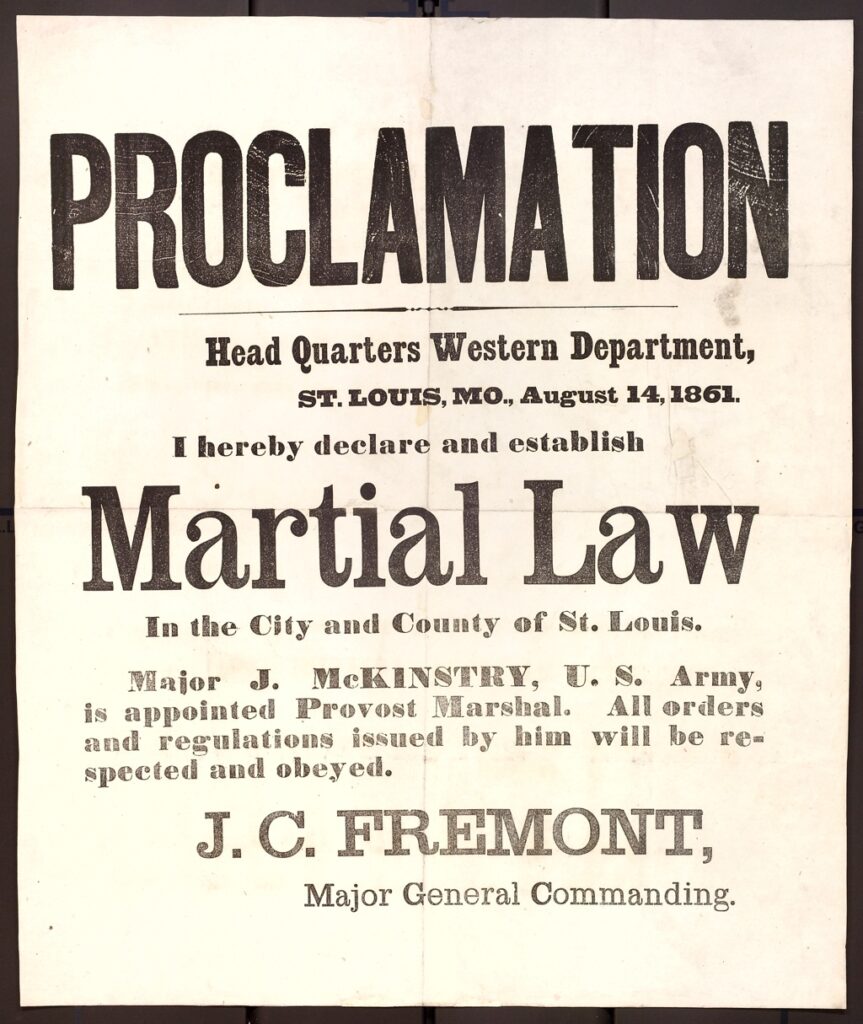
Broadside proclamation of martial law in the city and county of St. Louis by General Fremont, dated headquarters, Western Department, St. Louis, August 14, 1861. Courtesy: Missouri Historical Society
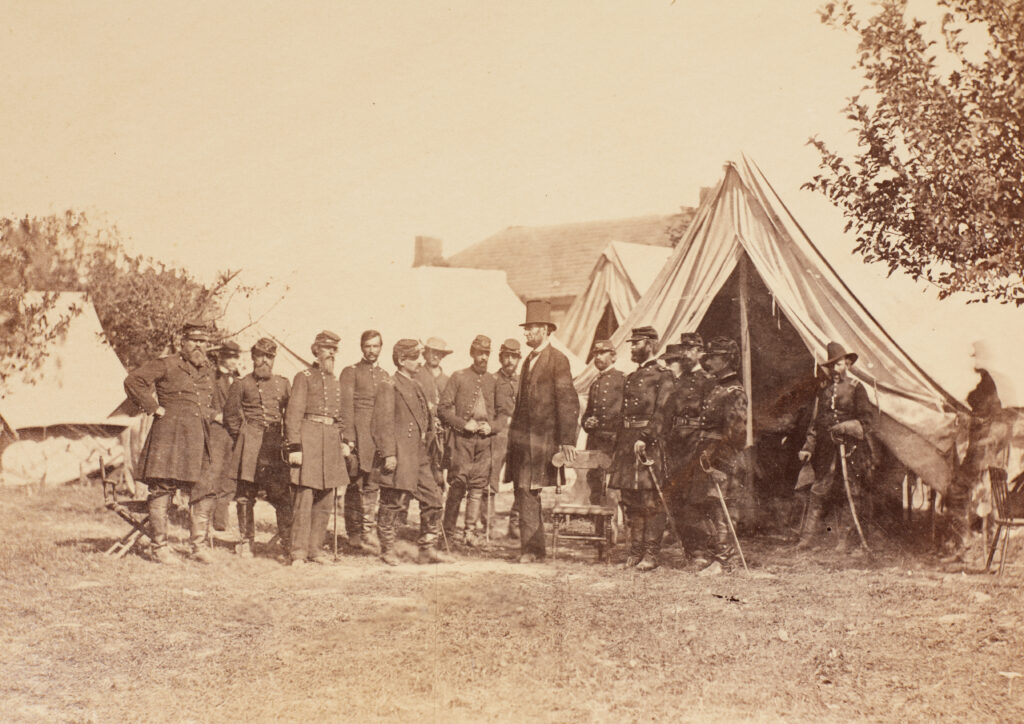
President Lincoln visiting the battlefield at Antietam, Maryland, October 3, 1862. General McClellan and 15 members of his staff are in the group. Photographed by Alexander Gardner. Courtesy: National Archives

Martial Law During the Civil War

During the Civil War, Congress passed a series of laws to address treason and rebellion against the federal government. In the South—where millions participated in the Confederate cause—there was no functioning federal judicial authority to enforce such laws. In Union-controlled areas, the military took the lead in handling those suspected of treason.

This policy began in April 1861, when President Abraham Lincoln, without Congress in session, unilaterally suspended the writ of habeas corpus in areas considered vital to the war effort—most controversially along the rail lines between Philadelphia and Washington, D.C. Habeas corpus, rooted in Anglo-American law, protects individuals from being arrested and held without formal charges—a safeguard against political repression. The suspension sparked intense protests, but the administration argued it was necessary under the extraordinary circumstances of civil war.

The issue led to a direct clash between the President and Chief Justice Roger Taney. While riding circuit in Baltimore, Taney issued a writ of habeas corpus for a Maryland secessionist accused of destroying railroad bridges. When Union officers ignored the order, Taney ruled in Ex parte Merryman (1861) that only Congress—not the President—could suspend the writ, as provided in Article I, Section 9 of the Constitution. Lincoln ignored the decision, later telling Congress that breaking the law “to a very limited extent” was preferable to letting the rebellion go unchecked.

In September 1862, Lincoln expanded his policy with a proclamation subjecting anyone obstructing enlistments, resisting the draft, or aiding the enemy to martial law and trial by military court. Habeas corpus was suspended for all such arrests. Roughly 18,000 civilians were detained; most were released after a few days upon swearing an oath to refrain from supporting the Confederacy.

Congress passed the Habeas Corpus Act in March 1863, retroactively approving the President’s suspension of the writ. The law allowed the President to continue suspending habeas corpus but required the government to provide federal courts with lists of political prisoners and to release those not indicted by a grand jury.

One of the most important legal tests came in 1863, when a military court in Indiana sentenced Lambden Milligan to death for alleged disloyal activities, including plotting to overthrow the state government. In Ex parte Milligan (1866), the Supreme Court—by a divided vote—ruled that the President had violated the 1863 Act by ignoring the requirement for a grand jury indictment. The majority held that Congress could not authorize military trials for civilians in areas far from the battlefield where civil courts remained open. “The Constitution,” the Court wrote, “is a law for rulers and people, equally in war and peace… Martial law cannot arise from a threatened invasion. The necessity must be actual and present; the invasion real.”

The Court unanimously agreed Milligan should have retained his right to habeas corpus. Four justices, however, disagreed with the majority’s restriction on congressional power, arguing that Congress could authorize military commissions in areas merely threatened by invasion or insurrection and should decide when to use them.

Martial Law in Times of Crisis

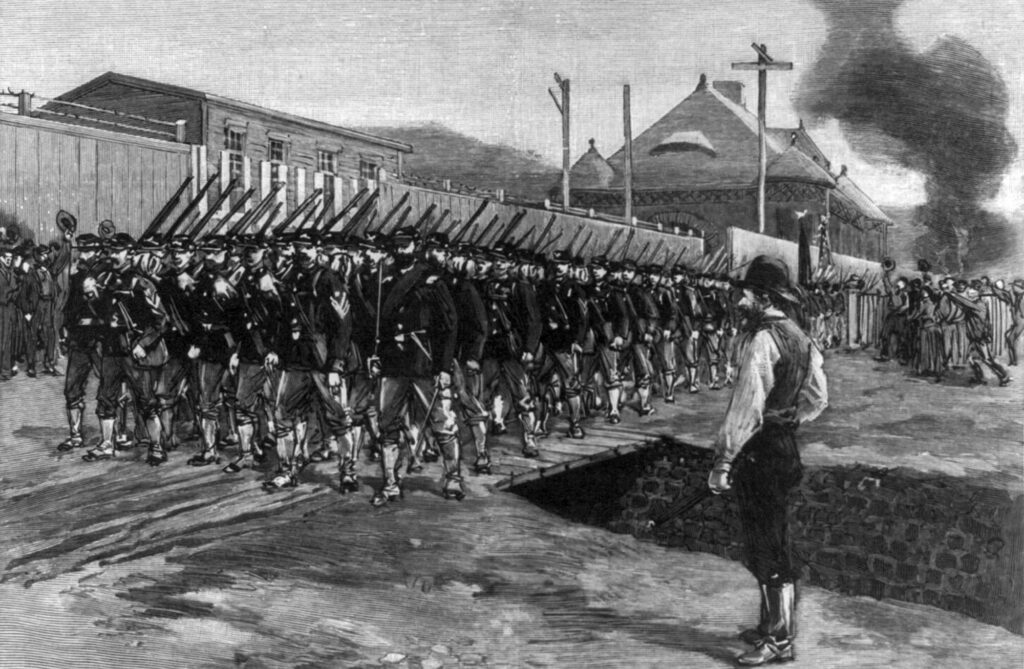
America’s rapid economic growth in the 19th and 20th centuries brought crises that led to several declarations of martial law. During violent labor strikes in Idaho, Colorado, and other states, governors called in state militias and federal troops to restore order. In the 1930s, facing the Great Depression, President Franklin D. Roosevelt asked Congress for broad powers to combat the crisis as if the nation were under foreign attack. Congress cooperated quickly—passing an emergency banking bill overnight, often without members reading it—making it unnecessary for Roosevelt to assume formal “emergency powers.”

Throughout U.S. history, Americans have often accepted military authority in times of crisis. Yet because martial law suspends the very constitutional system it seeks to protect, Americans have resisted allowing those who declare it to decide its scope or legality. That role has fallen to the courts. While U.S. courts have not established permanent rules for martial law, they have outlined guidelines for its use. Above all, they have held that necessity is the key requirement—without it, martial law has no real justification.

Homestead Strike, 18th Regiment arrives, Harper's Weekly, July 12,1892. Courtesy: Library of Congress
Verified by MonsterInsights